World
From India’s Jalpaiguri to Dhaka: Khaleda Zia’s noteworthy journey
Her leadership was defined by firm sovereignty and a tough stance toward India on transit, water, and strategy
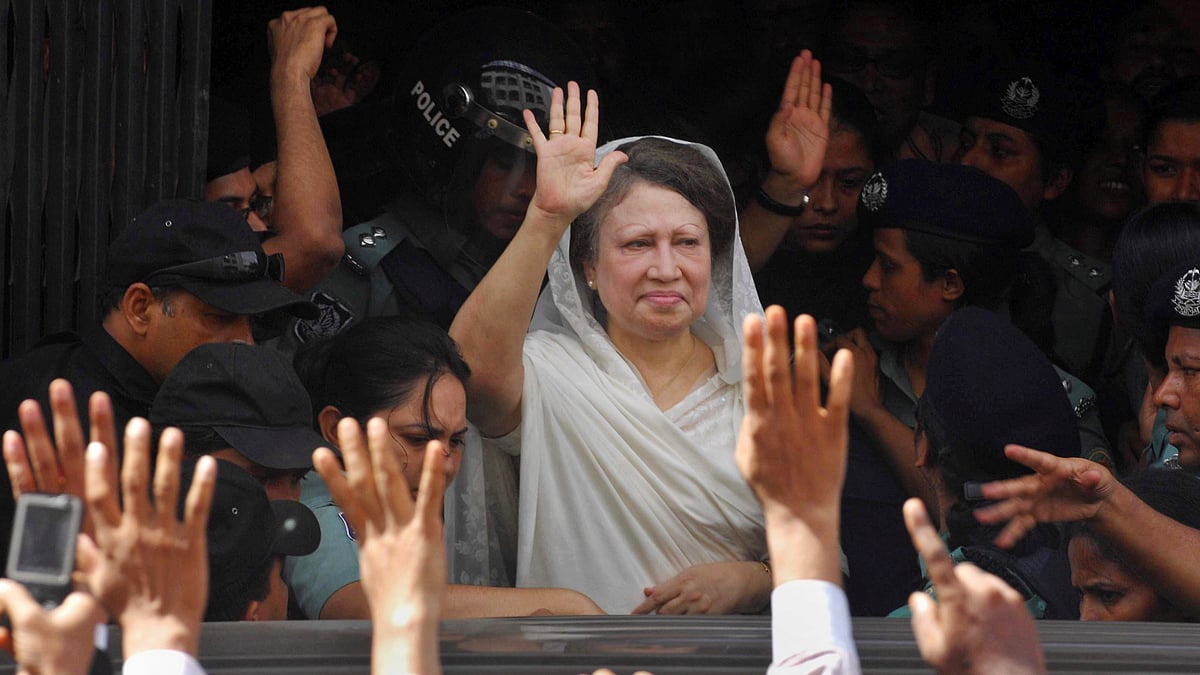
Khaleda Zia, a towering figure in Bangladeshi politics and the nation’s first female Prime Minister, passed away on Tuesday at the age of 80, leaving behind a legacy that shaped the course of her country for over four decades. Her journey — from a modest upbringing in undivided India to the pinnacles of power in Dhaka — was marked by resilience, ambition, and an indelible influence on South Asian political history.
Born in 1945 in Jalpaiguri, then part of Greater Dinajpur in undivided India, Khaleda Zia moved with her family to what was then East Pakistan after the partition. In 1960, she married Ziaur Rahman, a Pakistani Army captain who would later rise as a key figure in Bangladesh’s struggle for independence and eventually become the nation’s President in 1977. Following his assassination in 1981, Bangladesh Nationalist Party (BNP) faced a leadership crisis, prompting party stalwarts to turn to Khaleda Zia. She assumed the role of vice-president in 1984, and later that year was elected Chairperson, a position she held for nearly 41 years, navigating the party through turbulent political waters.
Zia first took office as Bangladesh’s prime minister in 1991, becoming the nation’s inaugural female head of government. She would go on to serve three terms, leading the country through periods of intense political contestation and shaping its post-independence trajectory. Her leadership was defined by a fierce commitment to Bangladesh’s sovereignty and a steadfast, sometimes adversarial, stance toward India, particularly on matters of transit, water sharing, and strategic cooperation.
Throughout her tenure, Zia framed her foreign policy and domestic posture as a defense of national interests. She resisted transit and connectivity agreements with India, opposed renewal of the 1972 Indo-Bangladesh Friendship Treaty, and challenged India over the Farakka Barrage, alleging it deprived Bangladesh of its rightful share of Ganges water. Her government also pursued closer defence ties with China, a move that drew scrutiny from New Delhi and reflected her broader strategic vision. Even after leaving office, Zia continued to voice opposition to policies she perceived as compromising Bangladesh’s autonomy.
Domestically, Khaleda Zia and Sheikh Hasina, leader of the Awami League, defined Bangladeshi politics for more than three decades, their rivalry shaping the nation’s political discourse. Zia herself faced significant personal and political challenges, including periods under house arrest and a five-year imprisonment in the Zia Orphanage Trust corruption case, which was later suspended amid the Covid-19 pandemic. She regained full freedom in August 2024, returning to Dhaka in May after months of medical treatment in London.
Zia’s final days were spent under medical supervision in Dhaka, having been admitted on November 23 for severe heart and lung complications. She is survived by her elder son, BNP acting chairman Tarique Rahman, his wife Zubaida, and their daughter Zaima Rahman. Her younger son, Arafat Rahman Koko, predeceased her in Malaysia.
Khaleda Zia’s life story is one of ambition, resilience, and defiance — a woman who rose from relative obscurity to become a defining figure in her nation’s history, shaping both its domestic politics and its place in South Asia. Her passing marks the end of an era in Bangladesh, leaving a legacy that will echo through the corridors of power and the hearts of the citizens she once led.
With IANS inputs
Join our official telegram channel (@nationalherald) and stay updated with the latest headlines