World
Republicans worried as Germany urges Europe to rearm after US announces troop pullout
Pentagon plans to remove 5,000 troops from Germany amid tensions over Iran war, NATO and tariffs
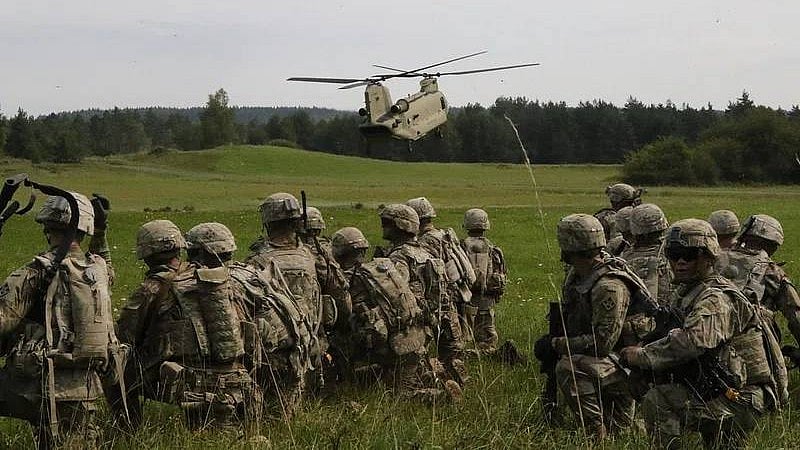
Germany on Saturday said the planned withdrawal of 5,000 American troops from the country should serve as a wake-up call for Europe to strengthen its own military capabilities, even as senior Republican lawmakers in the United States warned that reducing the US military footprint in Europe could weaken deterrence against Russia.
The Pentagon announced on Friday that it would begin withdrawing 5,000 troops from Germany, the largest American military base in Europe, in a move expected to be completed over the next six to 12 months.
The decision comes amid growing tensions between Washington and European allies over the Iran war, trade disputes and disagreements on broader NATO strategy.
Trump hints at deeper cuts
Donald Trump indicated the reduction could go far beyond the initial figure announced by the Pentagon.
“We're going to cut way down and we're cutting a lot further than 5,000,” Trump told reporters in Florida when asked about the plan.
The troop reduction also effectively ends a Biden-era plan to deploy a US battalion equipped with long-range Tomahawk missile systems in Germany, a deployment Berlin had strongly supported as a key deterrent against Russia.
Germany calls for stronger European defence
German Defence Minister Boris Pistorius said Europe now needed to assume greater responsibility for its own security architecture.
“We Europeans must take on more responsibility for our own security,” Pistorius said, adding, “Germany is on the right track” through military expansion, faster procurement and infrastructure upgrades.
The US currently maintains nearly 40,000 troops in Germany, including key installations such as the Ramstein Air Base and the Landstuhl military hospital, both of which have supported American operations in Iran as well as previous wars in Iraq and Afghanistan.
Senior Republicans oppose troop reduction
However, influential Republican lawmakers warned that the move could send the wrong signal to Moscow at a sensitive moment in the Russia-Ukraine conflict.
Roger Wicker and Mike Rogers, who chair the Senate and House Armed Services Committees respectively, said they were “very concerned” by the decision.
The two lawmakers argued the troops should not be removed from Europe but instead repositioned closer to NATO’s eastern flank.
“Prematurely reducing America’s forward presence in Europe before those capabilities are fully realized risks undermining deterrence and sending the wrong signal to Vladimir Putin,” they said in a joint statement.
NATO seeks clarification
A NATO spokesperson said the alliance was still working with Washington to understand the details of the withdrawal plan.
Meanwhile, Donald Tusk also expressed concern, warning that divisions within the transatlantic alliance were becoming more dangerous than external threats.
“The greatest threat to the transatlantic community are not its external enemies, but the ongoing disintegration of our alliance. We must all do what it takes to reverse this disastrous trend,” Tusk wrote on X.
Iran war and tariff tensions deepen rift
The troop withdrawal announcement came shortly after Trump threatened to raise tariffs on European Union automobile imports to 25 per cent, accusing the EU of violating trade commitments.
The decision has fuelled concerns in Berlin that Washington’s approach toward Europe is becoming increasingly transactional and unpredictable.
Peter Beyer from Chancellor Friedrich Merz’s CDU party suggested the decisions reflected political pressure on Trump amid domestic criticism over unresolved crises in Ukraine, Venezuela and Iran.
“Against this backdrop, both the troop withdrawal and the trade policy seem less like the expression of a coherent strategy and more like a political reflex and a reaction born of frustration,” Beyer said.
Long-range missile cancellation seen as bigger setback
Analysts said the cancellation of the long-range missile deployment may have greater strategic implications than the troop reduction itself.
The planned battalion was expected to provide NATO with enhanced long-range strike capability while European nations developed similar systems independently.
Christian Moelling said the United States currently maintained a near-monopoly within NATO over long-range strike systems.
“The U.S. holds a factual monopoly inside NATO on long-range fires. That is why this is operationally more serious than the troop number,” he said.
Join our official telegram channel (@nationalherald) and stay updated with the latest headlines