World
Govt ban on Palestine Action unlawful: British High Court
High Court finds decision “disproportionate” but leaves restrictions in place until further hearing
Britain’s High Court on Friday ruled that the government acted unlawfully in designating the protest group Palestine Action as a terrorist organisation, though it allowed the ban to remain in force pending a further hearing as ministers prepare an appeal.
Judges Victoria Sharp, Jonathan Swift and Karen Steyn found that “the nature and scale of Palestine Action's activities” did not reach the “level, scale and persistence” required to justify proscription under terrorism legislation. They said they were “satisfied that the decision to proscribe Palestine Action was disproportionate”.
The government imposed the ban after activists broke into a Royal Air Force base in June to protest Britain’s military backing for Israel during its offensive against Hamas in Gaza, a conflict that has killed tens of thousands of Palestinians. The designation placed the group alongside organisations such as al-Qaida and Hamas, making membership or support a criminal offence punishable by up to 14 years in prison.
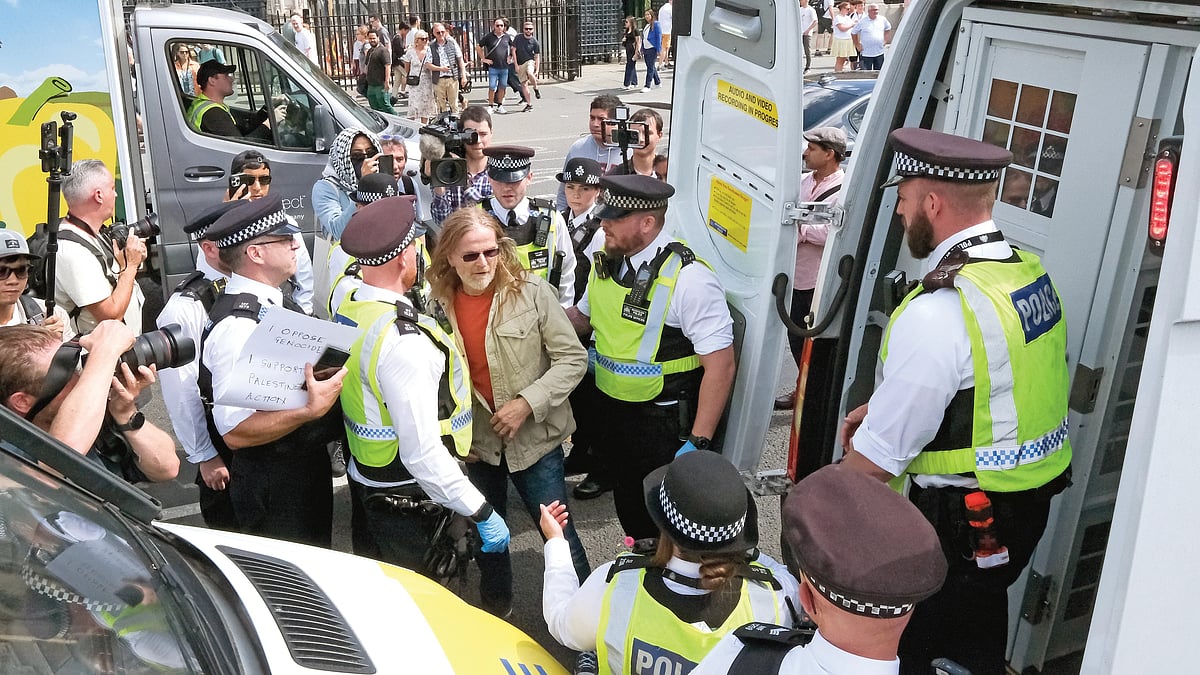
Since the ban, more than 2,700 people have been arrested at demonstrations for carrying placards stating 'I support Palestine Action', and over 250 individuals have been charged under the Terrorism Act. Supporters of the group and civil liberties advocates argue that such enforcement measures have undermined free speech and the right to protest.
Palestine Action co-founder Huda Ammori welcomed the ruling, saying it “is a monumental victory both for our fundamental freedoms here in Britain and in the struggle for freedom for the Palestinian people, striking down a decision that will forever be remembered as one of the most extreme attacks on free speech in recent British history”.
Yasmine Ahmed, UK director of Human Rights Watch, described the judgment as “a shot in the arm for British democracy”, arguing that anti-terror laws had been deployed to curb legitimate criticism of Israel.
Home secretary Shabana Mahmood, however, expressed disagreement with the court’s conclusions and indicated the government would challenge the decision. She said she was “disappointed by the court's decision and disagrees with the notion that banning this terrorist organisation is disproportionate”.
“The proscription does not prevent peaceful protest in support of the Palestinian cause, another point on which the court agrees,” she added, before stating: “I intend to fight this judgment in the Court of Appeal.”
Formed in 2020, Palestine Action has carried out direct-action protests targeting military and industrial sites across the UK, including break-ins at facilities linked to Israeli arms manufacturer Elbit Systems UK. Authorities say these actions have resulted in millions of pounds’ worth of damage and raised national security concerns.
In their judgment, the judges noted that while “a very small number of its actions have amounted to terrorist action... regardless of proscription, the criminal law is available to prosecute those concerned.” They emphasised that the legality of the ban itself required further consideration before any immediate change could be made.
The court therefore declined to quash the proscription outright and scheduled another hearing to determine whether it should remain in place “pending the possibility of an appeal.” Lawyers representing both sides have been given until February 20 to prepare submissions.
Following the ruling, London’s Metropolitan Police said officers would no longer arrest individuals solely for expressing support for Palestine Action, though they would continue gathering evidence of potential offences “to provide opportunities for enforcement at a later date”.
The case has become a focal point in Britain’s wider debate over the balance between national security powers and civil liberties, with Friday’s judgment likely to intensify scrutiny of how anti-terror legislation is applied to protest movements as the legal battle continues.
With AP/PTI inputs
Join our official telegram channel (@nationalherald) and stay updated with the latest headlines