World
How serious was the US at Islamabad with ‘surrender’ not ‘talks’ in mind?
As Iranian team leaves Islamabad, doubts rise over US intent after Trump shares report touting naval blockade option
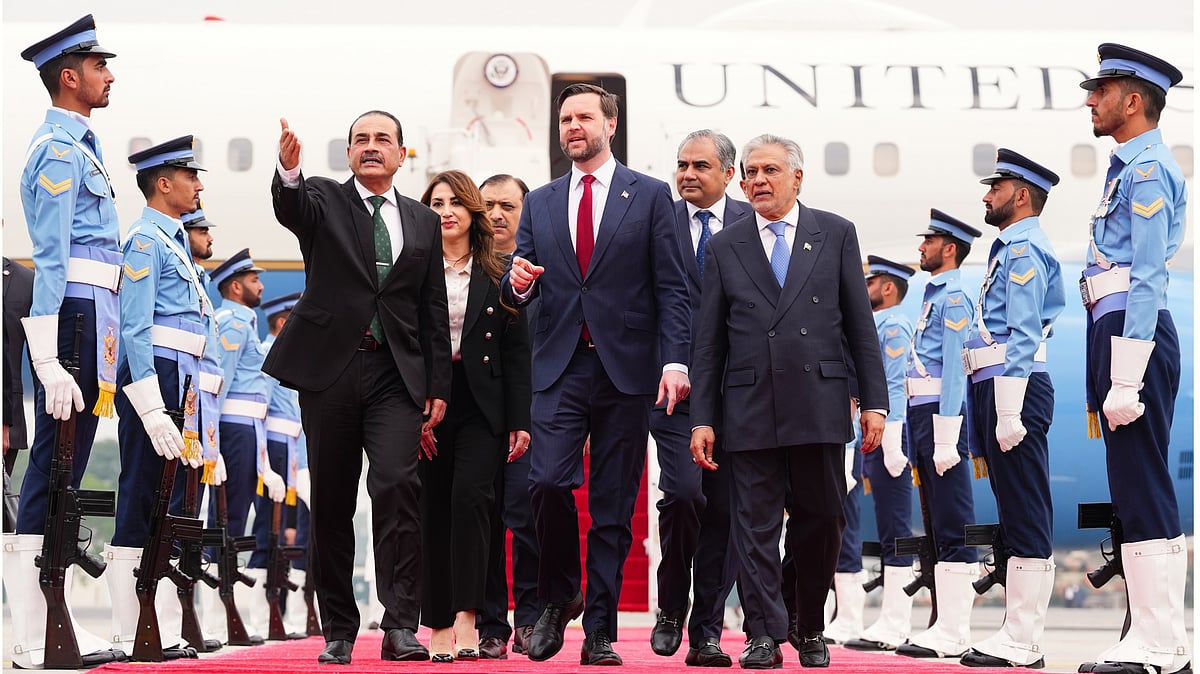
The composition of the US delegation to the 'Islamabad Talks' to discuss the Iran war ceasefire raised questions at the very outset about how seriously Washington approached the negotiations. The main negotiators were vice-president J.D. Vance, who arrived with his pregnant wife and children, President Donald Trump’s son-in-law Jared Kushner, and special emissary Steve Witkoff.
The delegation reached Islamabad nearly 10 hours after the Iranian team and then rested for four to five hours to recover from jet lag, journalists observed. Nor did the US side communicate much to the media, even as Iranian officials maintained a steady flow of briefings throughout the night of Saturday, 11 April.
By the time Vance arrived at the negotiation venue, Iranian sources claimed, the Iranian delegation had already laid out key points for the first round of talks. An informed source said the US side had not even confirmed the agenda in advance, instead appearing to proceed on the basis of the framework proposed by Iran.
The documents brought by the US reportedly consisted of only a few pages outlining general principles, whereas the Iranian delegation arrived with detailed technical material, including data, draft agreements and explanations relating to nuclear facility safety.
Hours after the US delegation left Islamabad on the morning of Sunday, 12 April, declaring that Iran had refused to accept the proposed deal, Trump shared a report suggesting the option of a naval blockade against Iran.
The article, shared late on Saturday evening US time — by which point the American delegation had already departed Islamabad — opened by recalling Washington’s earlier blockade strategy against Venezuela. It suggested that if Iran refused to accept the proposed agreement, the US could revive a similar approach to choke oil exports and increase diplomatic pressure on China and India, two of Tehran’s largest oil customers.
The report argued that the US could counter Iran’s strategic leverage over the Strait of Hormuz by deploying warships to control the movement of vessels, thereby restricting Iranian oil exports. “It would be very easy for the U.S. Navy to exert complete control over what does and does not go in and out of that Strait,” Lexington Institute defence analyst Rebecca Grant was quoted as saying.
The article noted that the USS Gerald R. Ford — the aircraft carrier that led the naval blockade of Venezuela — is now deployed in the Persian Gulf alongside the USS Abraham Lincoln.
A day earlier, an opinion article in The Washington Post by Marc Thiessen argued that Iranian leaders must understand that their personal survival depended on reaching a settlement acceptable to President Trump.
The US president has repeatedly claimed that most Iranian leaders had been eliminated and that only a few remained to negotiate a deal. Some analysts apprehended that hardliners in the Trump administration and Pentagon may even have considered targeting Iran’s senior leadership, who had gathered in Islamabad for the talks.
Reacting sharply, Iranian spokesman Esmaeil Baqaei said: “While US authorities accuse Iran of lacking ‘good faith’ and engaging in ‘extortion’, elements within the US policy and media space are openly recommending the assassination of Iranian negotiators in the event that talks fail. Does this not amount to normalising coercion through the threat of violence and manslaughter?” Another spokesman, Seyed Mohammad Marandi, wrote on X that the Trump administration “was not seriously negotiating”.
According to Iranian sources, an unnamed Pakistani diplomat privately told members of the Iranian delegation that the United States’ “arrogance and maximalist approach” made meaningful diplomacy extremely difficult. The diplomat noted that while Vance insisted on a firm Iranian commitment never to pursue nuclear weapons, Tehran had repeatedly made such assurances in the past. At the same time, Vance also claimed that Iran’s enriched uranium stockpile had already been destroyed, a position critics described as contradictory.
A correspondent for the Iranian news agency Fars in Islamabad reported that Iran rejected what it described as excessive US demands regarding the Strait of Hormuz, peaceful nuclear energy and other issues. A source close to the Iranian negotiating team was quoted as saying that the American side “demanded in negotiations everything it could not achieve through war”.
The conduct of the US delegation, according to these accounts, created the impression that Washington had arrived in Islamabad expecting capitulation rather than compromise. The episode has reinforced scepticism among Iranian officials about the sincerity of US diplomatic engagement.
Join our official telegram channel (@nationalherald) and stay updated with the latest headlines