World
‘The India deal is on,’ says Donald Trump
US president’s press conference also signals that all countries with no trade deal with US yet will now be levied 10 per cent tariff
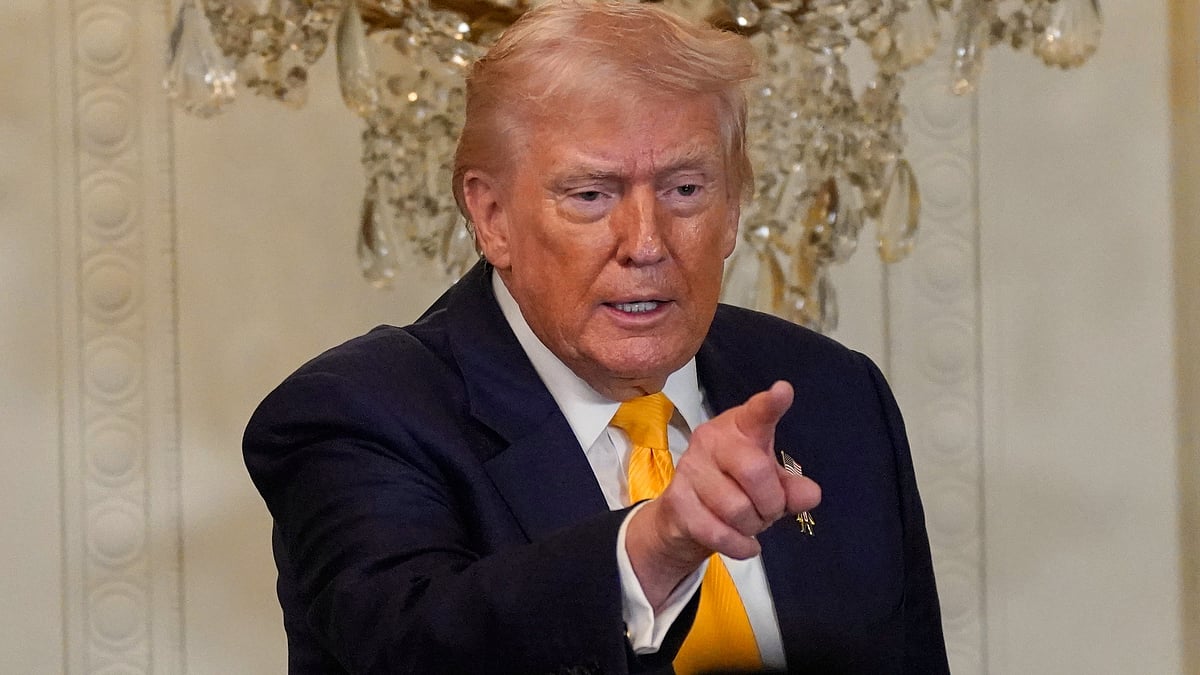
Hours after the US Supreme Court ruled his ‘emergency tariffs’ illegal, US President Donald Trump declared that most of the trade deals negotiated with the US still remained valid.
It means that the agreement between India and the US — the so called ‘framework agreement to an interim trade deal — made public as recently as 6 February 2026 still holds in Trump’s book.
The US president’s press conference also signalled that all countries with no trade deal with the US yet will now be levied 10 per cent tariff.
The Indo-US trade deal is likely to be signed by the end of March say media reports on Saturday morning. It explains the haste with which a clumsy ‘framework agreement to an interim deal’ was released on 6 February. The White House probably knew what the US Supreme Court’s verdict would be—most experts and commentators in the US anticipated the adverse ruling—and forced India to sign the ‘framework agreement’ in advance and agree to 18 per cent US tariff and zero ‘reciprocal tariff’ on US goods. India must be ruing its decision to sign the agreement without waiting for the US Supreme Court’s ruling.
“Nothing changes. They’ll be paying tariffs, and we will not be paying tariffs. This is a reversal of what used to be. PM Modi is a great gentleman, a great man. He was much smarter than the people he was against. In terms of the US, He was ripping us off. So, we made a deal with India. A fair deal now. We are not paying tariffs to them, and they are. We did a little flip,” Trump told the reporters. “The India deal is on,” Trump told reporters in response to a question, while suggesting tariffs under separate authorities would replace the ones overturned by the Supreme Court. The US President said he used tariffs to end the war between India and Pakistan.
Describing the US Supreme Court’s ruling as a ‘disgrace’, the US president said he was disappointed. “I am ashamed of certain members of the court, absolutely ashamed, for not having the courage to do what’s right for our country,” he told reporters and added that in his opinion the court was “swayed by foreign interests”.
The 6-3 decision centres on tariffs imposed under an emergency powers law, including the sweeping “reciprocal” tariffs he levied on nearly every other country. Trump relied on the 1977 International Emergency Economic Powers Act, or IEEPA, as justification for a historic barrage of tariffs, even though that law contains no mention of tariffs. IEEPA, which allows the president to seize assets and block transactions during a national emergency, was first used during the Iran hostage crisis. It has since been invoked for a range of global unrest, from the 9/11 attacks to the Syrian civil war.
A White House spokesman, however, added a fresh twist in the tale by suggesting that all countries including India will now pay 10 per cent, in effect nullifying the framework agreement with India.
Whether this is actually the US government's stand or reflects the confusion in the US administration is yet to be clarified.
Join our official telegram channel (@nationalherald) and stay updated with the latest headlines