World
Iran conflict roils region as Vance offers no timeline
US vice-president downplays confrontation, questions whether conflict should be called a “war”
The conflict with Iran continues to cast a deepening shadow over the West Asia, with uncertainty surrounding the fighting, mounting civilian casualties and disruptions to the Strait of Hormuz keeping global energy markets on edge.
US vice-president J.D. Vance on Thursday declined to offer any timeline for the end of the US-Iran conflict, instead placing the responsibility for de-escalation largely on Tehran.
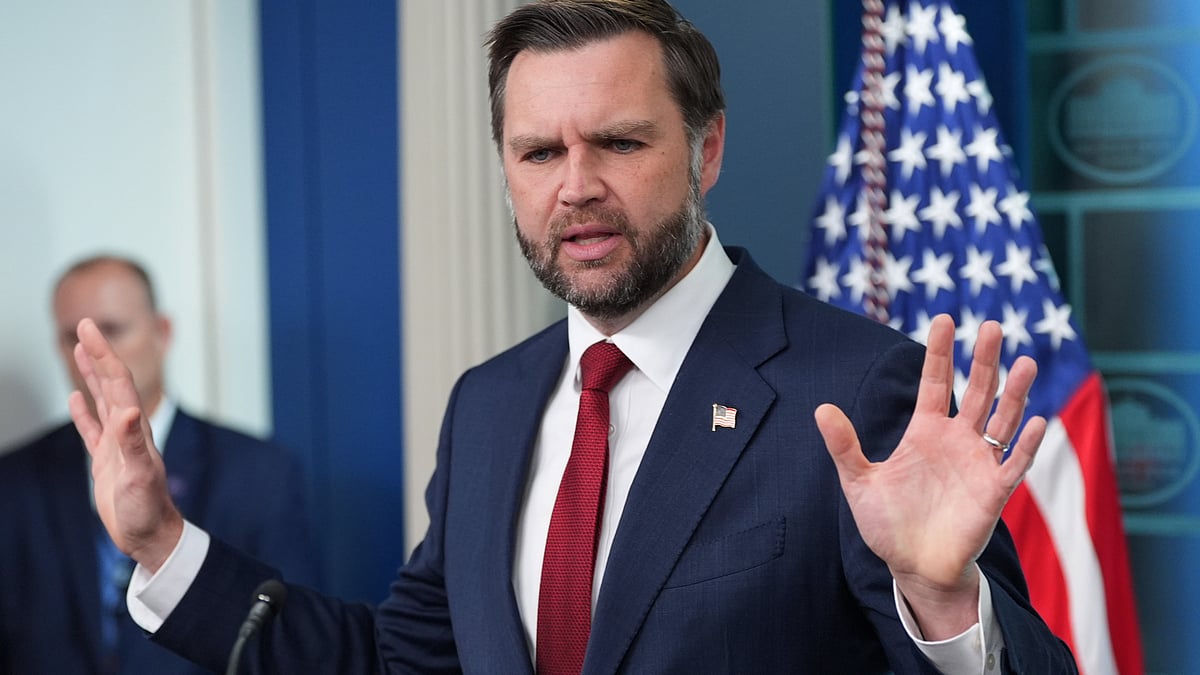
Speaking at a White House briefing, Vance sought to downplay the scale of the confrontation, questioning whether the months-long conflict should even be described as a “war”. He said major combat operations had lasted about six weeks, while acknowledging that fighting had flared up at various points.
“I wouldn’t call it a war. Right now, there is no active shooting,” Vance said, while conceding that violence had resurfaced in some areas.
His remarks came as Iran remains at the centre of a conflict that has disrupted commercial shipping, strained regional security and sent ripples through global energy markets.
The Strait of Hormuz, one of the world's most strategically important energy corridors, has become a major flashpoint in the confrontation.
Before the conflict began on 28 February, commercial traffic through the narrow waterway was largely uninterrupted. Following US and Israeli strikes, Iran closed the strait to commercial vessels, disrupting a route through which roughly one-fifth of the world's oil and gas had previously passed.
The closure has placed Iran at the heart of concerns over global energy supplies, with any prolonged disruption threatening to push up oil prices and intensify pressure on fuel markets.
Asked when the conflict would end, Vance offered no clear answer. Instead, he linked the question to Iran's actions against commercial shipping.
“I think the reality is, I don’t know the answer to that question. You’d have to ask the Iranians,” he said.
Vance claimed that US military operations were helping create conditions for shipping to resume through the strait and argued that the impact of the conflict on energy markets was gradually diminishing.
“When will the Iranians shooting at ships stop having an effect on world energy markets? The answer is it has less effect day by day,” he said.
He also pointed to a proposed arrangement involving Venezuelan oil reserves, arguing that transferring control of 65 billion barrels of reserves to the United States could help ease pressure on global oil prices.
Beyond the energy crisis, the conflict has exacted a heavy human toll inside Iran.
Thousands of people have reportedly been killed in Iran since the fighting began, while casualties have also mounted elsewhere across the West Asia, including Lebanon.
The question of civilian deaths again came to the forefront during Vance's briefing when he was asked about a reported US strike on a wedding gathering in the Iranian coastal city of Sirik.
The attack reportedly killed at least five people, including children, and injured nearly 70 others. The US military has said it does not target civilians and is investigating the incident.
Vance said he was “extremely sceptical” of the Iranian government's account but acknowledged that the incident warranted an investigation.
“We’re investigating it because obviously we care. We want to know,” he told reporters, adding that the US military learns from mistakes when they occur.
The incident has intensified scrutiny of civilian casualties linked to US military operations in Iran.
The Trump administration has also denied responsibility for an airstrike on an elementary school in Minab that reportedly killed more than 150 people, most of them children, on the first day of the conflict. Evidence cited by US media and international observers has pointed to the use of a US Tomahawk missile, although Washington has rejected responsibility.
The fighting has also placed Iran's position in the regional energy network under unprecedented pressure.
The Strait of Hormuz is vital not only to Iran but to major oil-producing countries across the Gulf. Prolonged disruption risks affecting crude supplies, tanker traffic and fuel prices far beyond the region.
Oil prices reflected the continuing uncertainty on Thursday, with Brent crude rising to around $95.52 a barrel and US West Texas Intermediate settling near $91.30. Both benchmarks touched six-week highs during the session.
The White House has said US forces are working to restore commercial movement through the waterway and claimed that nearly 1,500 commercial vessels had travelled through under US protection since the blockade resumed.
Vance defended the US military operation, saying Washington's intervention had helped prevent a wider global energy crisis. He also criticised US allies for not doing enough to contribute to the effort.
“What we’re doing right now is protecting commercial shipping in order to ensure that we don’t have a worldwide energy crisis,” he said.
The conflict has also exposed difficult questions within the United States over the treatment of American service members killed in operations against Iran.
Reporters questioned Vance about Libby Klinner, whose husband, Air Force Major John “Alex” Klinner, was killed during a military operation. Klinner said her family had been told that certain benefits were being withheld because the US had not formally declared war on Iran.
Vance, a military veteran himself, said he would contact Klinner directly.
“Our heart breaks for every single person who lost their lives in this operation,” he said.
For Iran, however, the conflict's consequences extend well beyond the diplomatic confrontation with Washington. Civilian deaths, attacks on infrastructure, pressure on shipping and the disruption of a vital energy corridor have placed the country at the centre of a crisis with consequences stretching across the West Asia and the global economy.
And with Vance offering no timeline for an end to hostilities, uncertainty continues to surround how long the confrontation with Tehran will last — and what further costs Iran and the wider region may have to bear.
With agency inputs
Join our official telegram channel (@nationalherald) and stay updated with the latest headlines