World
Iran draws a red line over Strait of Hormuz, demands US retreat
Iran says Hormuz will remain closed until Washington ends its campaign, lifts blockade and unfreezes Iranian funds
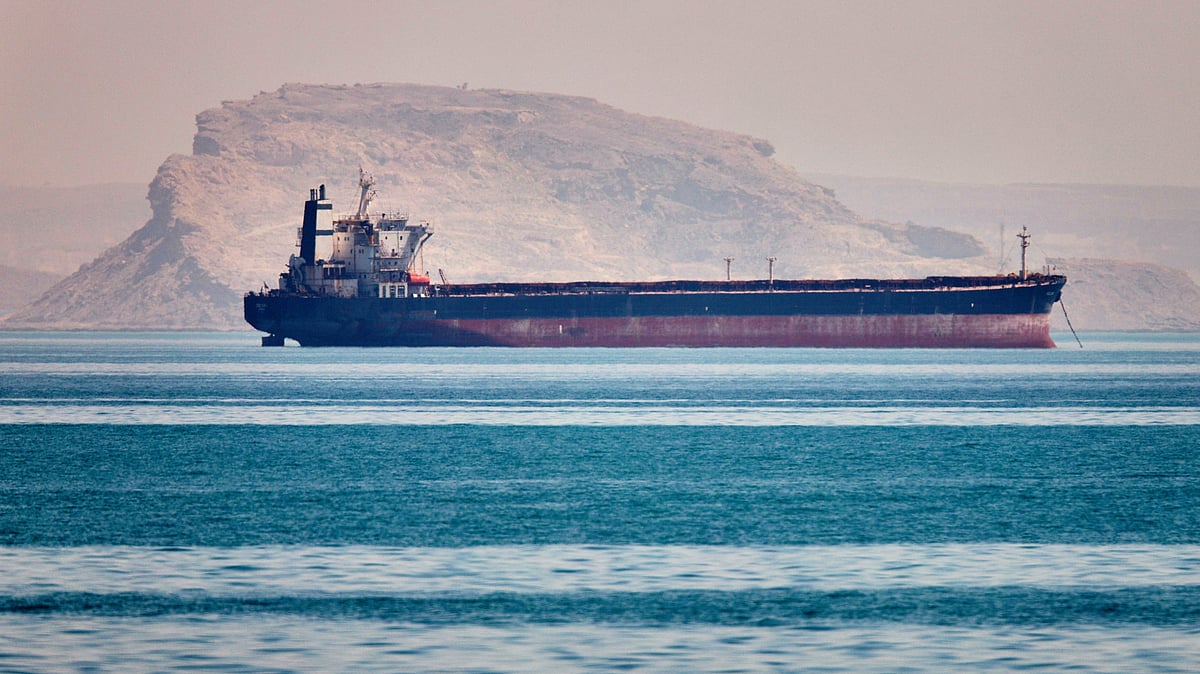
Iran has dug in on its conditions for reopening the strategically vital Strait of Hormuz, declaring that the crucial waterway will remain shut until Washington ends its military campaign, lifts its naval blockade and releases Iranian funds frozen abroad, the Al Jazeera reported.
The hardline stance came as Pakistan’s interior minister Mohsin Naqvi travelled to Tehran in a bid to help broker an end to the widening conflict, while fighting continued across the Gulf and Red Sea.
The latest developments unfolded as the US-Israel war on Iran showed little sign of abating, despite repeated claims by US President Donald Trump that a breakthrough in negotiations was close.
Mohsen Rezaei, Iran’s newly appointed Supreme National Security Council chief, told China’s ambassador to Tehran that Washington must fundamentally change course before the Strait can be reopened.
“As long as the US does not change its behaviour and accept Iran’s conditions, the Strait of Hormuz will not be reopened,” Rezaei said, according to Iranian media.
In a post on X, Rezaei laid out Tehran’s demands, calling for an end to the US naval blockade of Iranian ports, the release of Iran’s frozen assets and a region-wide ceasefire encompassing Gaza and Lebanon.
“Iran’s message is clear,” he wrote, warning that the Strait would remain closed until all of Tehran’s conditions were fulfilled.
There was no immediate response from Washington.
The Strait of Hormuz, through which a significant share of the world’s oil and gas supplies passes, has emerged as one of the most powerful pressure points in the conflict. Tehran’s insistence on linking its reopening to broader political and military concessions has heightened fears of prolonged disruption to global shipping and energy markets.
Trump, meanwhile, has oscillated between threats of devastating escalation and predictions of an imminent diplomatic breakthrough.
In an interview broadcast late Monday, he suggested that the standoff could continue for some time, saying he could simply “bop along” and allow Iran’s economy to deteriorate — or “hit” Tehran “really, really hard”.
“I’m sort of negotiating,” Trump said, describing Iranian negotiators as “very devious”.
Pakistan pushes diplomacy
In Tehran, Iranian President Masoud Pezeshkian and Foreign Minister Abbas Araghchi held talks with Naqvi, with discussions covering political, economic, trade, cultural and security cooperation, according to the Iranian presidency.
Naqvi’s visit comes as Islamabad seeks to mediate between the warring sides and help find a pathway towards ending the conflict.
Qatar, another key mediator, said separately that discussions between Iran and Oman over shipping through the Strait of Hormuz had reached an advanced stage.
“We have heard positive statements from both capitals in the recent couple of days,” Qatari Foreign Ministry spokesman Majed al-Ansari said, adding that Doha’s priorities included reopening the strait, preserving the ceasefire and advancing negotiations.
Iran, however, said any agreement reached with Oman concerning routes through the waterway would not by itself determine whether the Strait of Hormuz is reopened.
Fighting spreads across Gulf and Red Sea
The diplomatic manoeuvring unfolded alongside fresh violence.
US Central Command said a US Navy MH-60 helicopter fired two Hellfire missiles at a Panama-flagged cargo ship in the Strait of Hormuz, disabling its steering gear after the vessel allegedly ignored repeated warnings to stop violating the US naval blockade of Iranian ports.
Further south, in the Bab al-Mandeb Strait, four crew members were killed in a suspected Houthi attack on a small cargo vessel, according to Yemen’s Transport Ministry. Two Yemeni rescuers belonging to an anti-Houthi military group were also killed, Yemen’s coastguard said.
The vessel, the Egyptian-owned Tihamah, would mark the first reported deaths aboard a commercial ship from Yemen’s Iran-aligned Houthi attacks since the war on Iran began in late February.
The Houthi-run Saba news agency separately reported that the group had attacked a Saudi vessel carrying military equipment in the Bab al-Mandeb. The ship was not identified, and Saudi Arabia did not immediately respond.
A widening regional war
The conflict has already claimed thousands of lives since US and Israeli strikes on Iran began on 28 February. Iran has retaliated against US assets and infrastructure in Oman, Jordan, Kuwait, Israel, the United Arab Emirates and Saudi Arabia.
At least 3,527 people have been killed and more than 27,000 wounded in Iran, while at least 18 Americans have died, according to the figures cited in the report.
The war has also spilled deeper into Lebanon, where Iran-backed Hezbollah has attacked Israel and Israeli forces have responded with near-daily strikes.
Lebanon’s health ministry says Israel’s latest military escalation there, which began on 2 March, has killed more than 4,300 people and wounded over 12,000. In Israel, at least 60 people have been killed in Iranian and Hezbollah attacks.
With diplomacy struggling to keep pace with the violence, Iran’s message over Hormuz has sharpened into a stark warning: the strait will stay closed until Tehran’s conditions are met.
Join our official telegram channel (@nationalherald) and stay updated with the latest headlines