World
Iran rejects nuclear enrichment compromise, criticises US role in Hormuz
Foreign ministry spokesperson dismisses western media reports on Iran’s enrichment activities as “baseless speculation”
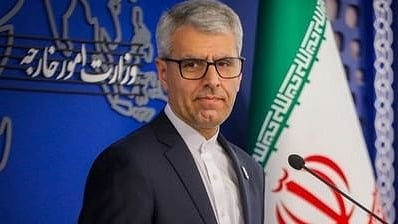
Iran has ruled out any compromise on its nuclear enrichment programme, asserting that its rights are firmly protected under international law and the Nuclear Non-Proliferation Treaty (NPT).
Speaking at a press conference in Tehran, foreign ministry spokesperson Esmaeil Baqaei said Iran’s entitlement to peaceful nuclear energy is “non-negotiable” and cannot be curtailed by external pressure or conflict. He dismissed western media reports on Iran’s enrichment activities as “baseless speculation”, stressing that such rights are neither a concession nor a favour granted by other nations.
“As long as Iran remains a signatory to the NPT, it must be able to fully benefit from the treaty’s provisions,” Baqaei said, according to state news agency IRNA.
Addressing reports about recent Iran-US talks held in Islamabad, he said any potential agreement must first establish a comprehensive framework, adding that discussions on sensitive issues such as enrichment would be premature until broader terms are finalised.
Baqaei also rejected claims that Iran had scaled back its support for Lebanese resistance groups, maintaining that Tehran continues to back what it considers legitimate resistance. He alleged that Israel failed to uphold its commitments under a ceasefire understanding linked to ending the conflict in Lebanon, while Iran has remained consistent in its stance.
He added that under any agreement, if one party violates its commitments, the other is entitled to proportionately reduce its own obligations. Claims that Iran has abandoned resistance fronts in Lebanon are “completely false,” he said.
On regional security, Baqaei opposed a European proposal for a United Nations-led coalition to secure the Strait of Hormuz, asserting that Iran and other regional countries are fully capable of safeguarding the vital waterway.
“Iran has historically been a guardian of security in the Strait of Hormuz,” he said, blaming recent disruptions on what he described as an “imposed war” involving the United States and Israel.
He cautioned that foreign intervention would further destabilise the region, while expressing satisfaction that some European countries have not aligned with what he termed US and Israeli attempts to escalate tensions.
Baqaei reiterated that regional cooperation — not external involvement — is key to maintaining stability in the Strait of Hormuz.
With IANS inputs
Join our official telegram channel (@nationalherald) and stay updated with the latest headlines