World
Iran strike injures US troops as Israel hits nuclear sites
American personnel wounded in Gulf attack as Hormuz aid corridor opens amid mounting casualties across West Asia
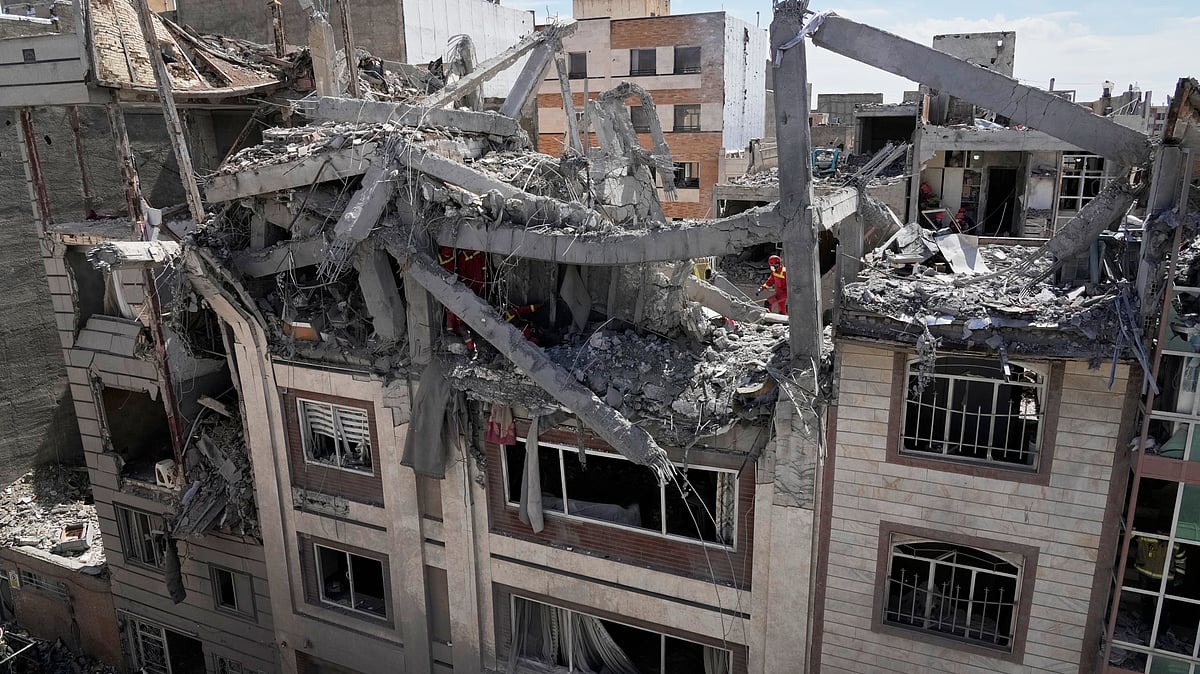
At least 10 US service members were wounded after Iran struck Prince Sultan Air Base in Saudi Arabia, damaging several refuelling aircraft and underscoring the growing risk of direct American involvement in the widening West Asia conflict. Two of the injured personnel were seriously hurt, according to US officials familiar with the matter, who spoke on condition of anonymity because of the sensitivity of the military developments.
The attack came as Israel intensified strikes on Iranian nuclear infrastructure, hours after warning it would “escalate and expand” its campaign against Tehran. Iran vowed retaliation, raising fears that the conflict could spill further across the region and draw in additional global powers.
Iran’s Atomic Energy Organization said the Shahid Khondab Heavy Water Complex in Arak and the Ardakan yellowcake production plant in Yazd province were targeted in Israeli strikes. Iranian state media IRNA reported that the attacks did not cause casualties or risk radioactive contamination, adding that the Arak facility had not been operational since a previous Israeli strike in June 2025.
Yellowcake is a concentrated form of uranium produced after impurities are removed from mined ore, while heavy water is used as a moderator in certain types of nuclear reactors.
Israel’s military said the Yazd facility processes raw materials used in enrichment, describing the strike as a significant blow to Iran’s nuclear programme. Iranian officials, meanwhile, warned that retaliation would follow. Iranian foreign minister Abbas Araghchi said Tehran would exact a “heavy price” for what he described as Israeli crimes.
The Islamic Revolutionary Guard Corps also signalled further escalation. Seyed Majid Moosavi, commander of the IRGC’s Aerospace Force, warned that the response would exceed proportional retaliation, writing on social media that “this time, the equation will no longer be an eye for an eye”.
Late on Friday, Israel said Iran launched missiles towards the country, triggering air raid sirens in Beer Sheba and areas near Israel’s main nuclear research centre, locations that had been targeted in earlier strikes that injured dozens last weekend. Loud explosions were reported in Tel Aviv, where emergency services responded to nearly a dozen impact sites. A man in his 60s was later pronounced dead after sustaining severe injuries, according to Israeli emergency authorities.
Witnesses in eastern Tehran reported partial power outages following airstrikes, indicating the continued intensity of attacks on critical infrastructure. Israel’s Fire and Rescue Service said it was responding to 11 impact sites across the Tel Aviv metropolitan area.
Elsewhere in the region, Saudi Arabia’s defence ministry said it intercepted missiles and drones targeting the capital Riyadh. In Lebanon, the health ministry reported two people were killed in strikes linked to the conflict.
Kuwait said its Shuwaikh Port in Kuwait City and the under-construction Mubarak Al Kabeer Port sustained material damage. The latter project forms part of China’s Belt and Road initiative, making the incident one of the first known cases of Chinese-linked infrastructure in Gulf Arab states being hit during the war. China has continued to import Iranian crude despite the hostilities.
Amid the intensifying conflict, Iran signalled limited cooperation on humanitarian access. Tehran agreed to allow humanitarian aid and agricultural shipments to pass through the Strait of Hormuz after a request from the United Nations, according to Ali Bahreini, Iran’s ambassador to the UN in Geneva.
The Strait of Hormuz is one of the world’s most strategically vital waterways, handling roughly one-fifth of global oil shipments and nearly one-third of fertiliser trade. While global attention has largely focused on disruptions to oil and natural gas supplies, restrictions on fertiliser ingredients could also threaten agricultural output and food security worldwide.
Bahreini said the decision reflects Iran’s commitment to facilitating humanitarian assistance even as it faces ongoing attacks on its nuclear infrastructure. The United Nations earlier announced the creation of a task force to address disruptions to aid flows caused by the war.
Diplomatic engagement has continued alongside military escalation. Officials from several countries, including Pakistan and Turkey, have attempted to broker direct talks between US and Iranian representatives. Separately, foreign ministers from the Group of Seven nations, meeting in France, called for an immediate halt to attacks targeting civilian populations and infrastructure.
The United States has simultaneously moved additional forces towards the region, including approximately 2,500 Marines and at least 1,000 paratroopers from the 82nd Airborne Division, a unit trained to deploy rapidly into hostile territory to secure strategic positions and airfields.
US Secretary of State Marco Rubio said Washington could achieve its objectives without deploying ground troops, but added that the additional deployments were intended to provide “maximum opportunity to adjust to contingencies should they emerge”.
Israel has also deployed the 162nd Division into southern Lebanon to support operations aimed at protecting northern border communities from Hezbollah attacks and dismantling the militant group’s infrastructure, according to the Israeli military.
The UN’s International Organization for Migration estimates that 82,000 civilian buildings in Iran have been damaged in the conflict, including hospitals and homes belonging to roughly 180,000 people. Humanitarian agencies warn that continued fighting could trigger a wider regional displacement crisis.
Jan Egeland, secretary general of the Norwegian Refugee Council, cautioned that prolonged hostilities could result in a major humanitarian emergency, with millions potentially forced to flee across borders in an already fragile region.
Casualties continue to rise across multiple theatres of the conflict. Authorities report more than 1,900 deaths in Iran and over 1,100 in Lebanon. Eighteen people have died in Israel, while four Israeli soldiers have been killed in Lebanon. Two Israeli soldiers were also severely injured in what the military described as an operational accident.
At least 13 American troops have been killed since the conflict intensified, while additional fatalities have been reported in the occupied West Bank and Gulf Arab states. In Iraq, where Iranian-backed militia groups have entered the conflict, 80 members of the security forces have died, underscoring the widening regional footprint of the war.
With AP/PTI inputs
Join our official telegram channel (@nationalherald) and stay updated with the latest headlines