World
Iran strikes US bases in Jordan after deadly attack on Larak Island
Tehran says missile and drone operation targeted military infrastructure after US forces hit Iranian launchers near the Strait of Hormuz
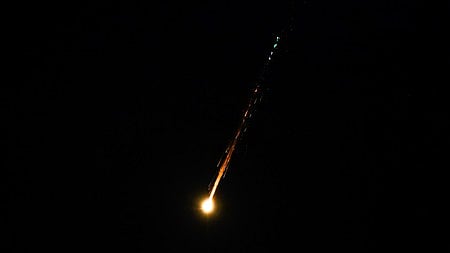
Iran said on Monday that it had launched missiles and drones at two US air bases in Jordan in retaliation for an American attack on Larak Island that reportedly killed and injured Iranian military personnel and civilians.
The Islamic Revolutionary Guard Corps said its combined operation targeted technical and maintenance infrastructure, as well as areas where fighter aircraft were stationed, at the King Hussein and Al-Azraq bases. Iran’s Fars news agency reported that the strikes caused extensive damage, although neither the United States nor Jordan immediately confirmed the claim.
“Aggression and crimes will not solve the enemy’s desperation in attempting to weaken the Islamic Republic’s control over the Strait of Hormuz, and every attack will be met with even more devastating responses,” the IRGC said.
The Iranian action followed US strikes on two IRGC rocket launchers on Larak Island on Sunday night. The operation was the first publicly acknowledged American attack on Iranian territory since late July and risked ending a month-long lull in direct hostilities.
US Central Command spokesperson Tim Hawkins said Iranian forces had been observed preparing to launch rockets carrying sea mines into the Strait of Hormuz.
“Islamic Revolutionary Guard Corps forces were observed preparing to launch rockets with sea mines into Strait of Hormuz,” Hawkins said, adding that the US military was monitoring the area and remained prepared to protect commercial movement through the waterway.
The IRGC described the operation as a “US-Israeli” attack and said several Iranian fighters and civilians had been killed or wounded. In a statement issued through Sepah News, the force pledged “punishment for the aggressor”.
Iran’s semi-official Tasnim news agency, citing preliminary reports, said at least two people were killed and two others injured in what it described as an American drone attack. Explosions were reported on the island on Sunday night.
Larak is a small Iranian island off the coast of Bandar Abbas, situated east of Qeshm Island and south of Hormuz Island. Its position near the Strait of Hormuz gives it strategic importance amid the continuing confrontation over control and security of one of the world’s most important energy corridors.
IRGC spokesperson General Hossein Mohebi described the US strike as a “fatal mistake by the Trump regime during the economic war” and warned that Washington would face military and economic consequences.
The attack came days after the Trump administration indicated that it would place greater emphasis on economic pressure and sanctions in its campaign against Tehran. The renewed military action, however, has raised the prospect of another escalation in a conflict that has continued intermittently for more than six months.
The United States last confirmed attacking targets in Iran on 29 July, when it announced a wave of strikes against dozens of IRGC installations, including coastal surveillance and defence sites. President Donald Trump subsequently said he would suspend further attacks following appeals from Qatar, Saudi Arabia and the United Arab Emirates.
Iranian officials maintain that the country has suffered an estimated $270 billion in direct and indirect losses during the conflict. Despite extensive damage to its military infrastructure and the killing of several senior officials, Tehran has continued to use its missile and drone capabilities, as well as its geographical position beside the Strait of Hormuz, to resist US and Israeli pressure.
Washington said its forces had completed the clearance of sea mines from international shipping routes through the strait last week. Trump has warned that any vessel involved in laying fresh mines would be “immediately and systematically destroyed”, declaring that a “Zero Tolerance policy on mine placement” was in force.
Tehran, however, insists that the United States cannot freely use the passage until it fulfils obligations contained in a memorandum of understanding signed in June. Iran has also been discussing a management framework for the waterway with Oman.
Trump has repeatedly said that the Strait of Hormuz is open, citing the passage of 24 vessels during the previous week. That figure remains far below the approximately 130 ships that crossed the waterway each day before the conflict began.
A US Navy-led multinational coalition said on Sunday that commercial traffic continued at reduced levels. The United Kingdom Maritime Trade Operations agency also reported that an unidentified projectile had struck a tanker north of Khasab, Oman, on Saturday. No casualties or environmental damage were reported, and there was no immediate claim of responsibility.
The Strait of Hormuz ordinarily carries about a fifth of the world’s oil supplies, making any renewed confrontation a threat not only to regional security but also to international energy markets and commercial shipping.
Iran’s retaliation against the US bases demonstrated that Tehran remained capable of responding beyond its borders despite sustained military and economic pressure. It also reinforced Iranian warnings that further attacks on its territory would draw increasingly forceful reprisals.
With IANS inputs
Join our official telegram channel (@nationalherald) and stay updated with the latest headlines