World
US-Iran: Washington seeks honourable exit from war it says isn’t war
Vice-president J.D. Vance avoids the word ‘war’, even as fighting, oil prices and economic pressure persist
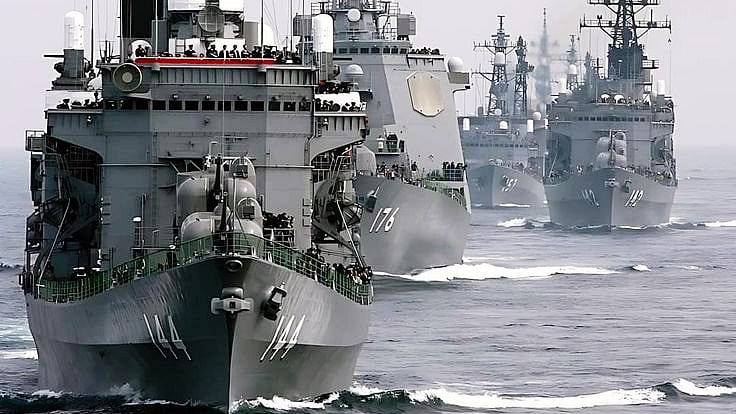
It may be a war, but Washington would rather not call it one — particularly with US voters heading to the polls in November.
Vice-president J.D. Vance on Thursday, 3 September rejected the use of the word 'war' to describe the six-month-old US conflict with Iran and declined to say whether the fighting would be over by the 3 November midterm elections, in which Republicans are fighting to retain their narrow majorities in Congress.
"I wouldn't call it a war," Vance said at a White House briefing when asked whether the fighting could end before the elections. "Right now, there is no active shooting."
The distinction was made on a day when Iran fired at US ally Kuwait as it continued retaliatory strikes following a fresh round of US attacks on Iran earlier this week.
Vance said Washington had a "responsibility" to carry out the strikes because Iran continued to target commercial vessels passing through the Strait of Hormuz. But he resisted setting any timetable for bringing the conflict to an end.
"But when you ask, 'When will this end?' You're asking me a question like, 'When will the Iranians stop shooting at ships?'" Vance said. "I think the reality is, I don't know the answer to that question. You would have to ask the Iranians."
The careful language underscores the bind facing US President Donald Trump: having promised at the outset that the campaign would last only weeks, his administration now needs to find a way to wind it down without looking as though it has lost, backed down or surrendered the strategic gains it claims to have made.
Calling it a war would make the problem harder. So would ending one. The conflict has already become politically and economically costly. Gasoline prices have risen, inflationary pressures have intensified and the administration is confronting an increasingly awkward question ahead of the midterms: how does Washington declare victory when there is no obvious victory to declare?
The White House has also faced scrutiny over how it counts US casualties. In July, four fallen soldiers and dozens of wounded troops were reclassified in the Pentagon's Defence Casualty Analysis System under a new category, 'overseas operations', after initially being included in the totals for the war.
The Strait of Hormuz problem
Oil provides perhaps the clearest measure of the gap between Washington's claims and reality. Brent crude was trading above USD 95 a barrel on Thursday, compared with about USD 72 a barrel the day before the conflict began.
Trump and his aides have nevertheless insisted that the US Navy has restored control over the Strait of Hormuz, through which about a fifth of the world's oil flowed before the conflict. The administration says oil shipments through the Gulf have returned close to pre-war levels.
Vance said the US Navy had escorted about 15 million barrels of oil on Wednesday. Energy secretary Chris Wright said 17 million barrels had passed through the strait with US assistance on Monday. Before the conflict, roughly 20 million barrels a day moved through the waterway.
Independent shipping data, however, paints a less reassuring picture. Lloyd's List Intelligence recorded 102 transits last week and 126 the week before, against 130 or more per day before the war. TankerTrackers.com estimates that an average of about 5 million barrels a day has exited the strait over the past 28 days, with other estimates ranging between 2 million and 6 million barrels.
The administration's insistence that the oil is flowing may therefore be doing another job besides reassuring the public: buying Washington time. "The administration is still jawboning oil markets," said Rosemary Kelanic, Middle East director at Defense Priorities. The claims of dramatically increased oil flows, she said, appear intended to prevent prices from rising further "so that they can extend the timeline before there's a worse price spike".
Finding a way out without looking like one
Trump's approach has increasingly combined economic pressure on Iran with threats of further military escalation, while repeatedly signalling that progress towards a settlement may be possible.
That balancing act has become particularly visible whenever markets have turned nervous. Trump has alternated between announcing progress in negotiations and backing away from threats of military action, with global markets responding quickly to his signals of either escalation or peace.
The administration continues to portray the US-Israeli campaign as devastating for Iran. Trump has repeatedly highlighted the damage inflicted on Iran's navy and air force, while Iranian officials have estimated direct and indirect losses at USD 270 billion.
Israeli strikes during the first weeks of the conflict also decimated much of Iran's leadership structure, including its Supreme Leader Ayatollah Ali Khamenei.
Yet Iran retains a potent source of leverage: the Strait of Hormuz and the ability to disrupt shipping through it and threaten US allies in the Gulf.
Washington has responded by arguing that the strait's importance will diminish anyway. Treasury secretary Scott Bessent said this week that it would become a "worthless piece of water" within two years as new pipelines bypass the chokepoint.
Trump on Thursday also highlighted a report about Syria's plans to develop the Mediterranean port of Baniyas as a westward route for Gulf exports.
Iran and Oman, meanwhile, have been discussing a phased arrangement for jointly managing shipping through the Strait of Hormuz — potentially offering another route towards reducing the confrontation without either side having to openly admit it is backing down.
That may be the real diplomatic challenge for Washington: not simply ending the fighting, but constructing an exit that can be presented as a victory.
For now, however, the administration appears unwilling either to return to an all-out bombardment of Iran or to make concessions that could allow Tehran to claim it has regained control over the strait.
"I find it hard to believe the president would agree to anything that hands back any modicum of IRGC control over the strait that has been wrested away," said Richard Goldberg, a former senior adviser on Iran policy in Trump's first administration.
Aaron David Miller, a senior fellow at the Carnegie Endowment for International Peace, said Iran did not appear ready to "let Trump out of the box", despite the severe damage inflicted on its economy. Trump, Miller said, appears to have settled into a holding pattern ahead of the midterms — avoiding both a return to full-scale bombardment and concessions to Tehran. "The White House doesn't want a massive war, and they don't want to be seen as offering massive concessions," Miller said. "The tack they are taking avoids both of those things."
For a conflict Washington does not want to call a war, that may be as close to an exit strategy as it has for now.
With AP/PTI inputs
Join our official telegram channel (@nationalherald) and stay updated with the latest headlines