World
Israel kills seven in Gaza, says Rafah crossing to partly reopen
The latest deaths, another truce breach, come after Israel says Hamas wounded four soldiers in Rafah
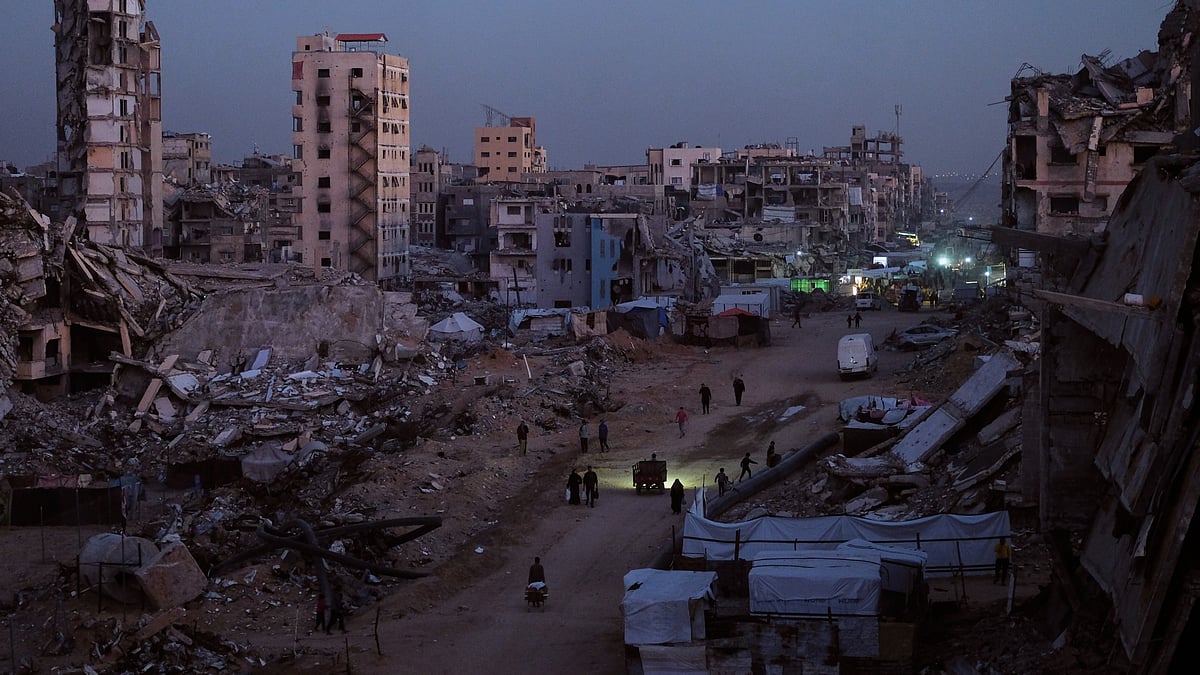
Israel’s military has taken seven Palestinian lives — including those of two young children — in new strikes that swept across Gaza, even as it proclaims plans to reopen the Rafah crossing only as a narrow passage for those seeking to flee the battered enclave, the Al Jazeera reported.
The latest deaths, marking yet another breach of the fragile, US-brokered ceasefire, came shortly after the Israeli army claimed Hamas fighters had attacked and wounded four soldiers in southern Rafah, near Gaza’s border with Egypt.
In the north, two Palestinians were shot dead in Gaza City’s battered Zeitoun neighbourhood. Farther south, in the coastal expanse of al-Mawasi — once a refuge for displaced families — five more were killed when Israeli strikes tore through the tented settlement. The attack sparked a fierce blaze, swallowing clusters of tents in flames and smoke, the Al Jazeera reported.
“Five citizens, including two children, killed and others injured, some seriously, as a result of an Israeli missile strike,” Mahmoud Basal of Gaza’s civil defence told Al Jazeera.
At the Kuwaiti Hospital, doctors confirmed the slain children were just eight and ten years old. More than 30 others were wounded — several with severe burns, their bodies charred by the firestorm.
Hamas condemned the strike as a “war crime”, accusing Israel of shredding the ceasefire terms and urging mediators — Egypt, Qatar, and the United States — to rein in the Israeli military. Gaza’s authorities say Israel has violated the truce at least 591 times since it began on 10 October, killing 360 Palestinians and wounding nearly a thousand more.
In a separate development, Israel said it had received from Palestinian armed groups — via the International Committee of the Red Cross — the remains of what might be one of the two captives still believed to be in Gaza. Hours earlier, Prime Minister Benjamin Netanyahu had revealed that forensic tests on partial remains returned the previous day did not match either of the missing captives.
Since the ceasefire began, Hamas has returned 20 living captives and 26 bodies, while Israel has freed roughly 2,000 Palestinian detainees and prisoners. These exchanges form a key pillar of the first stage of former US President Donald Trump’s 20-point plan to end the war — a phase that also requires Israel to allow humanitarian aid into Gaza and reopen Rafah “in both directions”.
Yet Israel continues to throttle aid deliveries. And on Wednesday, COGAT — the Israeli military body overseeing Palestinian affairs — declared that the Rafah crossing would reopen “exclusively” to allow Gaza residents to leave for Egypt, pending security approval. The announcement stirred immediate alarm among Palestinians who fear such a move could accelerate their permanent displacement — a prospect openly championed by several far-right ministers in Netanyahu’s government.
Egypt quickly rejected any plan that would turn Rafah into a one-way exit. Cairo insisted the crossing must open in both directions, in line with the current ceasefire framework, and denied coordinating any such arrangement with Israel. Former Egyptian diplomat Hussein Haridy said Egypt remains bound by UN Security Council Resolution 2803, which obliges the opening of all crossings and lays the groundwork for future joint management of border posts with the Palestinian Authority and the European Union.
Meanwhile, the United Nations reiterated its call for a full reopening of Rafah — for aid, for humanitarian staff, and for the safe, voluntary movement of civilians. “If Palestinians wish to leave, they must be able to do so freely. And if they wish to return, they must be able to return,” said UN spokesman Stephane Dujarric.
President Trump, however, painted a rosier picture, insisting the ceasefire was “going along well” and promising that the next phase of his peace plan would unfold “very soon”. The later stages envision an international stabilisation force, a technocratic Palestinian government, and eventually the disarmament of Hamas — a scenario the group has flatly rejected, saying it will not abandon its weapons while Israeli occupation persists.
The humanitarian crisis deepens in the meantime. The World Health Organisation estimates that more than 8,000 critically ill or injured Palestinians have been evacuated from Gaza since October 2023 — but over 16,500 still require urgent medical transfer. Doctors Without Borders warns that the need is “really huge”, noting that while more than 30 countries have accepted patients, only a handful — chiefly Egypt and the UAE — have taken in significant numbers.
The war’s toll continues to rise at a staggering pace: Israel’s assault on Gaza has killed at least 70,117 Palestinians and wounded 170,999 since October 2023. In Israel, 1,139 people were killed and about 200 taken captive during the Hamas-led attack on 7 October.
As the ceasefire strains under the weight of new violations and political manoeuvring, Gaza remains suspended between hope and devastation — its people trapped in a landscape of grief, uncertainty, and the distant promise of a peace that has yet to take shape.
Join our official telegram channel (@nationalherald) and stay updated with the latest headlines