World
Israel strikes kill 10 in Gaza as US unveils phase two of ceasefire deal
A 16-year-old youth fell amid the deadly rains of fire that struck the homes of the al-Hawli and al-Jarou families in Deir el-Balah
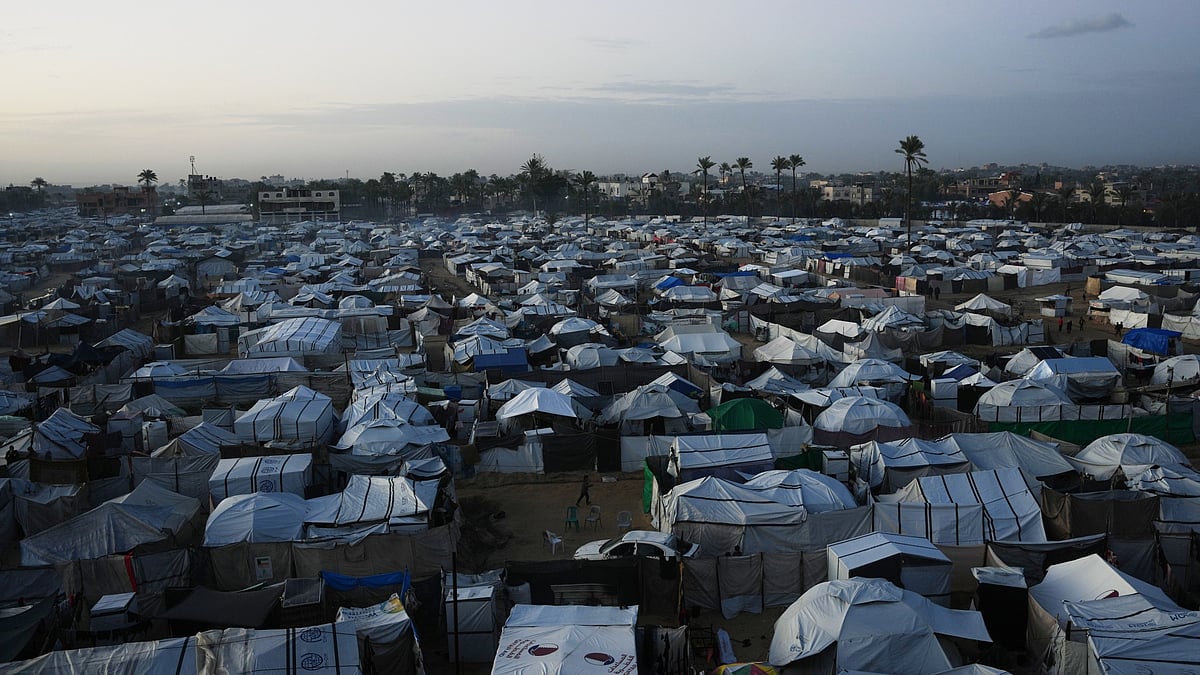
A new chapter in the Gaza conflict unfolded on Thursday as Israeli strikes claimed the lives of at least ten Palestinians, even as the United States heralded the launch of phase two of a 20-point ceasefire plan with Hamas aimed at ending hostilities and rebuilding the war-torn enclave, the Al Jazeera reported.
Among the victims was a 16-year-old minor, caught in the deadly bombardment of two homes in Deir el-Balah belonging to the al-Hawli and al-Jarou families. The Israeli military identified one of the slain, Muhammad al-Hawli, as a commander in Hamas’s Qassam Brigades, underscoring the fraught nature of the fragile ceasefire.
Al Jazeera reported that the attack highlighted Israel’s firm stance on defining the terms of the next phase, which envisions a Palestinian technocratic administration overseen by an international “Board of Peace”, while leaving the specter of escalation looming ominously over the enclave.
Elsewhere in Gaza, violence continued to ripple through the densely populated territory. Israeli forces reportedly shot one person near Al-Alam roundabout west of Rafah, targeted a police post near Al-Nablusi Junction, and struck the Al-Khatib family home in the Nuseirat refugee camp, killing two more. Hamas condemned the targeting of al-Hawli’s home as a “despicable crime”, decrying what it called Prime Minister Benjamin Netanyahu’s contempt for the October ceasefire, though it has not officially confirmed the death of its commander.
Since the ceasefire took effect, at least 451 Palestinians, including over 100 children, have been killed. Israel has ordered the evacuation of more than half of Gaza, with troops stationed behind a moving “yellow line”, while three Israeli soldiers have also lost their lives in the same period.
The US, seeking to shepherd the fragile truce into a more durable framework, announced through special envoy Steve Witkoff that phase two of Trump’s 20-point plan has begun. This next stage seeks to move from mere ceasefire to demilitarisation, technocratic governance, and reconstruction, with the full disarmament of unauthorized personnel, particularly Hamas fighters, forming a cornerstone of the initiative. An International Stabilisation Force is slated to help secure Gaza and train vetted Palestinian police units.
A 15-member technocratic committee, the National Committee for the Administration of Gaza, will manage day-to-day governance under the oversight of the Board of Peace. Former Palestinian Authority deputy minister Ali Shaath has been appointed to lead the committee, currently meeting in Egypt to prepare for its entry into Gaza. Shaath emphasised that the body would rely on “brains rather than weapons” and avoid coordination with armed groups.
Senior Hamas official Bassem Naim welcomed the committee as a “step in the right direction”, signaling the group’s readiness to hand over administrative control. “This is crucial for consolidating the ceasefire, preventing a return to war, addressing the catastrophic humanitarian crisis, and preparing for comprehensive reconstruction,” he said, calling on mediators and the international community to empower the committee.
The US-proposed Board of Peace, expected to be led by Bulgarian diplomat Nickolay Mladenov, is set to oversee the committee’s work on the ground. Invitations to potential members, handpicked by Trump, were reportedly sent out on Wednesday.
The first phase of the plan, launched on 10 October, included a complete ceasefire, the exchange of Israeli captives for Palestinian prisoners, and a surge of humanitarian aid. Yet with Israel maintaining tight control over the flow of supplies, Gaza’s more than 2 million residents are struggling to endure the winter in damaged homes and makeshift shelters.
UNOPS head Jorge Moreira da Silva described conditions as “inhumane” and urged rapid reconstruction, highlighting the $52 billion required to restore the territory, according to assessments by the World Bank, UN, and European Commission. Shaath, detailing the monumental challenges ahead, spoke of 60 million tonnes of rubble, scattered unexploded ordnance, hazardous waste, and human remains, envisioning the use of bulldozers to transform the devastation into new land and hope.
As the fragile truce moves into its second phase, Gaza remains a land scarred by war, yet the promise of governance, reconstruction, and cautious hope hangs delicately in the air — a testament to the region’s resilience amid centuries of conflict.
Join our official telegram channel (@nationalherald) and stay updated with the latest headlines