World
London Diary: Britain still runs on cheap foreign labour
Research shows four out of every five new jobs created in Britain since 2014 went to overseas workers rather than British ones
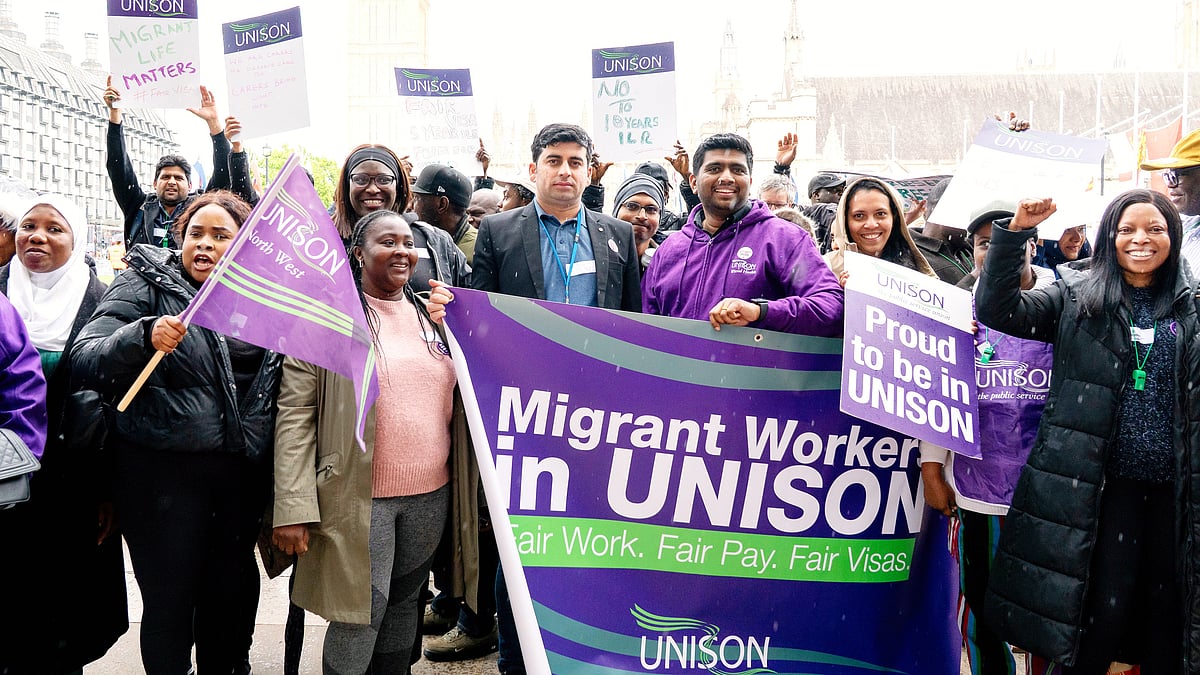
For all the brave rhetoric about cracking down on foreign workers accused of ‘stealing’ British jobs, the bland truth is that Britain cannot do without them. Primarily because they come cheap but also because in many critical areas such as social care and high-tech there’s an acute shortage of local skilled labour.
Research has revealed that four out of every five new jobs created in Britain since 2014 went to overseas workers rather than British citizens.
Of the 3.7 million jobs added to the workforce in Britain in the past 12 years, some 2.5 million went to foreign workers — an overwhelming majority from outside the European Union. A study by the Centre for Social Justice think tank found that most of them were employed in the hospitality, retail and social care sectors.
This has pushed many more native Brits into an already bloated welfare system that doles out billions of pounds as unemployment allowance to those out of work.
With the cost of benefits set to reach £136.1bn by next year (according to official figures) the government is under pressure to reduce the load by taking harsher measures to keep out foreign workers.
The findings showed an economic crisis which “extends beyond the benefit system” said Sir Iain Duncan Smith, the former Conservative party leader who led the study. “Ministers have repeatedly pulled the easy lever of immigration rather than providing a better deal for left-behind communities.”
A separate report from the Migration Observatory at the University of Oxford said some 3.4 million people from outside the EU migrated to Britain between 2021 and 2025 during the ‘Boriswave’ — a surge in migration which followed the post-Brexit policies of the then Prime Minister Boris Johnson.
Ironically, at the time, Brexit was touted as a magic wand to stop immigration and save ‘British jobs for British workers’.
Meanwhile, new home secretary Shabana Mahmood has announced a series of even more stringent measures to discourage immigration. These include doubling the standard time it takes to qualify for indefinite leave to remain, which grants foreign nationals the right to live, work, study and claim benefits in the UK permanently.
Will she succeed in achieving what her predecessors failed to achieve?
****
Class still matters in ‘meritorious’ Britain
Tony Blair, that great cheerleader for modern Britain, famously declared that its notorious class system was dead (“We’re all middle class now”) and henceforth only meritocracy would rule.
A quarter of a century later, it seems that he spoke a bit too early as the well-oiled ‘old school tie’ system is still very much alive and flourishing, says a new report.
‘The old adage of who you know, not what you know, being crucial in finding a job is as true as ever for graduates’, said The Times, citing research by Graduate Futures Institute, which surveyed university careers advisers.
It would appear that social networking rather than professional competence continues to drive the graduate employment market. More than three quarters of respondents — 79 per cent — attributed their difficulty in finding a suitable job to a lack of their ‘social capital’. As many as 97 per cent said students from under-represented groups, such as refugees, carers or those estranged from their families, faced disadvantages in finding employment compared with their more well-heeled classmates.
A ‘meritorious’ Britain? Really, Mr Blair?
****
Partition memories
ilmmaker Meera Syal has recalled her father’s first visit since Partition to his childhood home in Pakistan in 1997 for the 50th anniversary of that traumatic event.
Speaking at the Cheltenham Literary Festival about her memoir, Vigilauntie, Syal described being led upstairs by the welcoming Muslim family who lived there. Her father seemed confused, she said, as the rooms felt much smaller than he remembered. This is when the host family confessed, “We’ve had a row with our relatives and partitioned the house.”
****
The two faces of Jeffrey Archer
A lot of important people have said a lot of nice things about Jeffrey Archer, who died on 5 October. However, many have also been critical, citing their personal experiences. Some have highlighted his intolerance of any criticism of his work and his “economical relationship with truth”.
Charles Moore, the noted British journalist and former editor of The Telegraph who knew him rather too well, has written about Archer’s penchant for self-publicity.
In a piece in The Spectator, Moore reveals that during a book tour in America, Archer managed to get hold of the person who was to interview him for a TV network and fed him some handy questions to ask.
Came the day and the interviewer asked: “Is it Jeffrey or Lord Archer?”
“Oh, just Jeffrey,” Archer replied.
The host then asked: “They say Margaret Thatcher loved your books?”
Archer blushingly said: “How did you know that?”
And was the Queen a fan?
“I ought not to comment.”
American viewers, we are told, were suitably impressed by such modesty.
And finally, former chancellor of the exchequer and home secretary Sajjid Javid recently happened to drop by Parliament House — once his second home — to attend an event. A young parliamentary aide met him and brightly said, “I’m just going to show you around. Have you been to Parliament before?”
Oh, just “once or twice” was Javid’s jesting reply. To which the young woman replied, in all earnest: “And did you like it?”
Join our official telegram channel (@nationalherald) and stay updated with the latest headlines