World
Measles vaccine shortfall reveals deepening weaknesses in Bangladesh’s health system
Falling immunisation rates and workforce gaps raise concerns over governance and policy missteps
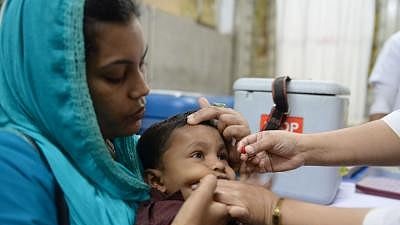
Bangladesh’s public health system is facing mounting strain, with a recent measles vaccine shortage exposing broader structural and administrative weaknesses, according to a report published on Friday.
The report highlights a sharp decline in national immunisation coverage, which has dropped to around 60 per cent in 2025 — a significant fall from the 85 to 92 per cent range recorded between 2010 and 2022. Health experts warn that this reversal threatens to undo decades of progress in controlling vaccine-preventable diseases.
For years, Bangladesh’s Expanded Programme on Immunisation (EPI) had been regarded as a model for developing nations. Built on consistent government backing, international partnerships, and an extensive network of frontline health workers, the programme achieved high vaccination rates and reduced disease outbreaks. However, recent disruptions suggest that this success is now at risk.
The report argues that the current crisis extends beyond logistical setbacks, pointing instead to systemic governance failures. Effective immunisation programmes depend on coordinated procurement, reliable funding, stable leadership, and a functioning workforce. Disruptions across these areas, particularly when occurring simultaneously, can severely undermine outcomes.
A key concern raised is the dismantling of the Health, Population and Nutrition Sector Programme (HPNSP) in 2025, which had previously provided a structured framework for vaccine procurement.
The absence of a well-planned transition strategy has reportedly led to operational gaps, with little indication that the decision was supported by thorough technical consultation or risk assessment.
Staff shortages have further weakened the system. Nearly 45 per cent of field-level EPI positions remain unfilled across 37 districts, affecting services at approximately 150,000 vaccination centres nationwide. In addition, reports indicate that workers responsible for maintaining the vaccine cold chain have faced delays in payment, leading to unrest and strikes.
The report stresses that without a stable and adequately supported workforce, maintaining immunisation coverage will remain a challenge. It calls for urgent measures to restore institutional stability, streamline procurement systems, fill staffing gaps, and strengthen research and disease surveillance.
Rebuilding public confidence is also seen as essential, with consistent communication identified as a key step in regaining trust in the vaccination system.
Experts caution that unless swift corrective action is taken, the current pressures could escalate into a more severe public health crisis, with significant human and economic costs.
With IANS inputs
Join our official telegram channel (@nationalherald) and stay updated with the latest headlines