World
Nepal marks 13th day of Rasuwa disaster with national mourning
National flags fly at half-mast as nearly 5,000 people remain missing 13 days after the Himalayan disaster
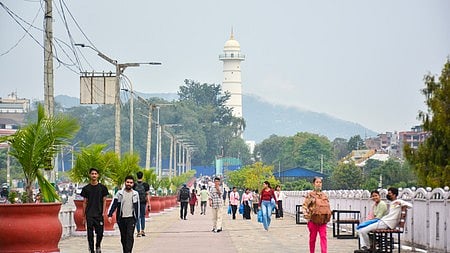
Nepal is observing a National Day of Mourning on Monday, 7th September in memory of more than 1,340 people killed in the devastating flash floods that struck Rasuwa and neighbouring districts last month.
The commemoration was held on the 13th day after the 26th of August disaster, reflecting the Hindu tradition of performing rituals to honour the dead and mark the end of the formal mourning period.
National flags were flown at half-mast at government offices across Nepal and the country’s diplomatic missions overseas, the Ministry of Home Affairs said.
Nearly 5,000 people, including 589 foreign nationals, remain unaccounted for after an ice-rock avalanche in the high Himalayas triggered destructive flooding along the Bhotekoshi and Trishuli river systems.
Rasuwa, which borders China, was among the areas worst affected. The floods also caused widespread devastation in Nuwakot, Dhading and other districts across northern and central Nepal.
The disaster destroyed homes, roads, bridges, government buildings, hydropower facilities and other critical infrastructure. At least 32,000 families have been displaced, while approximately 7,500 houses have been completely destroyed. Livelihoods and access to essential services have also been severely disrupted.
Search-and-rescue operations are continuing across the affected areas, including inside tunnels at hydropower projects. Security personnel and specialist international teams are working to trace missing people, rescue those feared trapped and recover bodies.
The government has deployed the Nepali Army, Nepal Police, Armed Police Force and other agencies for rescue, relief and recovery operations. Specialist teams from neighbouring countries, including India, have also joined efforts to reach people believed to be trapped in hydropower tunnels.
Separately, the Nepalese government has declared Tuesday a public holiday to commemorate Gen Z Martyrs’ Day.
The observance marks the anniversary of the Gen Z-led protests that erupted in Kathmandu last year against restrictions on social media, alleged corruption and the ostentatious lifestyles associated with the children of influential politicians and officials.
The agitation turned violent after security forces opened fire near the Parliament building, killing 72 people, including children. The unrest forced then-prime minister K P Sharma Oli to resign and led to the dissolution of Parliament and the collapse of the coalition government formed by the CPN-UML and Nepali Congress.
A caretaker administration was subsequently installed, followed by parliamentary elections on 5th of March this year. The Gen Z-backed Rastriya Swatantra Party, led by Rabi Lamichhane, secured an almost two-thirds majority, paving the way for former Kathmandu mayor Balendra Shah to become Prime Minister.
With PTI inputs
Join our official telegram channel (@nationalherald) and stay updated with the latest headlines