World
Nepal polls: Rapper-politician Balendra Shah’s RSP heads for sweeping win
New party surges ahead in first election since Gen Z protests toppled Oli government
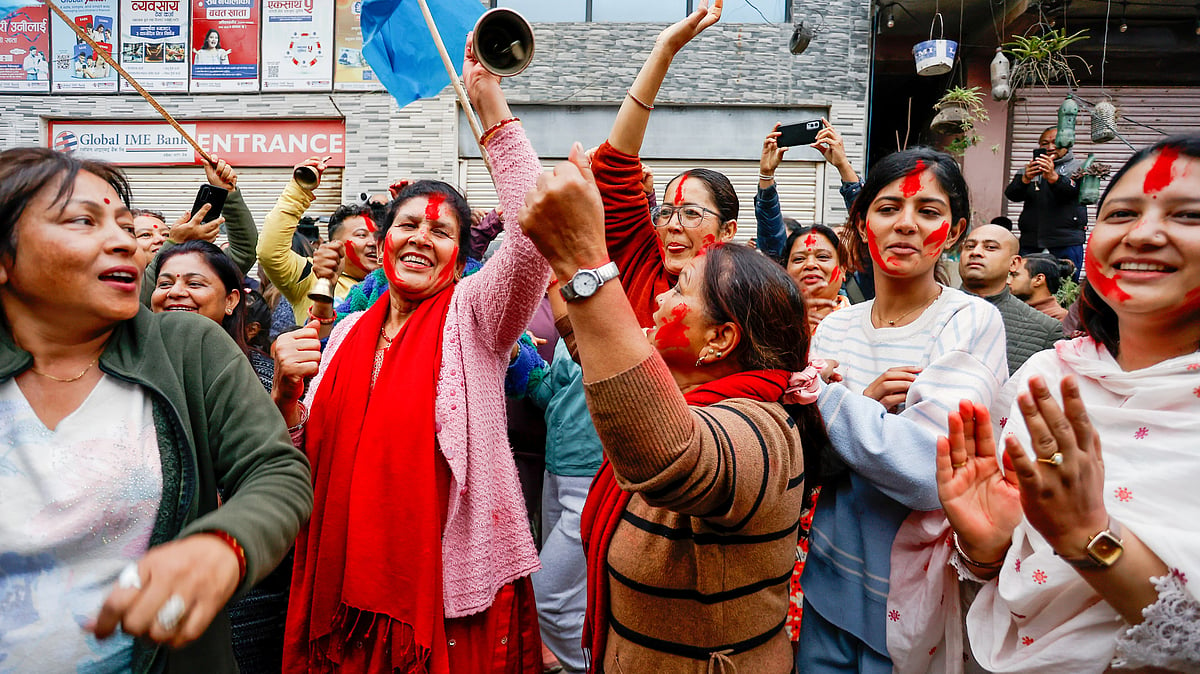
Rapper-turned-politician Balendra Shah’s Rastriya Swatantra Party (RSP), founded by Rabi Lamichhane, was on Saturday heading towards a sweeping victory in Nepal’s first general election since last year’s Gen Z-led protests, dramatically upending the dominance of the country’s established political parties.
According to the latest figures released by Nepal’s Election Commission, the RSP has won 18 seats and is leading in 99 others, putting the newly formed party on course for a commanding position in the 275-member House of Representatives.
The result marks a major political shift in the Himalayan nation, where traditional parties such as the Nepali Congress and the CPN-UML have dominated electoral politics for decades.
So far, the Nepali Congress has won four seats and is leading in 11 constituencies, while the CPN-UML has secured one seat and is ahead in 11 others. The Nepali Communist Party has won two seats and is leading in 10, while the Shram Sanskriti Party is ahead in three constituencies, down from six earlier.
Election watched closely by India
The election is being closely monitored in New Delhi, which hopes the outcome will produce a stable government in the politically fragile neighbour.
India’s Ministry of External Affairs said earlier this week that it looked forward to working with the new leadership in Kathmandu. “We look forward to working with the new Government of Nepal to further build on the robust multifaceted ties between our two countries and peoples for mutual benefit,” MEA spokesperson Randhir Jaiswal said in Delhi on Thursday.
He added that India has “consistently supported peace, progress and stability in Nepal” and had provided logistical supplies for the elections at the request of the Nepali government.
First election after youth-led protests
The polls were the first since a wave of Gen Z-led protests last September forced the resignation of Prime Minister K P Sharma Oli, who had been heading a coalition government backed by the Nepali Congress with nearly two-thirds majority support in parliament.
The protests, led largely by young voters, erupted over issues such as corruption, poor governance, entrenched nepotism and the lack of generational change in Nepal’s political leadership.
Following Oli’s ouster, President Ramchandra Paudel dissolved the House of Representatives on September 12 and appointed Sushila Karki as caretaker prime minister until fresh elections could be held.
Turnout and electoral system
Around 18.9 million voters were eligible to vote in the election to choose 275 members of the House of Representatives, with turnout estimated at around 60 per cent when polling was held on Thursday.
Of the total seats, 165 are elected through direct voting, while the remaining 110 are allocated through a proportional representation system.
Nearly 3,400 candidates contested the directly elected seats, while 3,135 candidates were in the fray for the proportional representation positions.
With counting still under way, the RSP’s strong showing suggests the youth-driven political upheaval that shook Nepal last year may now be translating into a major electoral realignment.
With PTI inputs
Join our official telegram channel (@nationalherald) and stay updated with the latest headlines