World
North Korea tests engine for missiles apparently capable of targeting US mainland
State media says upgraded solid-fuel engine boosts 'strategic military muscle'; experts flag missing data, possible exaggeration
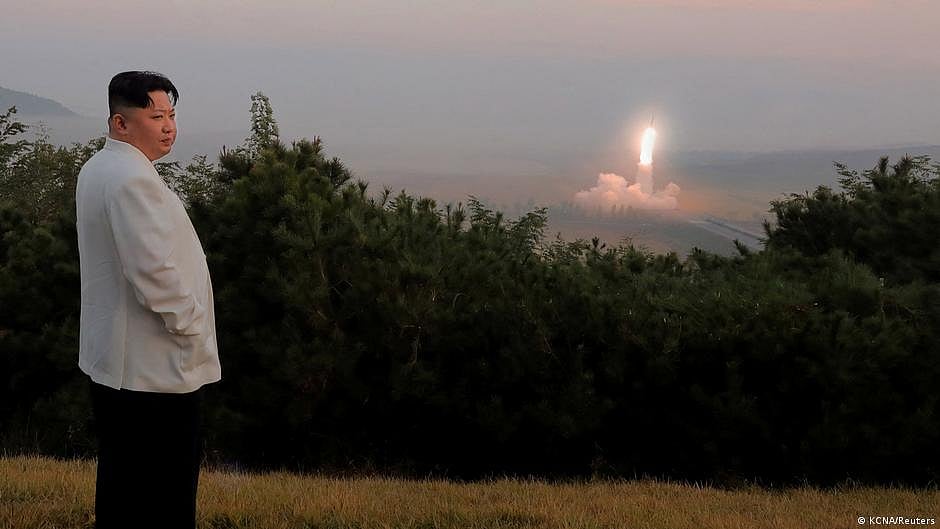
North Korean leader Kim Jong Un oversaw a test of an upgraded high-thrust solid-fuel engine for weapons, state media reported, in a move seen as part of efforts to strengthen the country’s long-range strike capabilities.
According to the Korean Central News Agency (KCNA), the ground jet test involved an engine built using composite carbon fibre material and capable of generating a maximum thrust of 2,500 kilotons, up from about 1,970 kilotons reported in a similar test in September.
KCNA said the development aligns with Pyongyang’s five-year arms modernisation plan aimed at enhancing “strategic strike means”, a term used for nuclear-capable ballistic missiles, including intercontinental ballistic missiles (ICBMs).
Kim described the latest test as having “great significance” in elevating the country’s strategic military capabilities, according to KCNA. The report did not specify the exact date or location of the test.
Experts question claims, cite data gaps
Some analysts expressed caution over North Korea’s claims, noting the absence of key technical details.
Lee Choon Geun, an honorary research fellow at the Science and Technology Policy Institute in South Korea, said the report lacked information such as total combustion time, which is critical to assessing engine performance.
He said the announcement could be “bluffing” or reflect ongoing development challenges, including possible delays in the country’s solid-fuel engine programme.
Lee added that North Korea may be attempting to develop a more advanced engine, potentially with external technical assistance, amid deepening military ties with Russia in recent years.
Push for advanced missile systems
North Korea has in recent years conducted multiple tests of ICBMs—long-range ballistic missiles designed to deliver nuclear warheads over intercontinental distances—demonstrating the potential to reach the United States mainland.
Solid-fuel ICBMs offer operational advantages over older liquid-fuel systems, as they can be launched more quickly and are harder to detect prior to liftoff.
Experts said improved engine performance could enable North Korea to build smaller and more mobile missile systems, including submarine-launched platforms or road-mobile launchers.
Some analysts also linked the push for higher thrust engines to efforts to develop multiple independently targetable reentry vehicles (MIRVs), which allow a single missile to carry multiple warheads.
Ongoing nuclear and missile expansion
North Korea has accelerated its weapons development since the collapse of denuclearisation talks with the United States in 2019 during diplomacy involving then US President Donald Trump.
While Pyongyang has at times indicated openness to dialogue, it has maintained that Washington must first drop demands for unilateral nuclear disarmament.
Past North Korean claims on weapons tests have drawn scepticism. In 2024, the country said it had successfully tested a multi-warhead missile, but South Korea dismissed the claim, suggesting the launch had failed.
Some foreign experts continue to argue that North Korea faces technical hurdles in building a fully operational ICBM, particularly in ensuring warheads can survive atmospheric reentry. Others contend that the country’s decades-long weapons programme may have already overcome such challenges.
The latest engine test is likely to be closely monitored by regional powers and the United States, given its potential implications for North Korea’s missile capabilities and regional security dynamics.
Join our official telegram channel (@nationalherald) and stay updated with the latest headlines