World
Repeated fires expose safety crisis in Rohingya refugee camps in Bangladesh
Aid shortfalls stall fire-resistant shelter plans as overcrowding and fragile housing leave settlements highly vulnerable
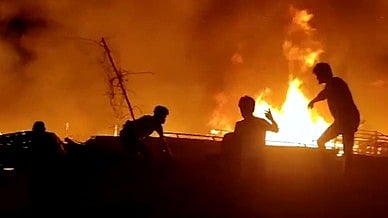
Bangladesh’s management of fire safety in the Rohingya refugee camps has come under scrutiny as recurring blazes continue to devastate the overcrowded settlements in the country’s southeast.
A recent report by Global Voices highlighted what it described as a persistent cycle of disasters in the camps located in Cox’s Bazar refugee camps, the world’s largest refugee settlement housing nearly one million Rohingya refugees.
According to the report, at least 2,425 fires were recorded in the camps between May 2018 and December 2025. The incidents affected more than 100,000 people and destroyed over 20,000 shelters, illustrating what the report described as a pattern of repeated emergencies rather than isolated accidents.
Humanitarian organisations have largely focused on responding to fires after they occur, the report said, while the structural conditions that make such disasters inevitable remain unresolved.
Plans to construct 50,000 semi-permanent, fire-resistant shelters had been announced earlier with considerable attention. However, the proposal has stalled following international aid reductions in early 2025, leaving the project without sufficient funding.
The camps are characterised by extremely dense living conditions and highly flammable building materials. Most shelters are made from bamboo frames covered with tarpaulin sheets and secured with plastic ropes, with no fire-resistant elements.
Population density in some sections of the settlement exceeds 95,000 people per square kilometre, the report noted. Families typically cook with open flames inside tightly packed structures, increasing the risk of fires spreading rapidly, particularly during the dry winter months.
Lance Bonneau, chief of mission in Bangladesh for the International Organization for Migration, said fires in such crowded environments have far-reaching consequences.
“When fires strike overcrowded camp settings, the impact extends far beyond damaged infrastructure,” Bonneau said, noting that families often lose homes, essential belongings and access to basic services.
A fire in January 2026 displaced more than 2,100 people in the camps, prompting emergency relief efforts from humanitarian groups.
Kaiser Rejve, head of programmes at CARE Bangladesh, said the organisation planned to incorporate fire-safety training into shelter maintenance and upgrade programmes to raise awareness among residents.
Despite such initiatives, the report argued that the underlying vulnerability of the camps stems from broader policy constraints. The Rohingya refugees have lived in the settlements for more than eight years, yet the Government of Bangladesh continues to view the camps as temporary arrangements.
This stance has made large-scale, long-term infrastructure investments politically sensitive, leaving the camps dependent on short-term humanitarian assistance while the risk of further fires persists.
With IANS inputs
Join our official telegram channel (@nationalherald) and stay updated with the latest headlines