World
Russia says New START obligations no longer apply as nuclear arms pact expires
End of last US–Russia arms control treaty heightens fears of renewed nuclear arms race
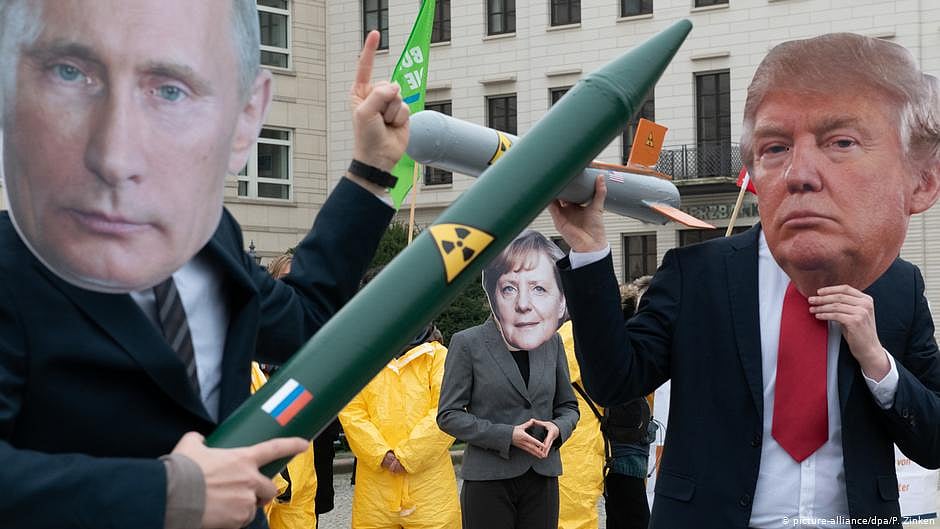
Russia has said it now considers both itself and the United States free from all obligations under the New Strategic Arms Reduction Treaty (New START), as the landmark nuclear arms control pact expires, raising fresh concerns about global strategic stability.
In a statement issued on Wednesday, the Russian foreign ministry said it had received no formal response from Washington to Moscow’s proposal to extend voluntary restraint on nuclear weapons limits beyond the treaty’s expiry. As a result, it said the parties could no longer be regarded as bound by the agreement or its core provisions.
“In the current circumstances, we assume that the parties to the New START are no longer bound by any obligations or symmetrical declarations,” the ministry said, adding that Russia was now free to determine its next steps.
The BBC reported that while signalling readiness to take “decisive military-technical measures” to counter potential threats to national security, Moscow said it remained open to political and diplomatic efforts to stabilise the strategic situation if suitable conditions emerged.
New START, signed in 2010 and in force since 2011, capped the number of deployed strategic nuclear warheads at 1,550 for each side and imposed limits on delivery systems. It also introduced transparency measures such as data exchanges, notifications and on-site inspections. The treaty was extended once, to 5 February 2026, and is the last remaining nuclear arms control agreement between the two Cold War-era rivals.
Russian President Vladimir Putin said in September 2025 that Moscow would continue to observe the treaty’s core limits for a year after its expiration, provided the US refrained from actions that could undermine strategic balance.
However, Russia had already suspended its participation in the treaty amid heightened tensions over the war in Ukraine, though both sides were widely believed to have continued observing its limits.
US President Donald Trump has struck a more relaxed tone, saying in January that he was unconcerned by the treaty’s expiration and expressing hope that a new agreement could be reached. Washington has argued that any future arms control framework should also include China, which is expanding its nuclear arsenal, while Moscow has insisted that France and the UK — Europe’s nuclear powers — should also be part of any new deal.
The treaty’s expiry marks another blow to the arms control architecture that helped stabilise relations between Washington and Moscow after the Cold War. Previous agreements, including the Intermediate-Range Nuclear Forces Treaty, the Open Skies Treaty and the Conventional Armed Forces in Europe Treaty, have all collapsed in recent years.
The growing vacuum has alarmed security experts and world leaders. Pope Leo on Wednesday urged the US and Russia to renew the treaty, warning that the current global climate demanded urgent action to prevent a new arms race.
Russia’s former president Dmitry Medvedev, who signed New START in 2010, said its expiration should “alarm everyone”, while a senior Kremlin adviser said Moscow intended to act “responsibly and in a balanced manner”.
Analysts warn that both the US and Russia are modernising their nuclear forces and developing advanced capabilities, including hypersonic missiles and new delivery systems designed to bypass missile defences. These developments, they say, make the prospects of a new arms control agreement increasingly remote.
With no replacement treaty in sight, the end of New START signals a more uncertain and potentially dangerous phase in global nuclear relations.
With agency inputs
Join our official telegram channel (@nationalherald) and stay updated with the latest headlines