World
Six months into war, Iran’s leadership hardens stance against US and dissent
New leadership consolidates around military commanders and hard-line clerics as economic pressure mounts and tensions with Washington persist
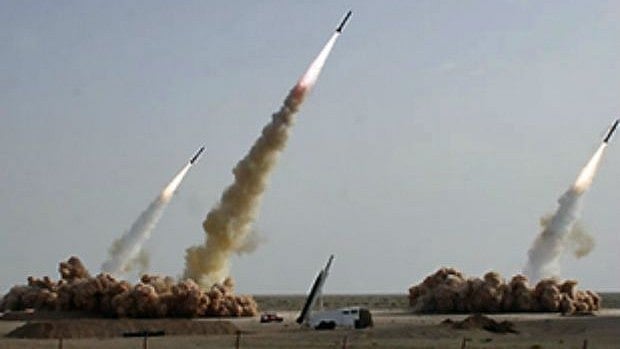
Six months after the start of the war with the United States and Israel, Iran’s leadership has consolidated around senior military commanders and hard-line clerics, signalling readiness for a prolonged confrontation with Washington while tightening its grip on domestic dissent.
The shift comes after US President Donald Trump initially expressed hopes of bringing about regime change in Iran and later suggested that the war had created an opportunity for more moderate figures to emerge.
Instead, Iran’s newly established leadership appears increasingly dominated by officials with long-standing ties to the Islamic Revolutionary Guard Corps (IRGC) and the country’s security establishment.
The leadership has also shown little confidence in reaching an agreement with Trump, particularly after Iran came under attack while negotiations were taking place. At the same time, Tehran faces mounting economic pressure from continued US sanctions and an American blockade.
“If [Trump] wants to do something, we will retaliate in a seismic manner,” newly appointed Supreme National Security Council secretary Mohsen Rezaei said last weekend.
He warned that if the economic war continued, “not a single drop of oil will be exported” from the Persian Gulf.
Hard-line appointments signal tougher approach
Iran’s Supreme Leader Ayatollah Mojtaba Khamenei recently announced a series of appointments that formally established the country's new senior leadership.
Khamenei's father, Ayatollah Ali Khamenei, and several senior officials were killed in the US-Israeli bombing campaign launched on February 28.
Among the most significant appointments was that of Hossein Taeb as head of the Basij, the IRGC's volunteer paramilitary force that maintains a nationwide presence and has played a prominent role in suppressing protests.
Taeb, a hard-line cleric and former head of the IRGC's intelligence organisation, previously played a central role in crackdowns on protests, including demonstrations following the disputed 2009 presidential election.
Analysts say his return to a senior security position indicates that the leadership is preparing for possible renewed unrest as economic conditions deteriorate.
Sascha Bruchmann, an analyst with the International Institute for Strategic Studies' Middle East office in Bahrain, described the appointments as a sign of growing internal cohesion among senior hard-line officials.
“It looks like internal cohesion, as in hardcore people are being pulled into the inner circle,” he said.
Military leadership consolidated
The leadership changes have also strengthened the position of veteran Revolutionary Guard commanders.
Rezaei, 71, headed the IRGC during its formative years and throughout the Iran-Iraq war from 1980 to 1988. He remained a prominent hard-line political figure after leaving the military and ran for president several times.
Brig Gen Ahmad Vahidi, 68, has been confirmed as head of the IRGC after serving as acting commander following the death of his predecessor.
Other senior commanders, including Gen Ali Ozmaei, who leads the IRGC's naval forces, and military chief of staff Gen Ali Abdollahi, have also been confirmed in their positions.
Analysts say the appointments reflect an effort to ensure continuity and unity within the military and security establishment following the deaths of senior leaders.
Economic pressure creates tensions
Despite the increasingly hard-line composition of the leadership, divisions remain over how Iran should handle the confrontation with Washington.
President Masoud Pezeshkian has continued to advocate negotiations and has warned that prolonged war could worsen Iran's economic problems.
“It would be better to bring the war to an end, since today we enjoy power and dignity and the entire world approved our victory, and the US is hated,” Pezeshkian said last week.
He has also defended the ceasefire agreement reached in June, despite criticism from hard-line factions that Tehran conceded too much.
The ceasefire quickly collapsed amid renewed exchanges of strikes. Iran has demanded the release of billions of dollars in frozen assets under the agreement, as well as formal authority over the Strait of Hormuz.
Rezaei, despite his hard-line credentials, has also left open the possibility of negotiations if Washington changes its approach.
On Monday, he told Pakistani mediator Gen Asim Munir that the US should “change its attitude and take practical action about implementing the conditions” of the ceasefire agreement.
Tehran-based political analyst Ahmad Zeidabadi said significant disagreements existed over Iran's future direction.
Hard-liners oppose normalisation with Washington because, he argued, “their survival depends on the existence of conflict and hostility”.
Basij prepares for potential unrest
There has so far been no significant new wave of protests despite worsening economic conditions and rising prices for basic goods.
Taeb's appointment to lead the Basij has nevertheless been interpreted as preparation for potential unrest before it gains momentum.
Bruchmann said appointing a senior intelligence official to lead the organisation responsible for suppressing protests suggested that the government wanted to prevent dissent “before it even manifests”.
Taeb previously headed the Basij when it was involved in suppressing protests following the 2009 presidential election. He later led the IRGC's intelligence organisation for nearly 13 years before being removed in 2022.
The Basij operates a nationwide network of volunteers with a presence in streets, government offices and cultural institutions, monitoring political loyalty and promoting the Islamic Republic's ideology.
In his appointment decree, Khamenei instructed Taeb to expand the Basij's role in Iranian society, use new technologies and promote the organisation internationally.
During the current war, the Basij has increased its presence in Iranian cities, while hard-line supporters have held nightly rallies in Tehran and elsewhere.
Taeb has also warned that US economic pressure is intended to create divisions within Iran and called for stronger community-level mobilisation.
Khamenei remains largely out of public view
The new supreme leader, Mojtaba Khamenei, has remained largely absent from public view since Israeli strikes killed his father.
The 56-year-old leader has not appeared publicly or in recorded audio or video since the attack and is believed to have been wounded.
His continued absence could reflect the security risks surrounding Iran's top leader or the extent of his injuries.
For now, Iran's leadership appears to be prioritising internal cohesion and resistance to US pressure over rapprochement with Washington.
But the country's worsening economic conditions, continuing military confrontation and differences between hard-liners and advocates of negotiations could test that unity as the war enters its seventh month.
Join our official telegram channel (@nationalherald) and stay updated with the latest headlines