World
Ukraine battles freezing cold as 'hero' emergency crews rush to restore power
Weeks of intense Russian strikes on critical infrastructure have left residents exposed to the harshest winter in years
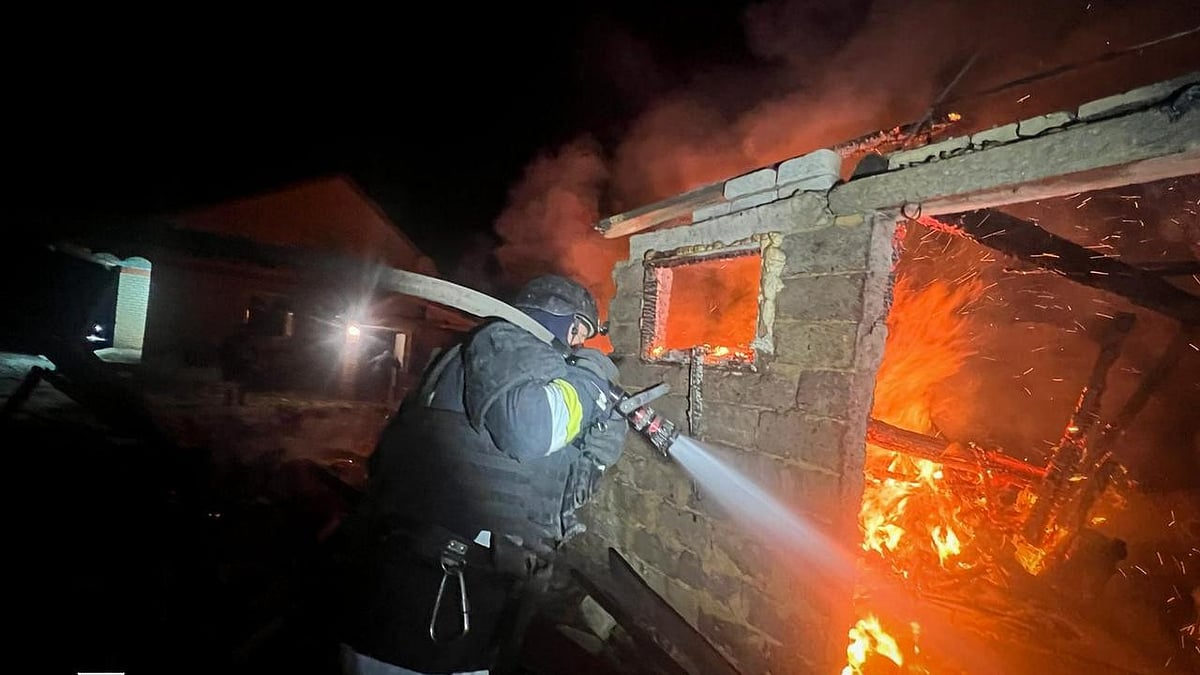
Emergency repair teams in Ukraine’s Kyiv region are racing to bring electricity back online, officials said on Wednesday, after weeks of intense Russian strikes on critical infrastructure left residents exposed to the harshest winter in years.
In Boryspil — a town of roughly 60,000 on the edge of Ukraine's capital Kyiv — crews have been tearing out and rebuilding charred electrical components at breakneck pace, attempting to mend systems shattered by repeated attacks.
They work outdoors through snow and temperatures of -15°C (13°F), from first light until nearly midnight, according to Yurii Bryzh, who heads the Boryspil regional department of private energy provider DTEK.
Speaking to the Associated Press, he explained that the teams have clawed back enough capacity to provide around four hours of power each day. The larger challenge, he noted, is that “when the power comes back on, people turn on all the electrical equipment that is available in the house”, eager to cook, wash or recharge. “That collapses the system again,” he said.
The strain on ordinary people is severe, with Kyiv’s mayor Vitali Klitschko describing the current outages as the longest and most widespread since Russia launched its full-scale invasion of Ukraine almost four years ago. Some households have gone days without electricity.
With heating systems stalled, flats in the capital have grown bitterly cold. Outside, residents bundle themselves in multiple layers to face temperatures that “chill to the bone”. Snow blankets the city — on roads, rooftops and in high drifts along pavements. After dark, much of Kyiv falls into a blackout hush, with streetlamps and tower blocks alike reduced to silhouettes.
Residents described how they are adapting to the absence of warmth and light at home. A married pair of scientists — Mykhailo (39) and Hanna (43) — said the temperature in their five-year-old daughter Maria’s bedroom has fallen to -15°C (13°F). For security reasons, they shared only their first names. They cook on a gas stove, but at night the family share one bed beneath piles of heavy blankets because, as Hanna put it, “We have to use all the blankets we have in the house.”
During the day, they bring Maria to their workplace, which has a generator; her kindergarten does not have heating. The Christmas decorations still hanging on their walls flicker occasionally when lit by torches.
Others rely on improvised tactics. Seventy-six-year-old Zinaida Hlyha said she heats water on her gas stove, pours it into bottles and tucks them under her covers for warmth. She refuses to complain, noting that Ukrainian soldiers along the roughly 1,000-km front endure far worse.
“Of course it's hard, but if you imagine what our guys in the trenches are going through now, you have to endure,” she said. “What can you do? This is war.”
For some, the psychological strain matches the physical. Tetiana Tatarenko, whose two sons are serving in the military, said her anxiety has spiked since a Shahed drone slammed into the building next door. In her icy flat, she said “it's as if life in the house has stopped, that's the feeling”.
Her neighbour, 89-year-old physicist Raisa Derhachova, lives alone and sometimes sits at her piano in what she calls “this terrifying cold”. She reflected bleakly on the historical echo: “Of course, it's hard to survive this. We survived World War II, and now this terrible war is upon us,” she said.
Energy analysts warn that repair efforts will be long and difficult. Russian strikes are targeting power plants and major substations, and sourcing replacement equipment such as transformers can take months, according to Dennis Sakva of the Ukrainian investment firm Dragon Capital. As he put it, “There are two types of heroes in Ukraine. They are the military and energy workers.”
With AP/PTI inputs
Join our official telegram channel (@nationalherald) and stay updated with the latest headlines