World
Ukraine peace talks falter as Russia launches massive new strikes
Russian forces launch 653 drones and 51 missiles in an overnight barrage targeting energy hubs and critical infrastructure
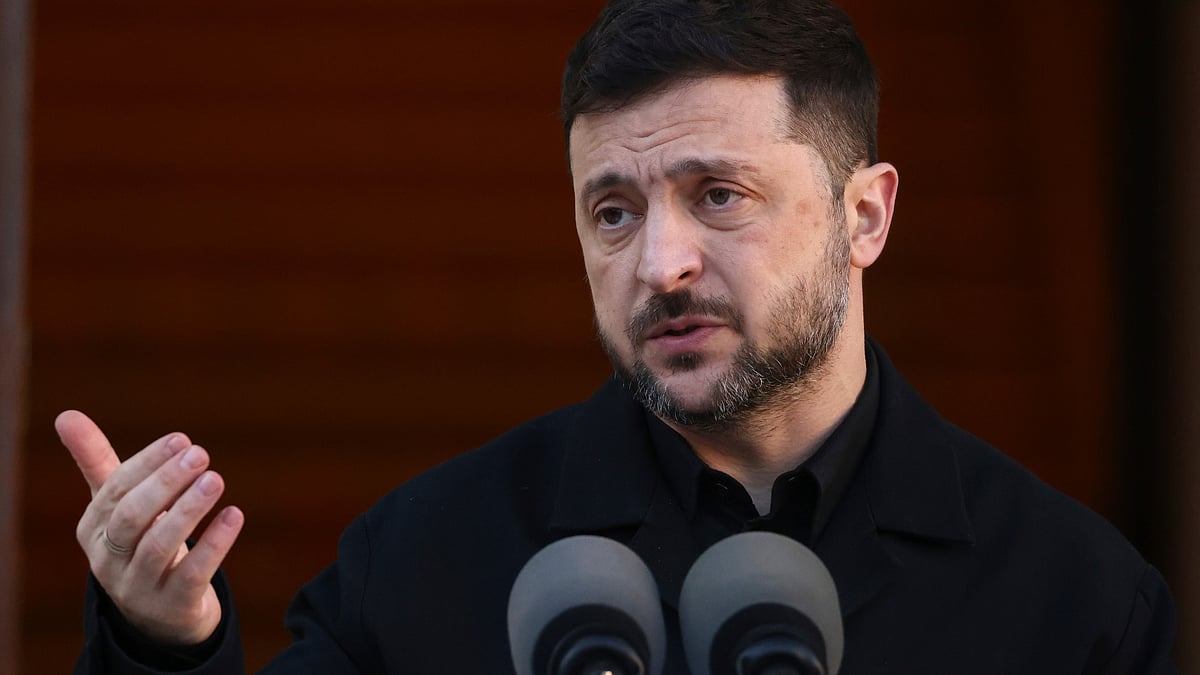
Three intense days of negotiations between Ukrainian and United States officials ended in Florida without the breakthrough many had hoped for, even as Russia unleashed one of its most formidable aerial barrages of the war, the Al Jazeera reported.
The diplomacy, described by President Volodymyr Zelenskyy as “substantive” after a call with US envoys Steve Witkoff and Jared Kushner, seemed to evaporate in the shadow of Moscow’s latest display of force — a stark reminder that peace still bends to the will of the battlefield.
As talks wrapped on Saturday, the skies over Ukraine lit up with the glow of incoming fire. Russian forces hurled 653 drones and 51 missiles across the country in an overnight onslaught that struck energy hubs and critical infrastructure. It was a sweeping, punishing assault that injured at least eight people and hit 29 locations, according to Interior Minister Ihor Klymenko, the Al Jazeera reported.
Among the most alarming consequences was the temporary loss of power at the Zaporizhzhia nuclear plant, long under Russian occupation. The outage revived fears about reactor safety, with the International Atomic Energy Agency warning yet again that the facility’s six shutdown reactors require uninterrupted electricity to avoid potential catastrophe.
“Energy facilities were the main targets,” Zelenskyy said, noting that a drone strike had obliterated a railway station in Fastiv, near Kyiv, the Al Jazeera reported. Ukrainian air defences, pushed to the limit, managed to intercept 585 drones and 30 missiles, the air force reported.
Moscow, for its part, claimed its attacks were aimed at “military-industrial enterprises and the energy networks that support them”, insisting it had struck all intended targets.
Yet even as diplomats traded proposals in Florida, the front lines told a harsher story. Russian forces continued to press forward in the east, tightening their grip around Pokrovsk and nearly encircling Myrnohrad in the Donetsk region.
In November alone, Moscow captured 505 sq km (195 sq miles) — nearly double its gains from the previous month. With almost the whole of Luhansk and vast coastal stretches toward Kherson under Russian control, the front has largely solidified, though Russia keeps making incremental but steady advances.
Amid this shifting battlefield, world leaders are now scrambling to recalibrate their approach. On Monday, French President Emmanuel Macron, British Prime Minister Keir Starmer, and German Chancellor Friedrich Merz will meet Zelenskyy in London to take stock of the faltering US-mediated effort. Macron denounced Russia’s “escalatory path”, urging the international community to intensify pressure on Moscow “to force it to make peace.”
The Florida talks themselves came on the heels of a high-profile meeting in Moscow where Witkoff and Kushner sat down with Russian President Vladimir Putin — a meeting that, like Florida, produced no breakthrough. A joint statement on Friday acknowledged the cold reality: no real progress is possible unless Russia shows genuine commitment to long-term peace and de-escalation.
Complicating the diplomatic picture, the International Criminal Court reaffirmed that its arrest warrant for Putin on alleged war crimes remains fully in effect and cannot be paused for peace talks. Only a UN Security Council decision could grant a temporary deferment, deputy prosecutor Nazhat Shameem Khan noted, stressing that “accountability is essential for enduring peace,” Al Jazeera reported.
For now, Putin shows no inclination to soften his demands. Instead, he has ordered his forces to brace for continued winter combat, signalling that Russia’s appetite for negotiation remains tethered tightly to its ambitions on the ground.
Diplomacy may be talking — but for the moment, it is the artillery, not the conference table, that shapes the terms of this war.
Join our official telegram channel (@nationalherald) and stay updated with the latest headlines