World
Ukraine war: Zaporizhzhia nuclear plant running on emergency generators amid power outage
The Russian-occupied plant has been without external electricity for more than a week and has only about 10 days of diesel fuel available
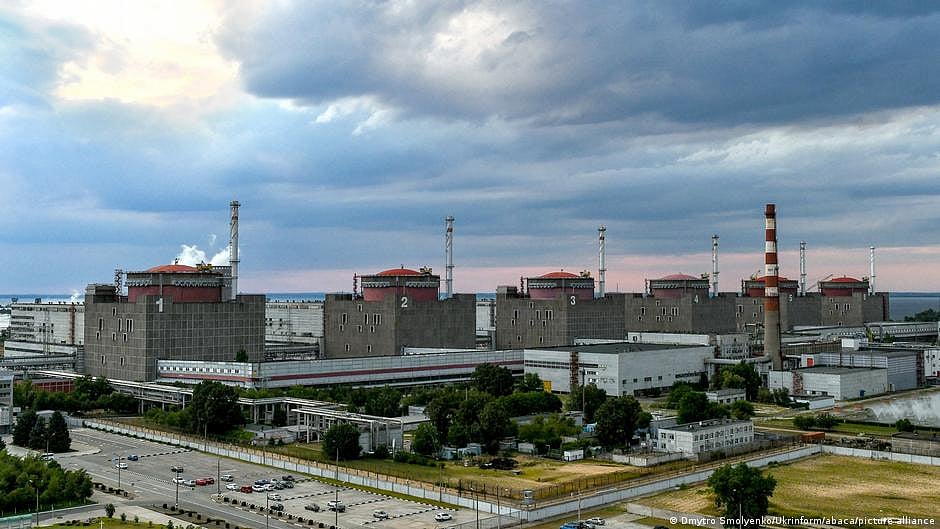
The Zaporizhzhia nuclear power plant in southern Ukraine is relying on emergency diesel generators after losing its external power supply for more than a week, the UN's nuclear watchdog has warned, highlighting renewed risks to nuclear safety as the war continues.
The International Atomic Energy Agency (IAEA) said the plant, which has six reactors that have remained shut down since Russia seized the facility in March 2022, still requires electricity to maintain essential cooling and safety systems. The plant currently has around 10 days' worth of diesel fuel available on site.
IAEA Director General Rafael Grossi said the availability of diesel becomes "of paramount importance" whenever a nuclear facility loses its external power supply, stressing that reliable electricity and secure fuel supply routes remain essential for nuclear safety.
The plant lost its regular electricity supply following military activity on the northern side of the Dnipro River, according to the IAEA. The agency is seeking a local ceasefire to allow repairs to the damaged power lines.
The situation has added another layer of concern around Europe's largest nuclear power plant, which has remained at the centre of the war since Russian forces took control of it more than four years ago.
A deadly strike near Kyiv raises questions
Meanwhile, Ukrainian authorities are investigating the circumstances surrounding a Russian strike on a warehouse near Kyiv that killed at least 37 people on Friday.
The attack hit a facility in Myla, in the Bucha district, where explosive materials were being stored. The strike triggered a major fire and a series of explosions and damaged at least 50 residential buildings, including a care home for elderly and disabled people.
At least 42 people, including four children, were injured, according to regional authorities.
Ukrainian President Volodymyr Zelenskyy said the warehouse was a military depot containing shells, drones and other ammunition. He acknowledged that the facility should not have been located so close to residential areas.
Ukrainian prosecutors have opened an investigation into why the munitions were stored at the site and whether the location and storage arrangements contributed to the scale of the casualties.
The attack has become the deadliest strike reported in Ukraine this year.
Germany weighs sanctions over Leipzig drone incident
Germany is also reportedly preparing to blame Russia for an attempted drone attack at Leipzig airport and impose sanctions on Russian entities.
The measures could be announced as early as next week and may coincide with a new European Union sanctions package, according to reports.
The alleged incident has added to European concerns about Russian activity beyond the battlefield in Ukraine, although details surrounding the Leipzig incident and any Russian involvement remain disputed.
Finland says Russia is unlikely to attack NATO
Amid heightened tensions between Russia and Europe, Finnish President Alexander Stubb said he does not believe Moscow would risk launching an attack against a NATO member.
Stubb told German newspaper Bild that such an attack would make little strategic sense and said he had seen no evidence suggesting Russia intended to test the alliance.
At the same time, he said NATO must remain prepared for every scenario, arguing that Russia would be unlikely to deliberately challenge what he described as the world's most powerful military alliance.
Finland joined NATO in 2023, significantly strengthening the alliance's presence along Russia's northern border.
Russia claims further territorial gains
Russia's Defence Ministry said its forces had captured three Ukrainian villages — Khrapivshchyna in Sumy region and Novoandriivka and Rubizhne in Donetsk region.
Moscow also claimed to have struck a logistics centre in Kyiv region where components for Ukrainian ballistic missiles were allegedly stored.
The claims could not be independently verified.
Ukraine, meanwhile, continued to face attacks from Russian forces while carrying out its own drone operations against targets inside Russia.
Authorities in Russia's Belgorod region said a Ukrainian drone attack killed three people and injured nine others. Three of those injured were reportedly in serious condition.
Kremlin says relations with Europe remain hostile
Kremlin spokesperson Dmitry Peskov said Moscow sees little prospect of improved relations between Russia and the European Union, accusing European leaders of increasingly describing Russia as an adversary or enemy.
Peskov said the EU's current leadership was taking a confrontational approach towards Moscow, both in its rhetoric and actions.
The comments come as European governments continue to support Ukraine and consider additional sanctions against Russia.
The war has now entered its fifth year, with the humanitarian toll continuing to mount. According to UN figures cited in the report, at least 16,874 civilians, including 820 children, had been verified as killed, while 51,173 people, including 3,126 children, had been injured since Russia launched its full-scale invasion in 2022.
For now, however, the immediate concern is at Zaporizhzhia, where the loss of external electricity has forced a nuclear facility to depend on diesel generators — making the restoration of a stable power supply increasingly urgent.
Join our official telegram channel (@nationalherald) and stay updated with the latest headlines