World
Ukraine: Zelenskyy hints at 40-day offensive against Russia
Hours after hinting at a sustained campaign to force Moscow to negotiate, Kyiv launched a massive assault across Russia and Crimea
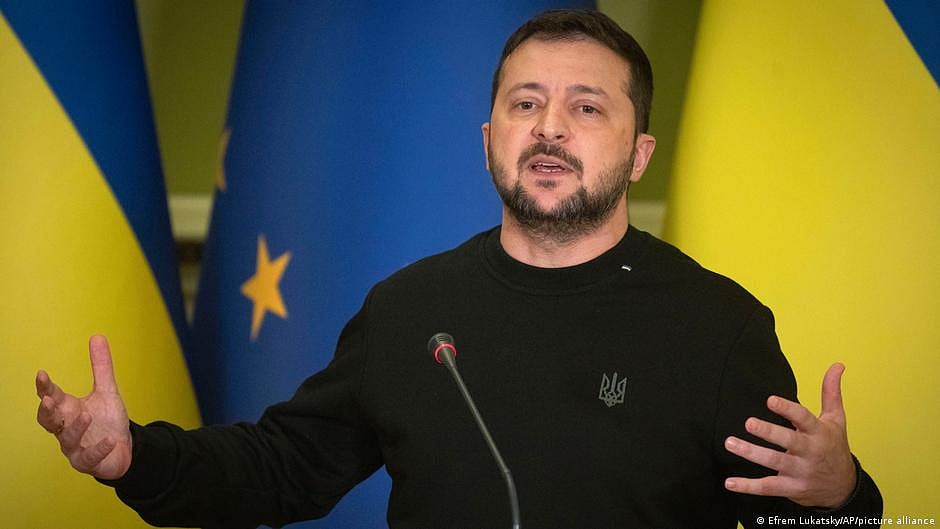
Ukraine launched one of its largest long-range drone attacks of the war overnight, targeting a dozen Russian regions, Russian-occupied Crimea and surrounding waters just hours after President Volodymyr Zelenskyy signalled the start of what he described as a "40-day influence operation" aimed at forcing Moscow to end the conflict.
Russia's defence ministry said its air defences intercepted 660 Ukrainian drones, making it one of the heaviest aerial assaults since the Kremlin launched its full-scale invasion more than four years ago. The previous largest Ukrainian drone barrage recorded over the past year involved 556 drones on 17 May.
The scale of the attack appeared to underscore Kyiv's intent to intensify its long-range campaign against military and strategic infrastructure deep inside Russia after months of largely stalled frontline fighting.
In a post on X hours before the strikes, Zelenskyy said he had ordered a "40-day influence operation" designed to compel Russia to end the war after months of US-led diplomatic efforts failed to produce a breakthrough. While he did not elaborate on what the operation would entail, the timing of the overnight assault suggested the campaign could involve sustained long-range strikes intended to increase military and political pressure on the Kremlin.
Ukraine has steadily expanded its drone capabilities over the past year in an effort to offset Russia's battlefield advantages. Long-range strikes have repeatedly targeted oil refineries, fuel depots, ammunition facilities and military infrastructure far behind the front lines. Western officials and analysts say the campaign has disrupted fuel supplies, complicated military logistics and increased pressure on Russian President Vladimir Putin.
Chemical plant reportedly hit
Russian authorities released few details about the damage, with the defence ministry saying only that hundreds of drones had been intercepted.
Independent Russian news outlet Astra reported that a chemical plant and a hydroelectric facility in Novomoskovsk were struck and caught fire. The Associated Press could not independently verify the report, and Russian officials did not confirm the claims.
Moscow mayor Sergei Sobyanin said 47 drones headed towards the Russian capital had been intercepted, adding that there were no immediate reports of casualties or significant damage.
Ukraine's Security Service (SBU) said it had also targeted Russian naval assets and air defence systems in the occupied Crimean port of Kerch.
According to the agency, the strikes hit the reconnaissance and minelaying vessels Volga and Vyatka, as well as the cargo-passenger ferry Petropavlovsk, triggering a large fire. Those claims could not be independently verified.
Fresh military backing
Zelenskyy indicated that Ukraine was preparing to intensify pressure on Russia with continued support from Western allies.
He said recent meetings with G7 leaders, including US President Donald Trump, had resulted in fresh commitments of military assistance that would strengthen Ukraine's ability to force Moscow back to the negotiating table. Attention is now turning to next month's NATO summit, where Kyiv hopes additional military aid and security commitments will be announced.
Russia continues attacks on Ukraine
Even as Ukraine expanded its drone campaign, Russian forces continued their bombardment of Ukrainian cities.
Regional governor Oleh Syniehubov said Russian attacks across the Kharkiv region over the previous 24 hours killed two people and injured seven others. Guided aerial bombs and drones struck the city of Kharkiv and 16 surrounding settlements.
A separate drone strike on central Izium on Friday morning killed a woman and wounded three others, Ukraine's emergency services said. Additional casualties and damage were reported in Kyiv, Odesa, Zaporizhzhia and Sumy, with some attacks involving powerful glide bombs.
Ukraine's air force said it intercepted 174 of the 189 Russian drones launched overnight. However, four of the seven Iskander-M ballistic missiles fired by Russia penetrated air defences and struck their intended targets.
No immediate threat from Belarus
Ukraine's border authorities said there were no signs of an imminent Russian troop buildup along the Belarusian frontier despite continued expansion of Russian military infrastructure inside Belarus.
State Border Guard Service spokesperson Andrii Demchenko said intelligence agencies had detected no concentration of Russian troops, equipment or personnel near the border.
Russia launched its full-scale invasion of Ukraine from Belarus in February 2022, and Kyiv has closely monitored military activity there ever since.
Demchenko said Russia was nevertheless continuing to expand military training grounds, bases and other facilities deeper inside Belarus, developments Ukrainian intelligence is continuing to track.
With AP/PTI inputs
Join our official telegram channel (@nationalherald) and stay updated with the latest headlines