World
US envoys urge Netanyahu to move into Gaza ceasefire’s second phase
Washington wants to keep the Trump-brokered deal moving as Netanyahu faces pressure to wait for the hostage’s body
Top US envoys held high-stakes talks with Israeli Prime Minister Benjamin Netanyahu on Saturday, pressing his government to step decisively into the long-awaited second phase of the Gaza ceasefire, even as the fragile truce strains under mounting political and humanitarian pressure.
Netanyahu met US President Donald Trump’s special envoy, Steve Witkoff, along with Jared Kushner—Trump’s son-in-law and key Middle East adviser—according to a statement from the Prime Minister’s Office, which offered few details of the closed-door discussions.
A US official, speaking anonymously, said the talks focused on recovering the remains of the final Israeli hostage still held in Gaza and charting the next steps toward demilitarising the war-battered enclave. Washington, the official said, is eager to keep momentum behind the Trump-brokered agreement, even as Netanyahu faces domestic pressure to delay further moves until Hamas returns the hostage’s body.
One of the clearest signals of progress into the ceasefire’s second phase would be the reopening of the Rafah border crossing between Gaza and Egypt — a vital lifeline sealed for months. Ali Shaath, who is expected to head a future technocratic administration in Gaza, said earlier this week that the crossing would open in both directions in the coming days. Israel has yet to confirm the move, saying the issue remains under consideration. The Gaza side of the crossing is currently under Israeli military control.
Meanwhile, anguish continues to ripple through Israeli society. The family of Ran Gvili, whose remains are still believed to be in Gaza, urged intensified pressure on Hamas. “President Trump himself said this week in Davos that Hamas knows exactly where our son is,” the family said in a statement. “Their refusal to return him is a blatant violation of the agreement they signed.” Hamas, for its part, said it has shared all available information with ceasefire mediators and accused Israel of blocking search efforts in areas under its control.
The ceasefire, which came into force on 10 October 2025, has also become a focal point of intense regional diplomacy. Egypt’s foreign minister Bader Abdelatty pressed for the immediate reopening of Rafah during a phone call with Nickolay Mladenov, the high representative for Gaza under Trump’s newly formed Board of Peace. The two discussed deploying an international monitoring force, opening the crossing in both directions, and withdrawing Israeli troops from the strip.
Implementing the second phase of the ceasefire, Abdelatty said, is the crucial gateway to launching Gaza’s reconstruction. No timeline was announced for allowing travellers through Rafah or evacuating the sick and wounded.
Israel is expected to take up the issue at its Cabinet meeting on Sunday.
Hamas, meanwhile, said its delegation met Turkish intelligence chief Ibrahim Kalin in Istanbul to discuss advancing the ceasefire’s second phase and ensuring the terms of the first phase are fully honoured.
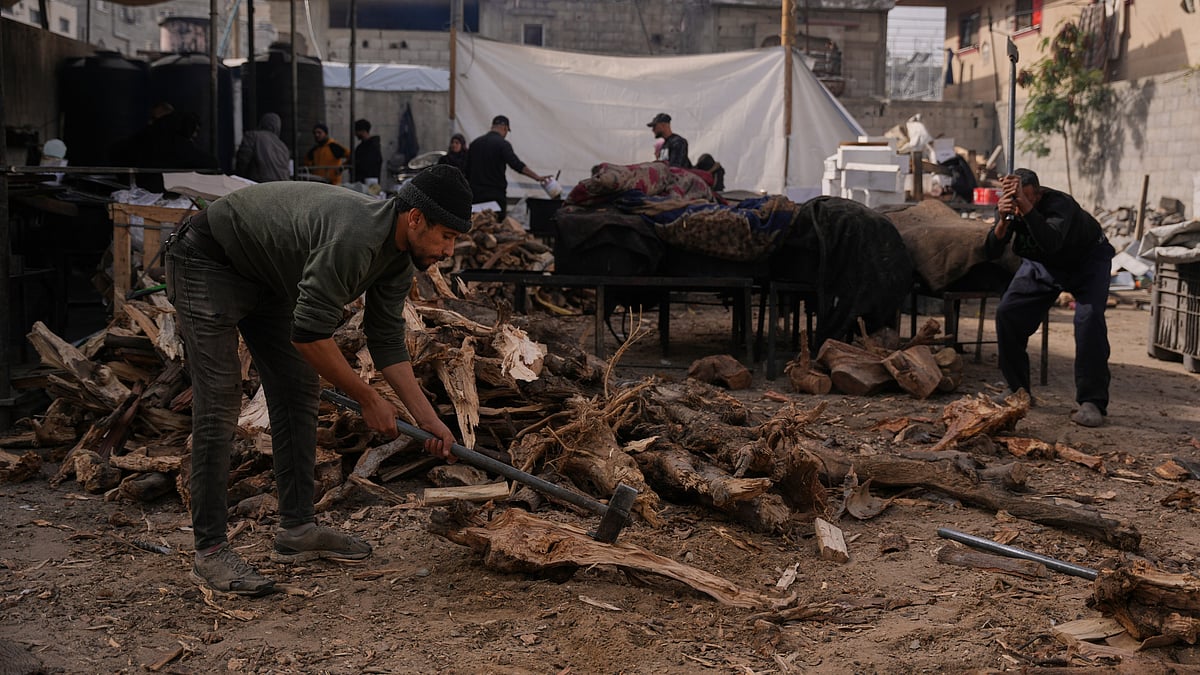
Yet even as diplomats speak of transitions and rebuilding, violence continues to cast a long shadow. On Saturday, an Israeli strike killed two Palestinian teenage cousins — aged 13 and 15 — who were searching for firewood in Gaza, according to hospital officials. The boys were killed near an area Israel has designated as safe for civilians, close to the so-called Yellow Line separating Israeli-controlled zones from the rest of the territory.
Israel’s military said it targeted militants who crossed the line and planted explosives, denying that the victims were children.
Since the ceasefire began, more than 480 Palestinians have been killed by Israeli fire, according to Gaza’s Health Ministry. While Israel disputes the figures, the ministry’s casualty records are widely regarded by UN agencies and independent experts as broadly reliable.
As diplomacy pushes forward and grief deepens on both sides, the promise of peace remains tethered to a ceasefire still struggling to hold.
With agency inputs
Join our official telegram channel (@nationalherald) and stay updated with the latest headlines