World
University in Tehran bombed, Iran threatens retaliation in the Gulf
Iran claims US and Israel have so far bombed 600 schools and 290 health facilities since 28 February
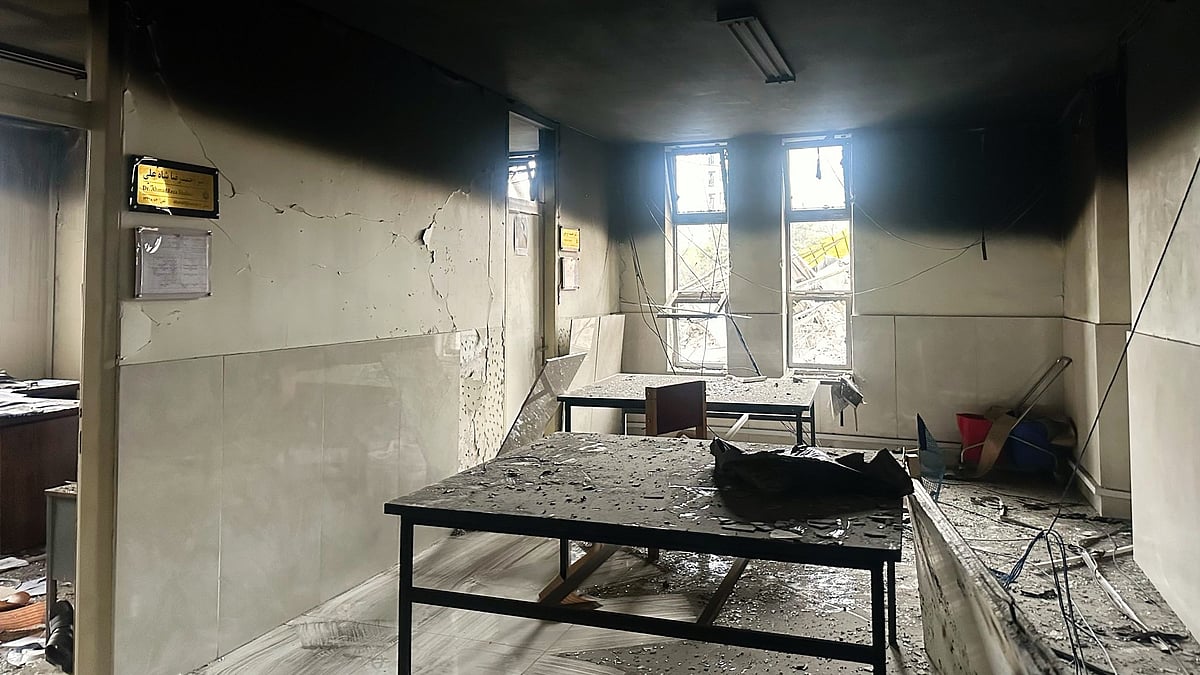
Iran University of Science and Technology (IUST) in Tehran, founded in 1929, was struck in an Israeli attack at approximately 2.30 am local time on Friday, 27 March. Under international humanitarian law, universities are civilian institutions and must not be targeted by militaries.
Iran’s Islamic Revolutionary Guard Corps (IRGC) has demanded that the United States condemn the bombing of the universities by noon on Monday, 30 March, or face retaliation against American university campuses across the Gulf. Iranian media had earlier reported the bombing of over 600 schools, a research centre, and the Isfahan University of Technology in the same wave of attacks.
The IRGC statement, published by Iranian media, reported by The Times of Israel and quoted by news agencies including AFP, read: “If the US government wants its universities in the region to be free from retaliation, it must condemn the bombing of the universities in an official statement by 12 noon on Monday, March 30, Tehran time.”
The statement warned employees, professors, and students at American universities in the region to remain at least one kilometre away from campuses. A report by news agency TASS said the IRGC claimed that two universities in West Asia would be destroyed regardless of Washington’s response.
Iran has alleged that the United States and Israel deliberately targeted 600 schools and 290 health facilities in the ongoing escalation. Iranian authorities have emphasised that, despite possessing the capability, the country has not been accused so far of striking any school or hospital in Israel or other Gulf countries.
According to Iranian claims, its precision drones and missiles have targeted military bases, hideouts, radar installations, and other strategic infrastructure, often after issuing prior warnings, but have not been used against schools, students, or medical facilities. Some American media reports, however, have suggested that certain Iranian universities housed IRGC-linked missile and drone research laboratories.
Iranian scholar Helyeh Doutaghi, who was dismissed in 2025 by Yale Law School for her support for the Palestinian cause, visited the bombed university and posted photographs on X on Saturday, 28 March, along with a statement that read: “…this is the same university that launched Iran’s Omid and Zafar 2 satellites, symbols of homegrown technological achievement. A week ago, one of its professors was assassinated. Yesterday, they bombed it.
"From sanctions to targeted killings, to the bombing of research centres and universities, there’s a clear pattern: de-development & de-industrialisation / the systematic dismantling of a nation’s indigenous development, its industrial base, its capacity to stand on its own…”
The bombing of the premier Iranian university has been interpreted by Iranian commentators as a deliberate attempt to impede the country’s scientific progress and research capacity.
Despite operating under stringent Western sanctions — and with its scientists often excluded from international collaborations — Iran has long been regarded as a significant scientific producer, frequently ranking among the leading countries in research output in the Islamic world. Iranian officials have noted that sanctions and publishing restrictions have begun to erode this standing, with the country’s global ranking reportedly slipping from 15 to 17 in recent years.
Several American universities operate campuses in Gulf countries. Qatar’s Education City hosts six US branch campuses: Texas A&M University, Carnegie Mellon University, Georgetown University, Northwestern University, Virginia Commonwealth University, and Weill Cornell Medicine. Thousands of students and faculty, many of them US citizens, study and work there.
The United Arab Emirates hosts New York University Abu Dhabi, which has approximately 2,200 students. The country is also home to the American University of Sharjah, the American University in Dubai, and the Rochester Institute of Technology in Dubai. Bahrain hosts the American University of Bahrain, while Saudi Arabia is reported to have partnerships with US universities.
As of the afternoon of Sunday, 29 March, there had been no official response from Washington DC or the Pentagon.
Join our official telegram channel (@nationalherald) and stay updated with the latest headlines