World
US strikes Iran for 7th straight night as Tehran hits Kuwait desalination plants
Fresh US attacks target military infrastructure across Iran as Tehran expands retaliatory strikes against Gulf states
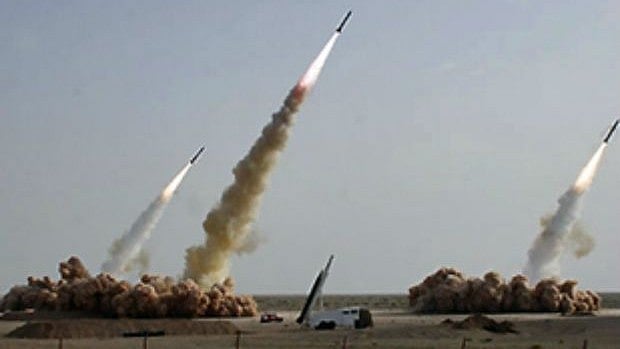
The United States carried out a seventh consecutive night of strikes on Iran, targeting military infrastructure across the country, while Tehran retaliated with missile attacks on US allies in the Gulf, hitting Kuwait's critical desalination and power infrastructure for the second day in a row and prompting temporary flight suspensions.
The US Central Command (CENTCOM) said its forces struck surveillance sites, military logistics infrastructure, underground weapons storage facilities and maritime capabilities using fighter aircraft, drones, warships and other military assets before ending the operation at 9.30 pm ET on Friday.
Iranian state media reported explosions in the central city of Yazd, on Qeshm Island and near the strategic port of Bandar Abbas, close to the Strait of Hormuz.
As Iran responded to the latest US offensive, Kuwait said another electricity and water desalination plant had been struck by a missile attack, triggering a fire in one of the facility's components and forcing several power generation units offline.
The latest strike came a day after another desalination and power facility was damaged, raising concerns over the security of Kuwait's critical infrastructure. The Gulf nation relies heavily on desalination plants for its drinking water, making them among the country's most strategically important civilian facilities. Authorities also temporarily suspended flights as missiles crossed the region.
Jordan's military said it intercepted 10 Iranian missiles that entered its airspace overnight, while Bahrain said its air defences had thwarted Iranian attacks. Iran's armed forces claimed to have targeted multiple US military facilities across Kuwait, Bahrain, Jordan and, for the first time since the conflict escalated, Syria.
US officials rejected several of Tehran's claims, although media reports citing American officials said several US service members had been injured during recent Iranian attacks on two military bases in Jordan.
The latest exchange follows the collapse of a temporary ceasefire agreed in June to facilitate negotiations between Washington and Tehran. President Donald Trump declared the truce "over" last week after talks failed to produce a breakthrough, triggering a renewed US military campaign against Iran.
Since then, Washington has resumed sustained strikes on Iranian military sites and reimposed a naval blockade around Iranian ports. Iran, in turn, has declared the Strait of Hormuz closed to shipping, severely disrupting commercial maritime traffic through one of the world's most important energy corridors.
Roughly one-fifth of global oil and liquefied natural gas shipments normally pass through the Strait of Hormuz. The disruption has fuelled concerns over global energy supplies, with analysts warning that a prolonged closure could have significant consequences for international energy markets.
CENTCOM also dismissed reports carried by Iran's Fars news agency claiming two oil tankers had exploded after sailing through a mined route south of the Strait of Hormuz. "Like most IRGC claims, this is false," the US military said.
Meanwhile, evidence of damage inside Iran continued to emerge. BBC Verify and BBC Persian confirmed extensive damage to the Gariveh Bridge in Hormozgan province after verifying footage showing part of the structure destroyed. Provincial authorities said seven people were killed in the strike.
The White House maintained that US forces had targeted only military objectives, including logistics infrastructure. Defence Secretary Pete Hegseth also shared footage showing the destruction of a control tower at the port of Chabahar, which CENTCOM identified as part of the Islamic Revolutionary Guard Corps' maritime surveillance network.
The latest attacks mark another sharp escalation in the conflict, with both sides widening the scope of their operations and raising fears of a broader regional confrontation involving Gulf states and critical energy infrastructure.
Join our official telegram channel (@nationalherald) and stay updated with the latest headlines