World
US widens air campaign against Iran after American troops killed; Bahrain, Kuwait struck
Fresh US strikes targeted missile and military sites across Iran as Tehran retaliated with attacks on Bahrain and Kuwait, raising fears of a wider regional war
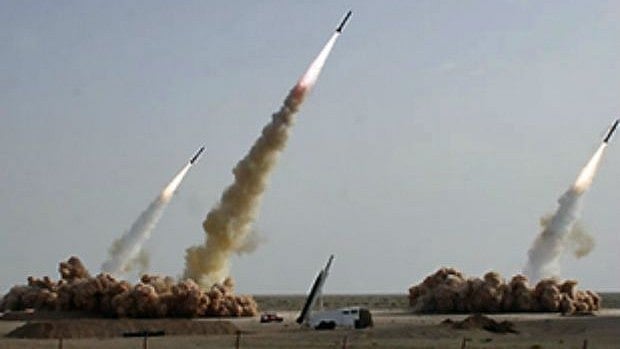
The United States launched a fresh round of airstrikes across Iran early Monday after announcing the death of another American service member, while Tehran retaliated by targeting Bahrain and Kuwait, marking another sharp escalation in the conflict that has pushed the two countries closer to all-out war.
The latest US attacks targeted areas around the northwestern city of Tabriz, believed to house underground missile bases operated by Iran's paramilitary Revolutionary Guard, along with other military installations across the country.
Iran responded by launching attacks towards Bahrain, home to the US Navy's Fifth Fleet, and Kuwait. Bahrain activated missile warning sirens, while Kuwaiti authorities said the country's air defences intercepted an incoming Iranian barrage.
The exchange of attacks came as last month's interim agreement aimed at ending the conflict continued to unravel. Shipping through the Strait of Hormuz remained severely disrupted, while Brent crude prices climbed above USD 90 a barrel, adding to concerns over global energy supplies.
The US military said the latest escalation followed the death of another American service member in Iraq on Saturday during the controlled detonation of a downed Iranian drone.
"We hit them very hard again tonight," US President Donald Trump said. "And we did that in honour of the soldiers killed."
The US Central Command said it carried out its ninth consecutive night of strikes, targeting Iranian military command centres, air defence systems, coastal surveillance sites, maritime capabilities, missile and drone launch sites, and communications networks.
Iran's state-run IRNA news agency reported that at least one person was killed near Tabriz. It also said strikes hit Bandar Imam Khomeini in Khuzestan province, Sirik and Jask in Hormozgan province, and Konarak and Chabahar in Sistan and Baluchistan province.
Meanwhile, a vessel caught fire in the Strait of Hormuz off the coast of Oman early Monday, according to the British military. The cause of the blaze was not immediately known, although Iran's Revolutionary Guard later claimed it had targeted tankers transiting the strategic waterway.
The Strait of Hormuz, through which about one-fifth of globally traded oil passed before the conflict began, has remained at the centre of the confrontation.
Trump has repeatedly threatened to target Iran's infrastructure, including power stations and bridges, to pressure Tehran into loosening its grip on the waterway. The US military has also reimposed a naval blockade on Iranian ports to disrupt the country's crude oil exports, saying it had redirected six ships and disabled another vessel since implementing the measure.
Despite the continuing military campaign, Washington maintained that diplomacy remained possible.
US Secretary of State Marco Rubio said the United States remained open to negotiations if Iran engaged seriously.
"We're going to continue to respond. If the door opens to diplomacy ... that'll be a very positive development. That's not where we are tonight, unfortunately," Rubio said.
Former Iranian foreign minister Mohammad Javad Zarif also called for renewed diplomacy in an essay published by Foreign Policy. He argued that neither side could secure a lasting military victory and urged a new regional security framework, while warning Tehran that repeated threats to maritime traffic could alienate much of the international community.
Iranian authorities said at least 50 people had been killed and 517 injured in the latest iranUS strikes. Since the conflict began on 28 February, 17 American service members have been killed.
Join our official telegram channel (@nationalherald) and stay updated with the latest headlines