World
US–India partnership at its weakest in 25 years, warn American strategic experts
Experts argue the downturn reflects a lack of political champions and growing friction over trade, Russia and regional security
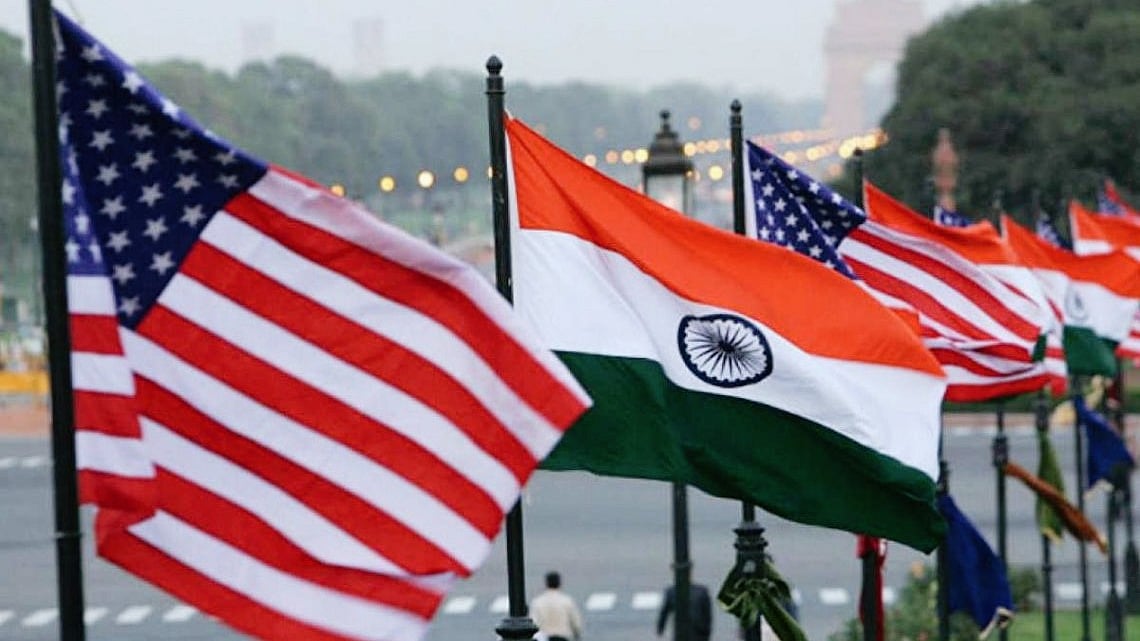
A group of prominent American strategic analysts has warned that relations between the United States and India have entered one of their most fragile phases in nearly a quarter of a century, with political mistrust, stalled negotiations and geopolitical pressures weighing heavily on what Washington has long regarded as a key Indo-Pacific partnership.
Speaking at an event hosted in Washington by the Centre for a New American Security (CNAS), Richard Fontaine, the organisation’s chief executive, said bipartisan efforts in the US and successive governments in India had spent more than two decades elevating the relationship as a central pillar of their response to China. “But we’re in a different place now,” he cautioned, noting that a series of disputes had prompted some in Washington to describe the current moment as “the lowest point in 25 years”.
Lisa Curtis, a former senior official in Donald Trump’s administration and now director of CNAS’s Indo-Pacific Security Programme, delivered the starkest assessment. “The US–India relationship is probably in the worst shape it’s been in for almost 25 years,” she said, arguing that expectations had once been high that Trump’s presidency would consolidate the progress made in his first term.
Curtis cited Trump’s 2020 visit to India, the high-profile “Howdy Modi” gathering in Houston in 2019, and the US backing India during its border confrontation with China as moments when ties appeared to have reached an “all-time high”.
Instead, she said, the relationship has since become unsettled by steep tariff increases, inflammatory social media posts from senior US officials, and the decision to invite Pakistan’s army chief, General Asim Munir, to the Oval Office shortly after a major militant attack in Jammu and Kashmir. “It is disappointing to see how far this relationship has deteriorated,” she added.
Curtis said Prime Minister Narendra Modi’s hosting of Russian President Vladimir Putin this week would be viewed in Washington as ill-timed but unsurprising. “India values its strategic autonomy,” she said, adding that Delhi was signalling it “will not be bullied by the United States”.
Lindsey Ford, a senior fellow at ORF America and a former White House adviser on South Asia, agreed that the current dip reflected the lack of political champions capable of repairing the relationship. “There is nothing easy or natural about how we got here,” she said, rejecting the long-standing description of the countries as “natural allies”. The partnership, she emphasised, “has taken high-level champions in both governments,” and it is now unclear “who those champions are”.
Ford argued that despite political turbulence, the strategic logic for rebuilding trust remained compelling. A stable balance of power in the Indo-Pacific, she said, was “impossible without a strong India that is more aligned with the United States”.
Tanvi Madan, a senior fellow at the Brookings Institution, said India’s current diplomatic outreach – including its engagements with Russia – should be understood as part of a broader diversification strategy rather than any major strategic shift. India, she said, seeks security, prosperity, status and autonomy through a wide network of partners spanning the West, Asia and Eurasia.
Madan stressed that India’s ties with Japan, Australia, South Korea and European partners remain far deeper than its relationship with Moscow. She also pointed to Delhi’s mounting trade imbalance with Russia, now its second-largest trading partner after China, as a factor driving India’s push for greater Russian imports of Indian goods. “There are real limits to the Russia–India relationship,” she said, highlighting Moscow’s increasingly close ties with Pakistan and China.
Despite political strain, Madan noted that “functional cooperation is continuing”, including joint military exercises and ongoing technology projects. The current turbulence, she said, underscores both “how fragile the relationship is” and “how resilient it still is”.
With IANS inputs
Join our official telegram channel (@nationalherald) and stay updated with the latest headlines