World
War widens in West Asia as blasts rock Tehran, missile exchanges intensify
Iranian authorities claim US-Israeli strikes hit nearly 10,000 civilian sites, killing over 1,300 people since the war began
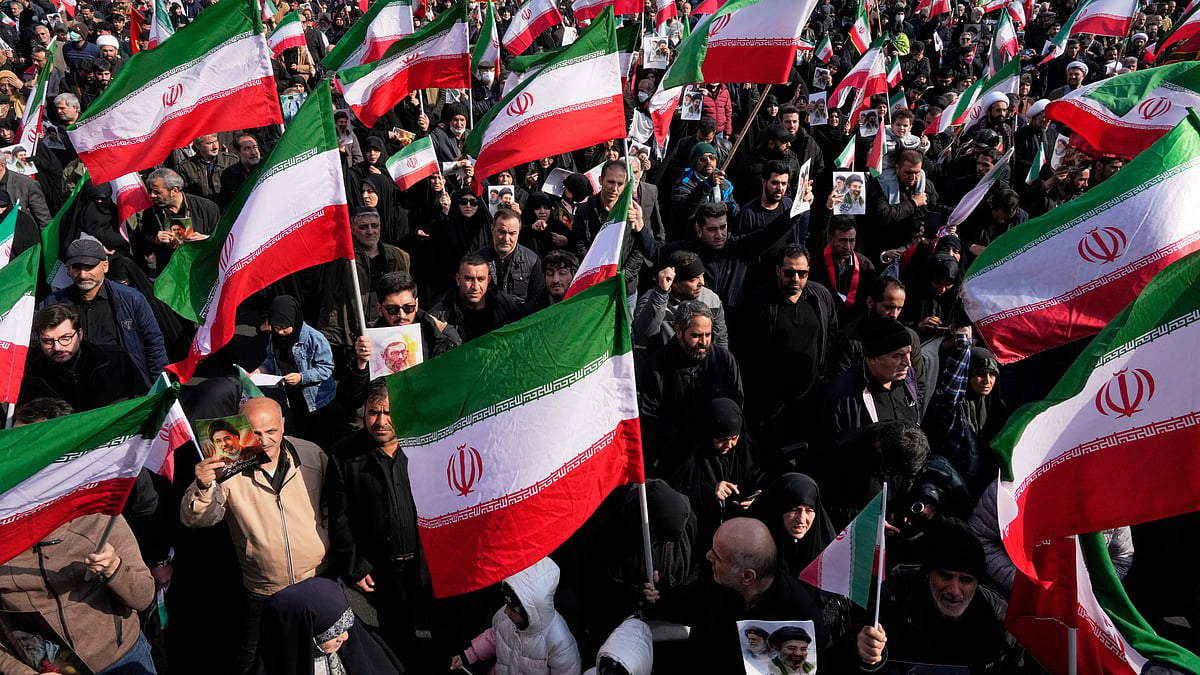
The skies over Tehran lit up with fresh explosions as the war between Iran, the United States and Israel entered its eleventh day, deepening fears of a wider regional conflagration across West Asia.
Iranian authorities claimed that US and Israeli strikes have bombed nearly 10,000 civilian sites across the country since the conflict began, leaving more than 1,300 civilians dead, the Al Jazeera reported.
The strikes, officials said, have hit residential neighbourhoods, infrastructure and public facilities, intensifying anger in Tehran and raising concerns about the growing humanitarian toll.
Even as the bombardment continued, the United States said it had launched fresh operations at sea. The US military announced that it destroyed 16 inactive Iranian mine-laying vessels after President Donald Trump warned Tehran of severe consequences if oil shipments through the strategically vital Strait of Hormuz were threatened, the Al Jazeera reported.
The narrow waterway — a crucial artery for global energy flows — has become one of the most sensitive flashpoints in the conflict, with Washington vowing to ensure that international shipping remains uninterrupted.
Beyond Iran’s borders, the confrontation has continued to ripple across the region. Fighters from Hezbollah and the Israel Defense Forces have again exchanged heavy fire along Israel’s northern front, adding another volatile dimension to the expanding war.
Inside Israel, air-raid sirens echoed as Iranian missiles streaked across the sky, with strikes reported in major cities including Tel Aviv and Jerusalem. The attacks marked another round of Tehran’s counter-offensive following days of sustained bombardment.
The shockwaves of the conflict are also being felt across the Gulf. Several countries reported intercepting incoming missiles and drones in recent hours, underscoring how rapidly the crisis is spilling beyond the immediate battlefield. Defence officials in Bahrain, Iraq, Kuwait, Qatar, the United Arab Emirates and Saudi Arabia said their air-defence systems had intercepted projectiles and drones believed to be linked to the widening hostilities.
With missile exchanges, naval operations and proxy confrontations unfolding simultaneously, the conflict now threatens to engulf much of the Middle East, raising alarm among global leaders about the risk of an even broader war and the potential disruption of vital energy routes and international trade.
As the violence continues to escalate, casualty figures across the region are still evolving, with authorities urging the public to follow live updates as the rapidly shifting battlefield reshapes the geopolitical landscape of the Middle East.
Join our official telegram channel (@nationalherald) and stay updated with the latest headlines