World
White House: Trump clears waiver for India to buy Russian oil
Officials say the move aims to stabilise global energy markets disrupted by the escalating US campaign against Iran
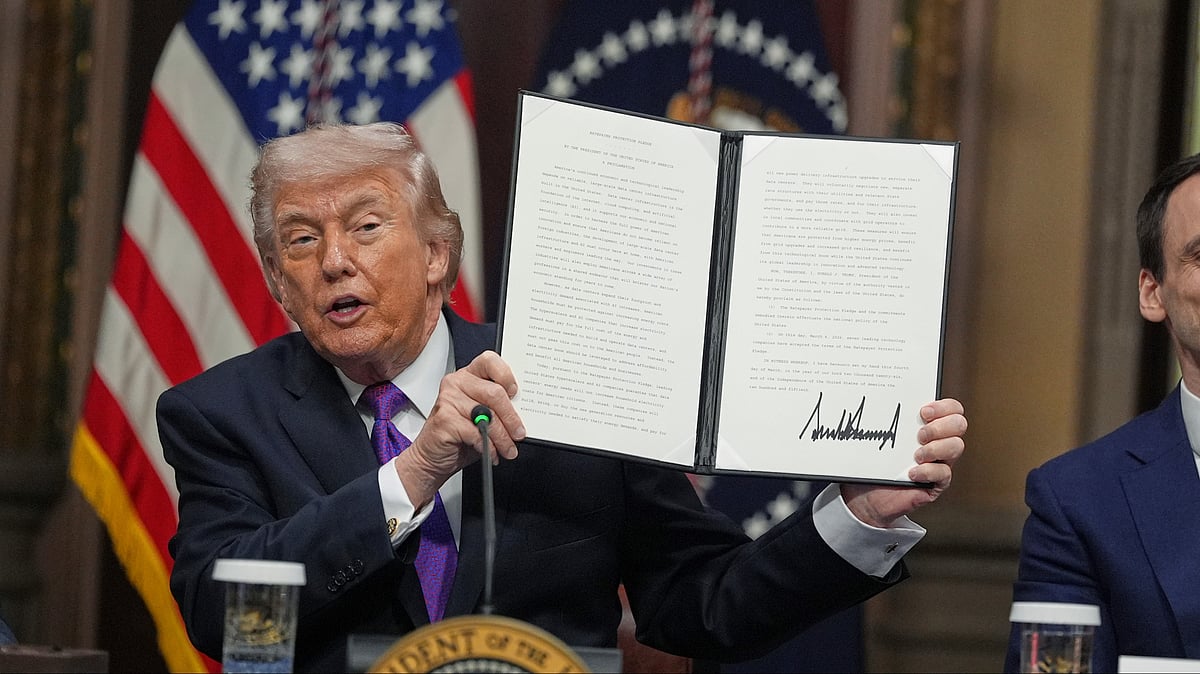
In a move reflecting the delicate balance between geopolitics and global energy security, the White House announced that US President Donald Trump personally approved a temporary waiver allowing India to purchase Russian oil. The decision, officials said, forms part of a broader effort to steady global energy markets rattled by disruptions arising from the escalating US military campaign against Iran.
The waiver followed high-level consultations involving the president, the United States Department of the Treasury, and members of the national security establishment, according to White House Press Secretary Karoline Leavitt. Speaking to reporters, Leavitt described the measure as a pragmatic step taken in recognition of India’s previous compliance with sanctions restrictions on Russian crude.
“The president and the secretary of the treasury and the whole national security team came to this decision because our allies in India have been good actors and have previously stopped buying sanctioned Russian oil,” she said.
Framing the waiver as a short-term stabilising measure, Leavitt noted that the crisis surrounding Iran had triggered tremors across global oil supply chains, creating a temporary vacuum in energy availability. Allowing India to receive the shipments, she explained, was part of Washington’s effort to cushion markets from sudden shocks.
“So as we work to appease this temporary gap of oil supply around the world because of the Iranians, we have temporarily permitted them to accept that Russian oil,” she said.
The press secretary also clarified that the crude cargoes in question had already begun their journey before the waiver was granted, quietly traversing international waters.
“This Russian oil was already at sea, it was already out on the water,” she remarked.
According to the White House, the administration does not expect the temporary arrangement to translate into significant financial gains for Moscow. “So this short-term measure, we don't believe it will provide significant financial benefit to the Russian government at this time,” Leavitt added.
The remarks came as officials also offered an update on Operation Epic Fury, the sweeping US military campaign targeting Iran’s missile infrastructure and naval capabilities. Leavitt said the operation had made rapid strides within just ten days of its launch.
“More than 5,000 enemy targets have been struck so far,” she said, describing the offensive as a decisive effort to degrade Tehran’s military reach.
She claimed the campaign had sharply reduced Iran’s capacity to retaliate. “Iran's ballistic missile attacks are down more than 90 per cent, and their drone attacks are down by approximately 35 per cent since the start of Operation Epic Fury,” Leavitt noted.
American forces have also turned their attention to Iran’s naval assets. According to the White House, more than 50 Iranian vessels have been destroyed, including a major drone-carrier ship — a blow that officials say has rendered the Iranian navy largely “combat ineffective.”
Despite the intensity of the operation, the administration insisted its objectives remain consistent: dismantling Iran’s missile capabilities, crippling its defence industry, neutralising proxy networks, and ensuring Tehran never acquires nuclear weapons.
Meanwhile, Washington has underscored its determination to safeguard global energy lifelines, particularly the strategically vital Strait of Hormuz — the narrow maritime artery through which a significant portion of the world’s oil flows.
Leavitt said President Trump had reaffirmed his commitment to keeping the passage open for international shipping and energy supply. “President Trump reiterated his commitment toward keeping oil flowing through the Strait of Hormuz so the United States and all of our allies can receive their energy needs,” she said.
As part of those efforts, the administration has already introduced measures aimed at calming jittery markets. Among them is the provision of political risk insurance for tankers navigating the volatile waters of the Persian Gulf.
Officials also indicated that the United States Navy stands ready to escort commercial vessels if required — a step that would ensure the uninterrupted flow of energy through one of the world’s most critical maritime corridors.
Together, the waiver for India and the robust military posture in the Gulf underscore Washington’s dual strategy: wage a relentless campaign against perceived threats while simultaneously guarding the fragile equilibrium of global energy markets.
With IANS inputs
Join our official telegram channel (@nationalherald) and stay updated with the latest headlines