World
With friends like Netanyahu and Trump, does India need foes?
India will be among countries which will be hit the hardest by the American plan to tax Strait of Hormuz
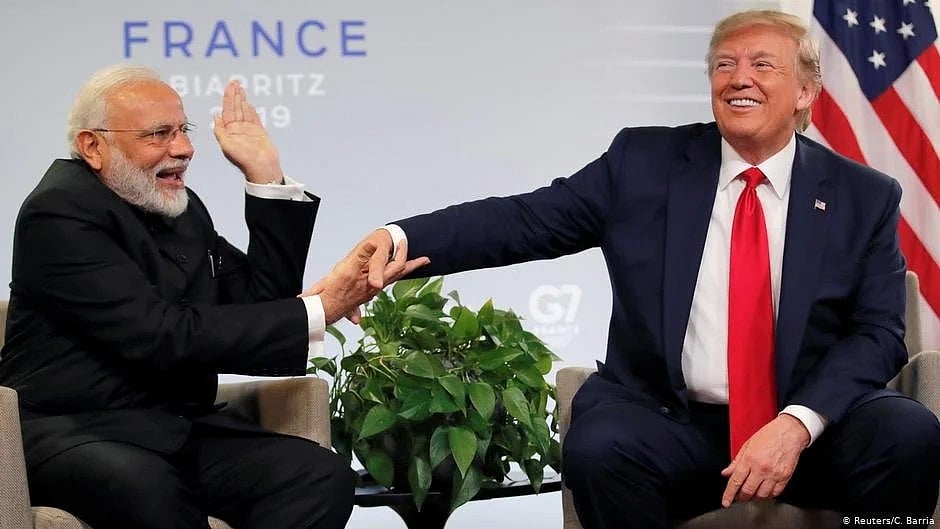
India finds itself cornered as the war in the Middle East threatens to spin out of control. Strategic analyst Trita Parsi points out that India has sided with Israel and the US, unlike China, which has stayed neutral.
Did Israel inform Prime Minister Narendra Modi of its plan to bomb Iran when the prime minister inexplicably visited Israel barely two days before the attack? Even if it is assumed that Israel did not inform Modi of its plans, it raises questions about whether it was a friendly act, Parsi quipped in an interview with Dekoder on Monday. The war did not create an energy crisis for Israel, but it did for India, he pointed out.
Similarly, the United States does not appear to have kept Indian interests in mind while bombing Chabahar, 750 kilometres from the Strait of Hormuz, again last week. India, under US pressure, had withdrawn from the project to jointly develop the port, but Chabahar continues to promise and provide India access to Afghanistan and Central Asia without going through Pakistan.
Now, the US President's baffling announcement of charging a fee on ships passing through Hormuz — till last week, the US and President Donald Trump were totally opposed to any fee at all — is also likely to adversely affect India and several other Asian countries.
The flamboyant and erratic US President's Monday post on Truth Social has been greeted with disbelief by maritime experts, who believe the proposal to be impractical, exorbitant and unimplementable. Iran's Foreign Minister Seyed Abbas Araghchi was quick to mock Trump.
Responding to Trump's post that "...the US as a matter of fairness, will be reimbursed, at the rate of 20 per cent on all cargo shipped, for any and all costs necessary to do the job of providing safety and security to this very volatile section of the World," Araghchi took a swipe within minutes.
"POTUS is absolutely right," Araghchi posted on X, adding, "Whoever provides secure and safe passage of commercial vessels through the Strait of Hormuz should be compensated for this service. Iran has always been the 'Guardian' of the Strait and will remain so forever. 20 per cent is of course too much. We will be fair."
Political analysts have been quick to point out that Iran can mock the US further by announcing that it would charge "only" half as much as the US and expect 10 per cent of the cargo value to be paid.
To put it in perspective, Iran had proposed charging a $1-per-barrel fee on commercial tankers passing through the strait. It would have amounted to roughly 1.2 to 1.3 per cent of the cargo's total value, far less than Trump's suggested 20 per cent.
With global crude oil trading between $78 and $82 per barrel, a standard two-million-barrel supertanker carrying cargo worth roughly $160 million would have fetched Iran $2 million in fees, which would have been shared with Oman. President Trump's 20 per cent fee would amount to $32 million — 16 times more.
India is a large importer of energy, and around 40 per cent of its crude oil imports, 60 per cent of its LNG imports and a whopping 90 per cent of its liquefied petroleum gas (LPG) imports used to come from West Asia through the Strait of Hormuz.
The country's dependence on imports stands at over 88 per cent for oil, 60 per cent for LPG and about 50 per cent for natural gas, which is imported as LNG.
If a barrel of oil is priced at $75 — Brent crude futures rose to $86 on Tuesday — a 20 per cent fee would inflate the landed price in India by $15 to well over $90 per barrel, it is estimated.
The final price paid by the importer includes the cost of freight and insurance, and not just the price of the commodity. The West Asia conflict has already led to higher war-risk insurance premiums and freight charges for vessels in the region.
A 20 per cent fee on the value of the cargo would be exorbitant, according to industry experts, given that the actual shipping cost is usually far lower.
Join our official telegram channel (@nationalherald) and stay updated with the latest headlines