Nation
’25 tests Delhi Police: Red Fort blast, station stampede strain force
Streets, stations and public spaces became theatres of emergency as officers battled violence, panic and uncertainty
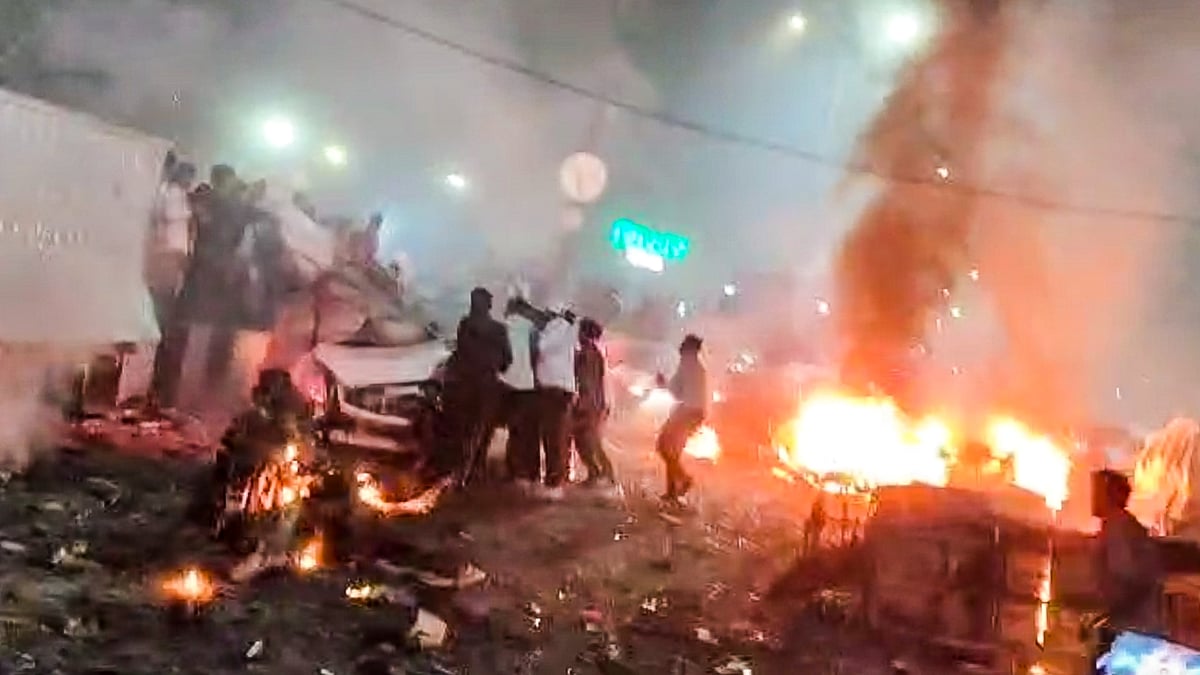
The Delhi Police endured a year of relentless trials, confronting tragedy, terror and crime as the capital reeled under a series of shocks that tested the city’s sense of security and the force’s endurance.
From the blood-soaked aftermath of the Red Fort car bomb to a dawn stampede at New Delhi Railway Station that shattered the city’s morning calm, the police found themselves navigating crisis after crisis. Streets, stations and public spaces became theatres of emergency as officers battled violence, panic and uncertainty.
The darkest hour came on 10 November, when a devastating car bomb ripped through the Chandni Chowk–Lal Qila belt, killing 15 people and injuring several others. The blast left behind scenes of horror, prompting an immediate lockdown of the area, closure of metro services, and the deployment of bomb squads and forensic teams. While the Delhi Police led the initial investigation, the case was later transferred to the National Investigation Agency.
Earlier in the year, on 15 February, tragedy struck again when a crowd crush at New Delhi Railway Station claimed 18 lives and injured 15 others. Commuters slipped and fell on an overcrowded footbridge above platforms 14 and 15, exposing deep-rooted infrastructure gaps at one of India’s busiest transit hubs.
Security concerns escalated further on 20 August when Delhi chief minister Rekha Gupta was attacked during a public hearing in Civil Lines. The assailant, who breached tight security to strike at her camp office, was later charged with attempted murder and criminal conspiracy, triggering an overhaul of VIP security protocols.
Amid the chaos, the force grappled with sensational criminal cases that captured public attention. In May, police tracked down Devender Sharma — a former Ayurvedic practitioner turned serial killer known as “Doctor Death” — who had jumped parole and was living incognito as a priest in Rajasthan. Investigators uncovered chilling details, including allegations that victims were disposed of by feeding them to crocodiles.
The year also saw a high-profile investigation into a self-styled godman accused of sexually harassing female students at a Delhi institute, adding another layer of complexity to the force’s workload.
Persistent bomb hoaxes targeting schools, hospitals and colleges kept intelligence units on edge, with officers chasing digital trails through VPN networks in a bid to identify anonymous callers.
Street crime, too, made headlines. In August, Congress MP R. Sudha was targeted in a chain-snatching incident in the high-security enclave of Chanakyapuri. Police arrested the habitual offender within 48 hours, but the episode reignited debate over public safety, particularly for women and senior citizens.
The year was also marked by turbulence at the top. After police chief Sanjay Arora’s retirement, SBK Singh’s brief 21-day tenure as commissioner ended with his transfer to prisons, paving the way for Satish Golchha. Under his watch, police-criminal encounters surged, including a major operation in Rohini on 23 October in which four notorious gangsters were killed.
Other tragedies punctuated the year, including the collapse of a four-storey building in northeast Delhi’s Welcome area in July, which claimed six lives, including that of a toddler.
As 2025 draws to a close, the Delhi Police stands reflective yet resolute — shaped by a year that strained its crisis response, investigative muscle and public trust. The coming months promise renewed focus on urban safety, fortified security at critical sites, and an intensified crackdown on crime in a city that demands vigilance at every turn.
With PTI inputs
Join our official telegram channel (@nationalherald) and stay updated with the latest headlines