Nation
87 days in custody, then bail: Who compensates Jalil Akhtar?
After being detained as a suspected Bangladeshi, a Bengali man walks free after a court finds no conclusive evidence of foreign nationality
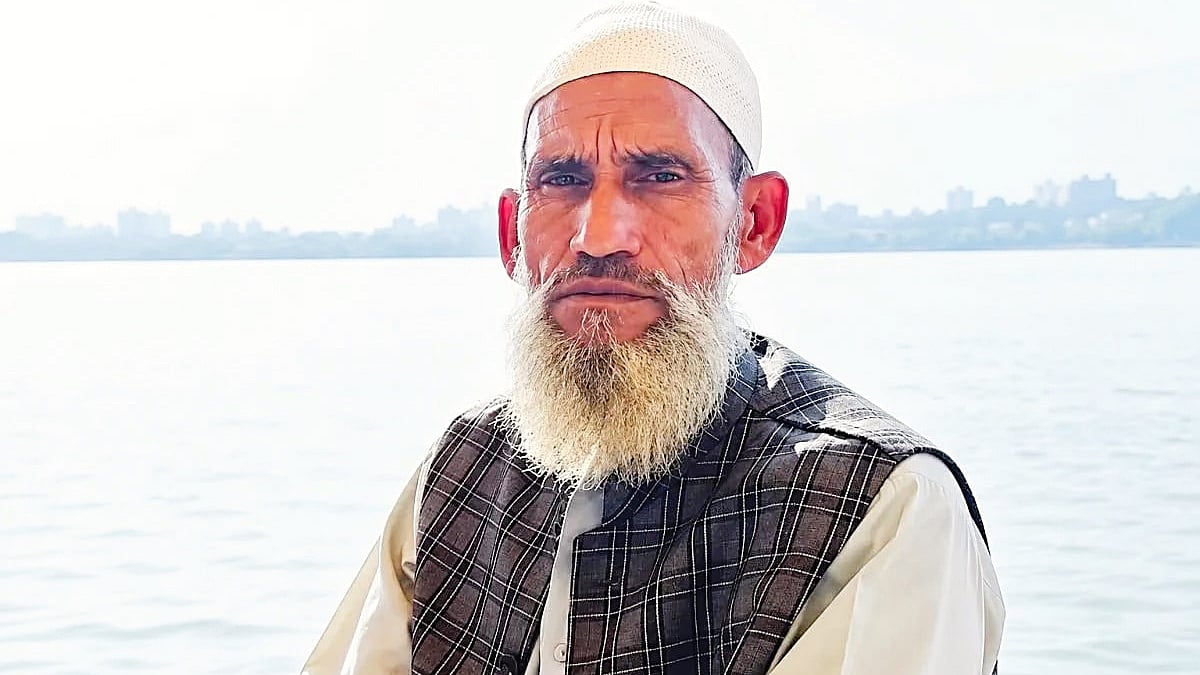
After spending 87 days in detention and custody on suspicion of being a Bangladeshi national, 70-year-old Jalil Akhtar is finally free.
The question now is: who compensates him for those 87 days?
An Islampur court granted Akhtar bail on Monday, 14 September after the prosecution failed to produce conclusive evidence establishing that he was a Bangladeshi national. The court noted that police verification had found his electoral photo identity card details on the Election Commission's ERONET portal and in the 2026 electoral roll. His Aadhaar and ration-card records were also found to be valid. His lawyers produced evidence that his name had appeared on electoral rolls as far back as 1995, including the 2002 and 2026 rolls.
Yet Akhtar had already — illegally —spent nearly three months behind bars.
The state opposed his bail, arguing that his release could potentially pose a threat to national security. The court nevertheless granted bail on a Rs 10,000 bond, taking into account his age, absence of criminal antecedents and the documentary and electoral records available on the case file.
The extraordinary sequence of events surrounding Akhtar's detention had first been reported in detail by the Bangla webzine Guruchandali. According to that account, Akhtar, a daily-wage worker from Bagrai village in Uttar Dinajpur district, was picked up by police in June on suspicion of being a Bangladeshi national. His family insisted that he had never been to Bangladesh and produced documents to establish his Indian identity.
What followed was a bewildering journey through holding centres and police custody. Akhtar was moved to detention facilities at Fulbari and Chakulia. His family repeatedly submitted documents to the police, expecting that verification would establish his identity and lead to his release. Instead, he was eventually produced before an Islampur court, with the police alleging that he was from Haripur in Bangladesh's Thakurgaon district.
The subsequent court proceedings became a succession of dates while the promised verification remained unresolved, according to the original Guruchandali report.
There was an even more extraordinary turn. Akhtar was taken to the border on more than one occasion in an apparent attempt to deport him. But the process could not be completed because he maintained that he was an Indian citizen. The BSF eventually returned him to the authorities.
In other words, the machinery set in motion to establish that Akhtar was a foreign national ultimately ran into the most basic obstacle: the man himself insisting that he was Indian — and refusing to accept deportation to a country he said he had never lived in.
The court's order does not amount to a judicial declaration settling every question of Akhtar's nationality. But it does establish something important: after nearly three months of custody, the state had not produced the conclusive material needed to justify continuing his detention, while police verification had confirmed the validity of several of his Indian government records.
That leaves the larger questions hanging. Who pays for the lost 87 days?
Who compensates an elderly man for being taken from his home, confined in holding centres and jail, separated from his family and subjected to the prospect of being pushed across an international border — if the case against him ultimately fails to establish that he was a foreign national?
The bail order, by itself, does not answer that question.
Akhtar's case comes at a particularly fraught moment in India-Bangladesh relations.
As reported in National Herald earlier, the two countries have been attempting to repair ties after the political upheaval in Bangladesh in August 2024. But that tentative diplomatic reset has been accompanied by growing friction along the 4,100-km border over allegations of 'push-ins' — people being forced or attempted to be forced into Bangladesh without the nationality-verification procedures that Dhaka says should precede repatriation.
Bangladesh has alleged that people pushed towards its territory included Indian citizens. India, for its part, has maintained that suspected Bangladeshi nationals are being dealt with through established verification mechanisms. The competing claims have become a significant irritant in bilateral relations.
That is why cases such as Akhtar's matter beyond the fate of one elderly man. A country has every right to identify and deport foreign nationals who are illegally residing on its territory. But nationality is not a question that can safely be settled by assumption, accent, appearance, religion, poverty or geography. It requires evidence.
And the consequences of getting that determination wrong are not abstract.
Akhtar's case therefore raises a question that goes beyond the courtroom: when the State's suspicion turns out to be wrong, is bail enough?
For Jalil Akhtar, 87 days of his life cannot be returned. The question is whether anyone is accountable for them.
With agency inputs
Join our official telegram channel (@nationalherald) and stay updated with the latest headlines