Nation
Are you an Indian citizen? The government too is not sure
India has no single citizenship document; even accepted proofs require verification as they can be forged, the government says
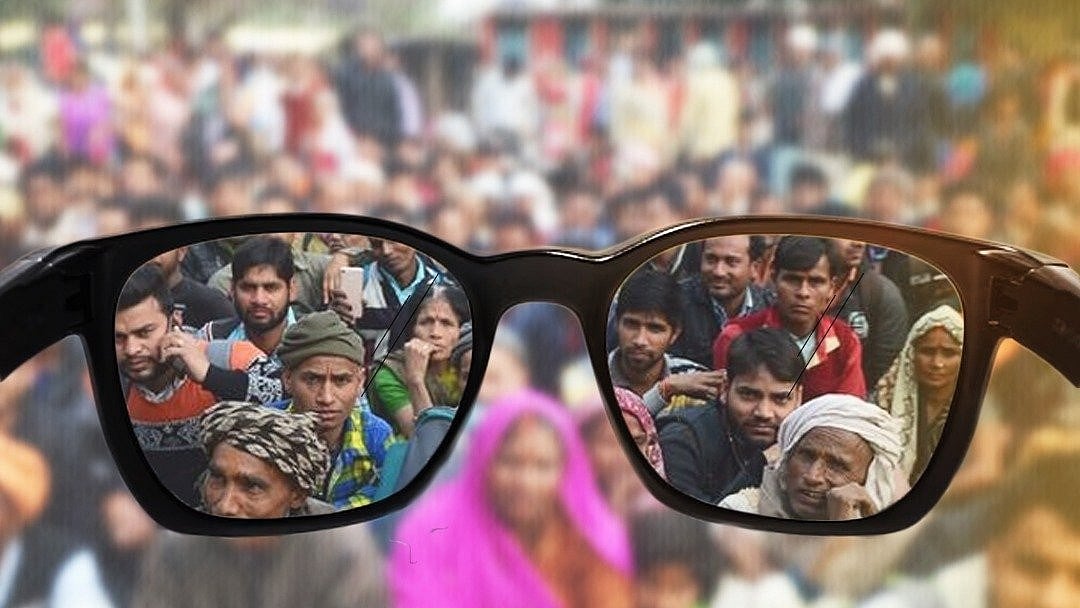
Despite the National Register of Citizens (NCR) in Assam, National Population Register (NPR) and the SIR (Special Electoral Revision) designed to weed out non-citizens, there is no single document in India that is legally valid as proof of citizenship. The biometric identification number Aadhaar is held as proof of residence, not of citizenship. Court rulings have held that the Elector’s Photo Identity card (EPIC) too is not proof of citizenship.
Now comes the MEA’s clarification that a passport is a travel document and not proof of citizenship has added to the confusion and outrage. In answer to a question if holding an Indian passport is not enough to prove one’s citizenship during electoral roll revisions, a spokesman of the Ministry of External Affairs clarified on Wednesday, 24 June 2026 that a passport is a travel document, not a proof of citizenship. The reply has added to the anxiety and confusion among people about citizenship proof acceptable to the government.
Who then is an Indian citizen? If Aadhaar, passport, PAN (meant to identify tax payers), driving license, voters’ cards are not proofs of citizenship, then what is?
One of the unspoken reasons for not accepting these documents as ‘proof’ is because they are deemed to be open to forgery. Forged and fake passports and Aadhaar are not uncommon. But then in our ‘fake nation’, every government document is suspect and can and possibly are forged. Another reason why a passport specifically is not accepted as proof of citizenship is because the Indian Passports Act, 1967 allows the government the discretion under section 20 to issue Identity Certificates to non-Indians to enable them to travel abroad. Tibetan refugees and people displaced from Bangladesh are some such people who appear to have travelled on Indian ‘passports’.
When the Citizenship Act was enacted in 1955, Section 3 stated that all those who are born in India on or after 1 January 1950 will be an Indian citizen. This was later diluted following an amendment in 1986, which limited automatic birthright citizenship to those who were born in India between 1 January 1950 and 1 July 1987. An added condition that one of the parents must be an Indian citizen was introduced for granting citizenship to those who were born in India after 1 July 1987.
The condition was further tightened after a 2003 amendment, which stated that those who were born after 3 December 2004 will be eligible for Indian citizenship only if one of the parents is an Indian citizen and the other is not an illegal migrant.
Former foreign secretary Nirupama Menon Rao on Thursday defended the MEA’s clarification to be legally and technically valid.
“A passport is issued under the Passports Act, while citizenship is governed by the Citizenship Act, 1955. One law regulates the document; the other regulates the legal status... A passport does not create citizenship. Nor is it the legal instrument that finally determines citizenship if that status is challenged before a court. Like many democracies, India distinguishes between citizenship law and passport law. In rare cases involving fraud, disputed parentage or illegal acquisition, citizenship may have to be established through the provisions of the Citizenship Act and supporting evidence,” Rao proceeded to post on X.
“A passport is issued because the Government has satisfied itself that you are an Indian citizen. It is therefore powerful evidence of citizenship in ordinary life and in international travel. But in a legal dispute over citizenship itself, the governing law remains the Citizenship Act, and a passport is not conclusive proof that overrides all other evidence,” she went on to add.
That the government itself is not clear about the proof became clearer in 2020 in a press statement, as reported in Live Law, issued by the union government in the wake of the controversy swirling around CAA.
“Citizenship can be proved by submitting any documents related to date of birth and place of birth. However, a decision is yet to be taken on such acceptable documents. This is likely to include voter cards, passports, Aadhaar, licenses, insurance papers, birth certificates, school leaving certificates, documents relating to land or home or other similar documents issued by government officials. The list is likely to include more documents so that no Indian citizen has to suffer unnecessarily,” the press release stated. The issue has not been settled however.
Another impediment is that millions of Indians do not have documents like birth certificates. Activist Yogendra Yadav, during the Supreme Court hearings on the NRC/CAA issue, cited survey data showing that only a small fraction of Indians possess formal identity documents: about 5 p.c. hold passports, around 50 p.c. have birth certificates, and roughly 60 p.c. possess school leaving certificates, he claimed.
The government’s own figures are higher though. As of 2024, official government data shows that about 9.26 crore Indians hold valid passports (roughly 6.5–7 per cent of the population), while birth registration coverage has reached over 89 per cent nationally, though not all registered births result in birth certificates issued.
If you are still confused, you can console yourself by the fact that the government too is as confused as you are.
Join our official telegram channel (@nationalherald) and stay updated with the latest headlines