Nation
Bengal polls: Women demand jobs, safety, dignity beyond welfare
For many women, expectations are layered — there is recognition of progress, but also a growing demand to address persistent gaps
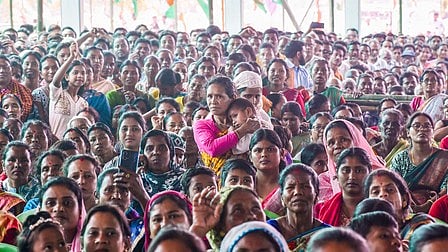
As West Bengal moves towards assembly elections, women across sectors say the next government must prioritise job creation, safety and long-term empowerment, while continuing welfare measures that have supported them over the years.
For many women in the state, expectations are layered — there is recognition of progress, but also a growing demand to address persistent gaps. Schemes such as Lakshmir Bhandar and Kanyashree are widely acknowledged for easing financial burdens and helping girls stay in school. However, many stress that empowerment must go beyond financial assistance.
Singer Ujjaini Mukherjee told IANS that while such schemes have improved access to education and financial support, long-term empowerment depends on greater opportunities, awareness and equal access to professional growth.
"Women in Bengal are definitely becoming more empowered, especially in education and careers. Schemes like Lakshmir Bhandar and Kanyashree have helped many women and young girls gain financial and educational support, which is a positive step. However, long-term empowerment also requires more opportunities, awareness and equal access to professional growth," said Mukherjee while speaking to IANS.
She also highlighted concerns in the cultural sector, long considered a cornerstone of Bengal’s identity. According to her, while talent remains abundant, institutional support is lacking. She called for better cultural infrastructure, transparent support systems, funding, and national-level exposure for artistes. Mukherjee further advocated pension schemes for senior artists and technicians, along with accessible healthcare for those unable to work due to age, illness or unemployment.
Safety and law enforcement remain central concerns. While some improvements are acknowledged, many women feel implementation needs to be more consistent. Suchismita Bagchi, a senior professional in the education sector, emphasised the need to restore public trust in law enforcement by ensuring police act independently and impartially, free from political influence.
She also stressed the importance of transparency in governance, suggesting regular publication of white papers detailing budget allocation, utilisation and implementation. Bagchi called for reopening closed schools, transparent teacher recruitment to fill vacancies across educational institutions, and the introduction of civic education — covering rights and duties — into school curricula. She added that a conducive environment for business and investment is essential to drive economic growth.
Entrepreneur and engineering consultant Anindita Maita Das echoed similar sentiments, cautioning against over-reliance on welfare schemes.
"I support schemes such as Kanyashree, but freebies alone cannot help in the cause of women empowerment. Dependence solely on financial assistance from the government will stop women from seeking out opportunities. They will do more harm than good in the long run. Schemes must not come out for vote-bank politics," Das told IANS.
Das also raised concerns over the privatisation of education, particularly in private medical colleges, where she said merit can be compromised in admissions.
Meanwhile, homemaker Stuti Karmakar underscored the importance of safety and dignity in workplaces. She said women must be able to work without fear, calling for stronger safeguards to prevent incidents like the RG Kar Medical College case. Ensuring women’s rights, she added, must remain a top priority for the next government.
Overall, women across the state say the challenge before the incoming administration will be to move beyond welfare-driven support and build robust systems that ensure sustainable empowerment, economic opportunity and personal security.
With IANS inputs
Join our official telegram channel (@nationalherald) and stay updated with the latest headlines