Nation
Bengal’s new university transfer law: Reform or control?
Opposition questions who will decide when transfers are necessary and what safeguards will protect academics from punitive postings
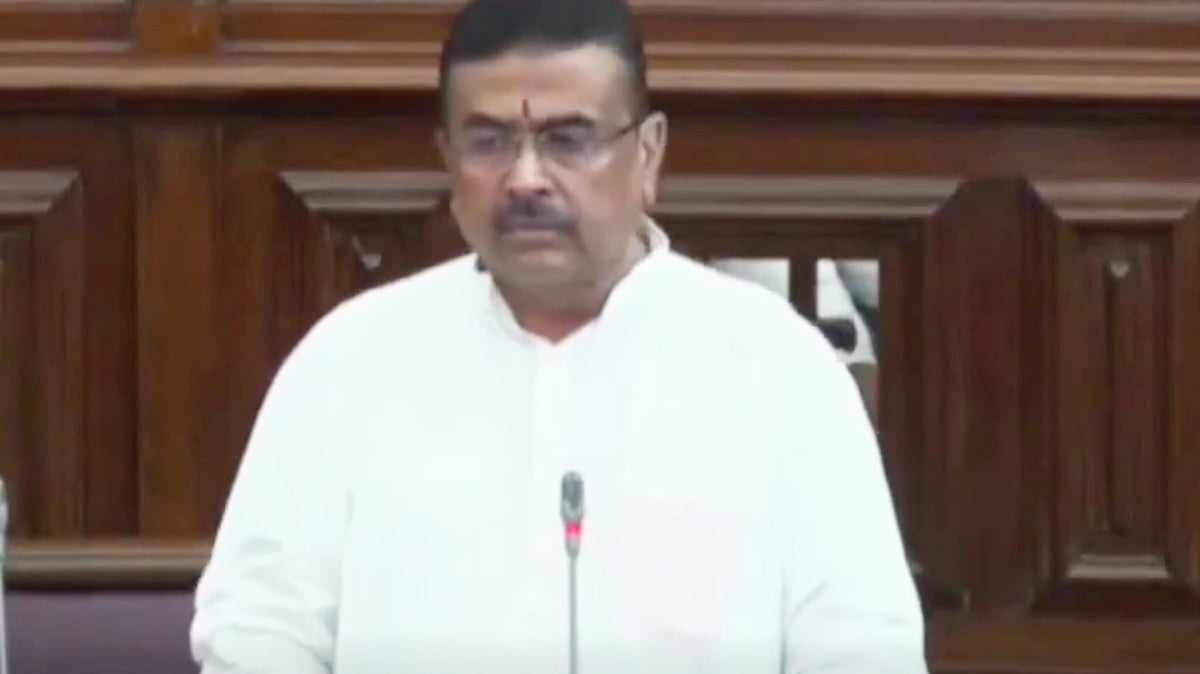
The West Bengal government on Thursday, 10 September pushed through a contentious amendment allowing the transfer of teachers and non-teaching employees between state universities, despite strong opposition from the Trinamool Congress, Left and ISF.
The Bill, passed during a stormy special session of the Assembly, has triggered a wider debate over university autonomy, academic freedom and the extent of government control over higher education.
The West Bengal Universities and Colleges (Administration and Regulation) Amendment Bill, 2026 introduces a new Section 14A to the 2017 Act. Under the provision, the Chancellor, in consultation with the state government, can transfer an employee of one state university to another on the ground of “administrative necessity”.
The government says transferred employees will retain their seniority and service benefits and will be entitled to a transfer grant and reimbursement of the cost of moving their belongings. The Bill is also intended to address the absence of a specific mechanism for transfers between different state universities.
The government has defended the measure as part of its proposed “one state, one education system” policy. Chief minister Suvendu Adhikari argued that experienced teachers should be deployed to newer and weaker universities, where their expertise could help improve teaching, administration and research.
The chief minister's argument, however, failed to convince the Opposition, which repeatedly questioned who would decide when a transfer was necessary and what safeguards would prevent the power from being used against teachers who criticised the government.
ISF MLA Nawsad Siddique said, “If the number of students in a specific subject at a university drops, it may be necessary to utilise the concerned teacher's merit and experience elsewhere. However, it is crucial to ensure that this transfer power does not become a tool for the ‘selective targeting’ of individuals for political reasons.”
He focused particularly on academic freedom and research. He questioned whether a teacher's consent would be required before a transfer and sought guarantees on seniority, pay protection, promotion and other service benefits.
Siddique also warned that compulsory transfers could disrupt research projects and the work of doctoral students. A professor supervising researchers or managing a laboratory or research grant, he argued, could not simply be moved without considering the consequences.
He said the government should consider fresh recruitment to fill vacancies instead of transferring existing teachers from one university to another. He also urged the government to consult teachers' associations and universities before implementing such a major change.
CPM MLA Mostafizur Rahman described the Bill as an “ominous sign”, arguing that it could weaken the independent status of universities.
Mostafizur pointed out that teachers and other employees were appointed under the statutes and regulations of individual universities, many of which did not provide for inter-university transfers. He questioned whether their employment conditions could subsequently be changed through legislation.
He also raised concerns about the role of university statutory bodies such as Syndicates and Executive Councils. Decisions taken without these bodies, he argued, could undermine the autonomy of universities.
TMC MLA Alifa Ahmed questioned the government's use of the phrase “administrative necessity”. She asked whether family circumstances would be considered before an employee was transferred and whether a teacher who criticised government policies could be moved to another university as punishment.
Ahmed nevertheless acknowledged that greater academic exchange could benefit universities. She suggested alternatives such as visiting faculty programmes, inter-university exchanges, joint academic projects and collaborative research rather than compulsory transfers.
The Opposition's concerns were amplified by the chief minister's aggressive criticism of sections of the academic community, particularly teachers at Jadavpur University and members of the Jadavpur University Teachers' Association.
Adhikari said the government had details of the activities of JUTA members and mocked that academics with “vast knowledge and international intellect” could be sent to newer universities to strengthen them.
He also took aim at teachers unhappy with the proposed changes to their service conditions. “Transfers are an integral part of government service,” Adhikari said, adding that those who found government employment unacceptable could quit and become full-time political activists.
His remarks came against the backdrop of continuing political tensions at Jadavpur University. The chief minister also warned that slogans he considered 'anti-national' would not be tolerated on university campuses, saying the government would respond “in the language of Netaji, not Gandhi”.
Join our official telegram channel (@nationalherald) and stay updated with the latest headlines