Nation
States unhappy but forced to accept 41 pc share in taxes until 2031
In 2015, the 14th Finance Commission raised devolution to states from 32 to 42 pc, adjusted to 41 pc after J &K ceased to be a state in 2019
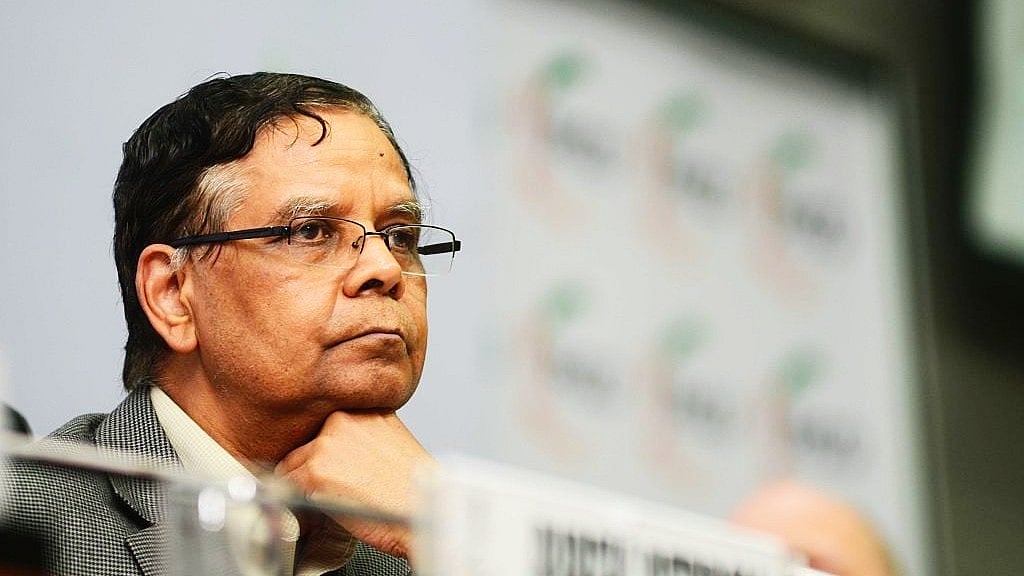
Voicing his disappointment with the Union Budget and the states' share in Central taxes, Tamil Nadu chief minister M.K. Stalin said, “While several states demanded that the share of states in the total tax revenue be increased from 41 per cent to 50 per cent, this demand has once again been ignored, and the share has been retained at 41 per cent.”
Most other chief ministers have been quiet, though, until they work out the formula used by the 16th Finance Commission headed by Dr Arvind Panagariya.
This is because the Finance Commission, a constitutional body entrusted with the task of fixing the rate of devolution of taxes to states, has this time tweaked the formula to reward better-performing states by marginally increasing their share.
It has also changed the various weightages used to determine a state’s share, to marginally reduce the share of laggard states, mostly in the north and east. It has also come up with something new, a ‘Finance Commission Grant’ of Rs 1.2 lakh crore to the states.
As a result, southern states — besides states like Gujarat, Maharashtra and Haryana, which contribute more to the GDP — have benefitted more while almost all the ‘poor’ states have seen their share decline, thanks to the 10 per cent weightage to each state’s contribution to national GDP.
Basically, the 16th Finance Commission chose to incentivise those states that contributed more to national GDP growth in the past few years. This has helped to somewhat correct the skew after the 15th Finance Commission retained the old rate of 41 per cent devolution, which has remained unchanged since 2019, and also incentivised the poorer states, the laggards.
For reasons of comparison, the 14th Commission under Dr Y.V. Reddy gave Karnataka 4.71 per cent of the divisible pool of Central taxes in 2015. This was brought down to 3.64 per cent by the 15th Commission. The 16th Commission has restored part of the loss to Karnataka by increasing its share from 3.64 to 4.131 per cent.
The southern states will thus collectively receive just over 17 per cent of the Rs 15,26,254.58 crore in the divisible pool of Central taxes and duties (Budget Estimates) in 2026–27, raising their combined share from 15.8 per cent.
NDA-ruled Andhra Pradesh is set to be the biggest beneficiary under the new formula and is expected to receive Rs 64,362.16 crore this year, while Karnataka is likely to receive Rs 63,049.58 crore. Tamil Nadu follows close behind, with an estimated share of Rs 62,530.65 crore.
Kerala’s share rises to 2.382 per cent from 1.925 per cent, taking its receipts to Rs 36,355.39 crore from the Rs 15,26,254.58 crore divisible pool for the 2026–27 fiscal year. Telangana, however, sees only a modest uptick, with its share rising from 2.102 per cent to 2.174 per cent, and is set to receive Rs 33,180.78 crore.
Implementation of the nationwide GST took away one of the most lucrative sources of revenue from the states. Most states have been complaining of a squeeze, and the 16 Finance Commission acknowledged as much in its report tabled in Parliament.
There was no further space to cut the states’ share in the divisible pool as the Centre’s cesses and surcharges — not sharable with the states — had 'cut' the size of the divisible pool from 89.1 of gross tax revenue in 2014‑15 to 74‑80 per cent during the 2020-24 period, for which actual figures are available.
To put it differently, the Centre’s share of taxes was 10.9 per cent in 2014-15 but went up to the range of 16 and 20 per cent between 2020 and 2024.
“The Commission is of the view that if an efficient and broad‑based system of taxation is to be put in place, a grand bargain would have to be struck between the union and states in which the union would agree to fold a large part of the revenue from cesses and surcharges into regular taxes and states would agree to a smaller share in the resulting larger divisible pool, with no loss of revenues to either side,” the report states.
While the weightage for a state’s population has now gone up from 15 to 17.5 per cent, its demographic performance — how successfully it has managed to contain population growth — has a lower weightage of 10 per cent from the earlier weightage of 12.5 per cent.
Weightage for area of a state, forest cover etc. too have undergone tweaks. The 16th Finance Commission has replaced the previous ‘tax and fiscal efforts’ category, which had a weightage of 2.5 per cent, with a ‘contribution to GDP’ that carries a 10-per cent weight.
Now that the Union government has accepted the rate of devolution and formula recommended by the 16th Commission, there will be no change for the next five years until 2031, when the next Finance Commission will determine the rate.
The question, however, is whether this is fair to the states. With the end of GST compensation in 2022 and mounting debt burdens, states had hoped for a larger chunk of Central revenues to sustain welfare schemes, infrastructure projects, and social spending.
The status quo on devolution will force states to cut back on welfare programmes or increase borrowings, pushing fiscal deficits higher. Poorer states such as Bihar and Odisha, which rely heavily on Central transfers, will be hit harder.
The decision to not increase tax share to states comes at a time when the Union government has been merrily levying cess and surcharges, which are not part of the divisible pool of taxes.
Join our official telegram channel (@nationalherald) and stay updated with the latest headlines