Nation
Char Dham temple panels consider move to restrict entry for non-Hindus
Conflicting statements from shrine authorities spark debate over access, constitutionality and tourism
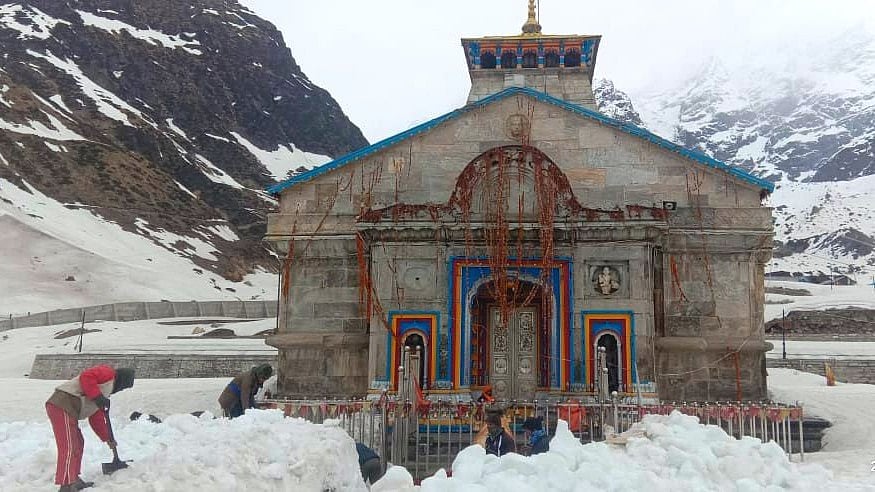
Temple committees overseeing Uttarakhand’s Char Dham shrines are weighing proposals that could restrict the entry of non-Hindus into temple premises, triggering confusion within the boards themselves and criticism from opposition leaders.
The issue came to the fore after Hemant Dwivedi, president of the Badrinath–Kedarnath Temple Committee, was quoted in the Indian Express as saying that a resolution banning the entry of all non-Hindus would be taken up at an upcoming board meeting. He told reporters that the matter would also be discussed with the state administration and Chief Minister, adding that similar demands had been raised about restricting access for non-Hindus at the ghats in Haridwar.
However, a senior office-bearer of the committee contradicted Dwivedi’s remarks, saying no such proposal had yet been discussed. The official, who requested anonymity, said the next scheduled meeting was focused on budgetary matters and that the statement appeared to have been made without consulting board members or stakeholders.
“This is not a simple decision,” the member said. “Traders, labourers and service providers around the temples include many non-Hindus. How can they be excluded? At present, entry into the temple is governed by adherence to religious practices. Non-Hindus accompanying government officials and dignitaries are also allowed.”
The official added that Sikhs, Jains and Buddhists would not be barred, suggesting that the issue should instead be framed around “non-Sanatanis”, rather than non-Hindus.
The Badrinath–Kedarnath Temple Committee, established under a 1948 Uttar Pradesh law, is a government undertaking with 17 members. It manages the administration of both shrines and includes public representatives and government officials. The chairperson and vice-chairperson are nominated by the state government.
A similar sentiment has emerged at Gangotri. Dharmanand Semwal, chairman of the Shri Gangotri Dham Temple Committee, said his board would also deliberate on a proposal to deny entry to those perceived as hurting religious sentiments. He said the Chief Minister had indicated the issue would be discussed, describing it as a concern raised by local residents.
Asked about visits by non-Hindu dignitaries, including Uttarakhand Governor Gurmeet Singh, who is Sikh, Semwal said no resolution had yet been passed. “If approved by the committee and the administration, it would be implemented,” he said, adding that discussions were at an early stage and that the definition of “non-Hindu” itself remained unclear.
The Char Dham sites attract not only pilgrims but also large numbers of international tourists, many of whom visit the region for trekking. In 2025, the four shrines together recorded around 5.1 million visitors. Kedarnath saw the highest footfall at 1.77 million pilgrims, followed by Badrinath with 1.66 million.
Opposition leaders have accused the ruling BJP of using the issue to deepen communal divisions. Former chief minister and Congress leader Harish Rawat said the controversy had little to do with religious practice. He noted that while some restrictions already exist in places such as Har Ki Pauri under municipal bylaws, Hinduism has historically been open and inclusive.
“Other religions are opening their doors, while Hinduism is being portrayed as closing its own,” Rawat said, questioning whether such restrictions would apply even to constitutional authorities who do not belong to the Hindu faith.
Senior Congress leader Suryakant Dhasmana echoed the criticism, calling the proposals a distraction from pressing public issues. He pointed out that Haridwar and the Char Dham sites are public spaces visited by international tourists. “Under the Constitution, anyone has the right to access public spaces. These moves are symbolic and impractical,” he said.
With agency inputs
Join our official telegram channel (@nationalherald) and stay updated with the latest headlines