Nation
CJI Surya Kant recuses himself from hearing on EC appointments law
Says participation would raise conflict concerns; case to go before bench without prospective chief justice
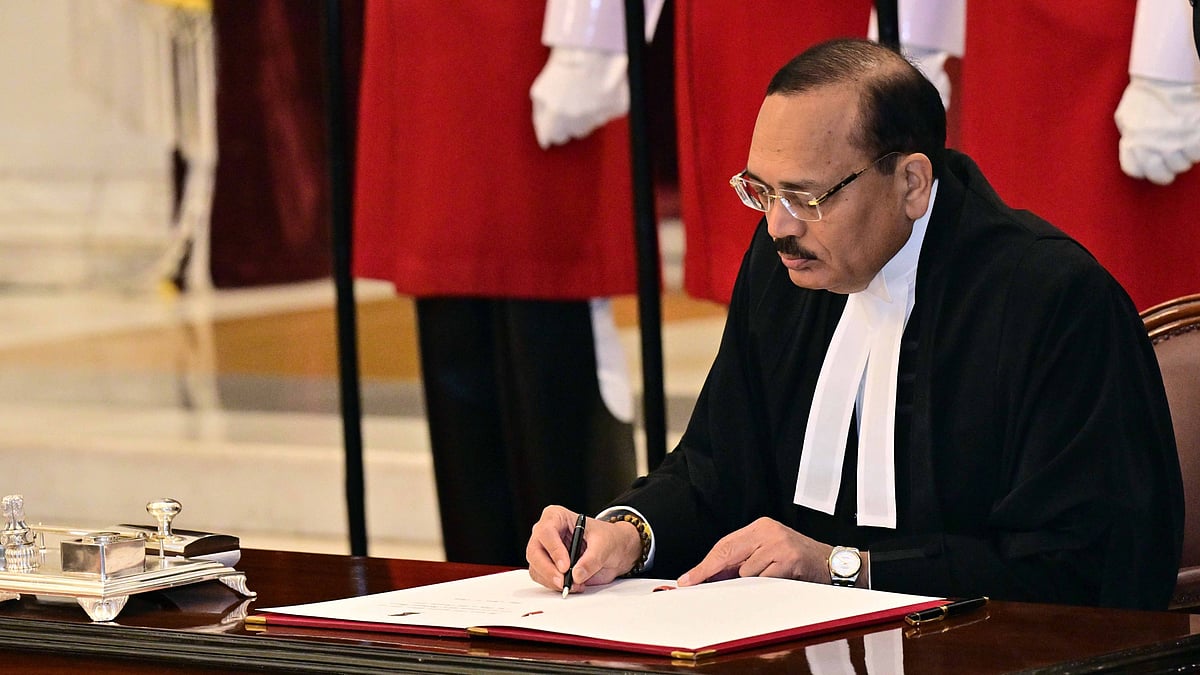
Chief Justice of India Surya Kant on Friday recused himself from hearing a batch of petitions that challenge the constitutional validity of a 2023 law removing the CJI from the committee tasked with appointing the chief election commissioner (CEC) and election commissioners (ECs).
At the outset of the hearing, a bench comprising the CJI along with Justices Joymalya Bagchi and Vipul M. Pancholi was informed of the recusal. “I will be accused of conflict of interest. There is a conflict of interest,” the CJI said, explaining his decision to step aside.
The petitions, filed as public interest litigations, contest provisions of the Chief Election Commissioner and Other Election Commissioners (Appointment, Conditions of Service and Term of Office) Act, 2023. The core challenge is to the exclusion of the CJI from the selection panel responsible for appointing members of the Election Commission.
The CJI observed that it would be more appropriate for the matter to be heard by a bench where no judge is in line to assume the office of the chief justice, in order to avoid any perception of bias.
Advocate Prashant Bhushan, appearing for one of the petitioners, supported this view. He suggested that the case be placed before a bench without any prospective CJI. “I personally don’t have any problem, but it can be listed before a bench not having a prospective CJI,” he said.
Accepting the suggestion, the CJI directed that the matter be listed on 7 April before a different bench, indicating that it would comprise judges who are not in line to become the CJI.
The 2023 law, enacted by Parliament in December that year, came months after a landmark Supreme Court ruling which mandated that election commissioners be appointed by a committee comprising the prime minister, the leader of the Opposition in the Lok Sabha, and the chief justice of India. The court had clarified that this arrangement would operate until Parliament enacted a law on the subject.
Under the new Act, however, the selection committee includes the prime minister, a Union minister nominated by the prime minister, and the leader of the Opposition — or the leader of the largest opposition party in the Lok Sabha — thereby excluding the CJI.
The petitioners argue that this exclusion weakens the independence of the appointment process. Among those who have challenged the law are Congress leader Jaya Thakur and the Association for Democratic Reforms.
Earlier, the Centre defended the appointments of two election commissioners made under the 2023 law, maintaining that the independence of the Election Commission does not hinge on the presence of a judicial member in the selection committee.
In an affidavit, the Union Law Ministry also rejected claims that the appointments, made on March 14, 2024, were rushed to pre-empt a scheduled hearing in the Supreme Court the following day on interim relief in the matter.
The apex court has, so far, declined to stay appointments made under the 2023 law.
Notably, in its March 2023 judgment, a five-judge Constitution bench had ruled that the CEC and ECs should be appointed on the advice of a committee comprising the prime minister, the leader of the Opposition, and the chief justice of India, pending legislation by Parliament.
With PTI inputs
Join our official telegram channel (@nationalherald) and stay updated with the latest headlines