Nation
CJP to launch ‘Adivasi School Thik Karo’ campaign from Gadchiroli
Group alleges decades of neglect of tribal schools, cites student deaths and poor access to higher education
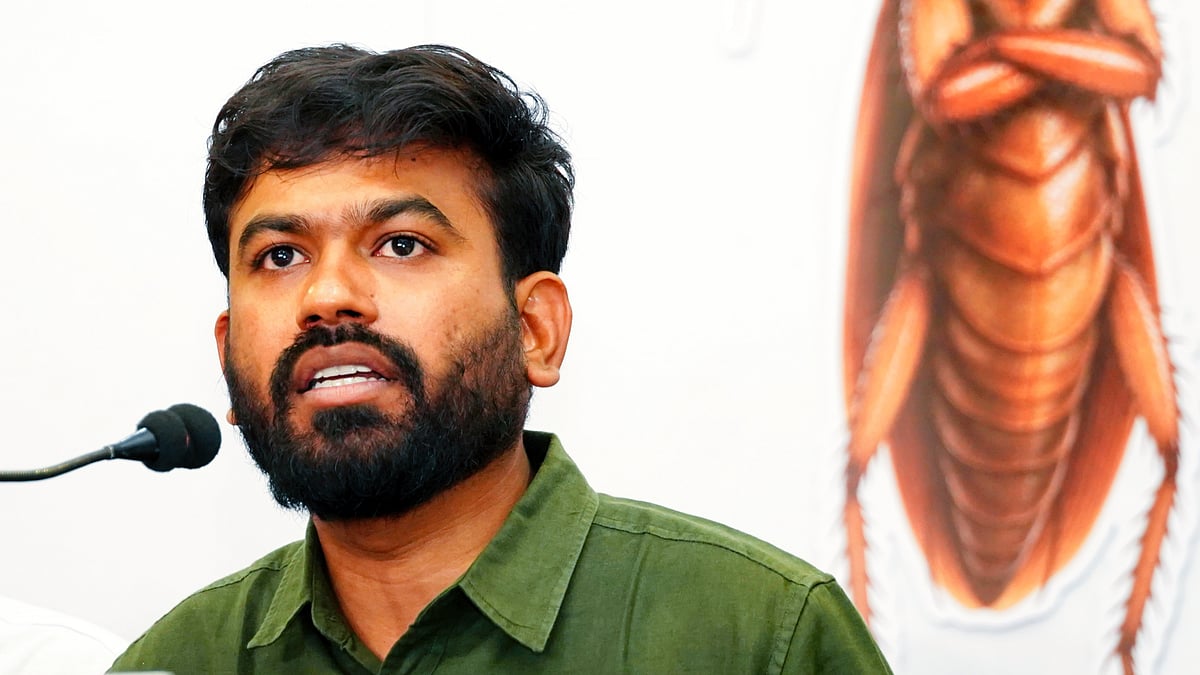
Alleging that tribal schools across India have faced government apathy for decades, Cockroach Janta Party (CJP) founder Abhijeet Dipke on Wednesday announced the launch of the group's ‘Adivasi School Thik Karo’ campaign from Maharashtra's Gadchiroli district on 17 September.
Addressing a press conference in Nagpur on Wednesday, 16 September, Dipke said the campaign would seek to draw attention to the problems and alleged discrimination faced by tribal students.
The CJP had launched ‘School Thik Karo’, a nationwide campaign aimed at improving the condition of rural and urban government schools, a month ago.
"Schools in tribal regions across India have been neglected by all governments in the last 80 years. Therefore, we are starting the 'Adivasi School Thik Karo' campaign from Thursday in Gadchiroli district of Maharashtra," Dipke said.
Gadchiroli is a tribal-dominated district in eastern Maharashtra's Vidarbha region.
As part of the campaign, CJP representatives will visit tribal schools and inspect their facilities and infrastructure, Dipke said. "Almost all governments have ignored tribal students... Political parties spend crores of rupees to build their party headquarters in every district, but they don't have funds for tribal residential schools that are mostly operated from rented properties," he said.
Dipke urged governments to prioritise students in tribal belts, saying they had considerable potential. "The government will have to give priority to the tribal community which comprises a big chunk of the population. Just claiming a 7.8 GDP growth rate or talking about becoming a USD 5 trillion economy is not enough," he said.
"We request all the governments to focus on tribal schools and students from rural parts of the country as they also are the future of the country just like students from big cities and private schools," he added.
Dipke claimed that more than 590 tribal students had died in Maharashtra over the past two years, many allegedly due to snakebites. "Many tribal students die of snakebites. But these deaths fail to draw any response from the government. Had these deaths occurred in Pune or Mumbai, it would have created a furore across the country," he said.
He also claimed that more than 30 tribal students had died in Balaghat, a tribal belt in Madhya Pradesh, over the past two months, and said deaths of tribal students had also been reported from Chhattisgarh, Jharkhand, Odisha, Andhra Pradesh and Uttarakhand. The families of deceased tribal students often do not receive fair compensation, he alleged.
Dipke also raised concerns over the functioning of Eklavya Model Residential Schools, claiming that 477 of the 720 schools were non-functional. "Where will these tribal students go for their studies?" he asked.
He said tribal students accounted for only 22.8 per cent of enrolment in higher education and claimed that only 130 Scheduled Tribe applicants had secured admission to IITs. "Why is the number of admissions and faculties in IITs so low? This is nothing else but outright discrimination," he alleged.
Asked about alleged attempts to ‘saffronise’ the education system and whether this could influence Gen Z, Dipke said young people could not easily be manipulated.
"I don't think Gen Z can be manipulated like that. I think Jantar Mantar (protest) has shown how aware and smart they are. 'Jai Bhim' was one slogan that Gen Z accepted across India irrespective of caste and religion," he said.
Dipke said Gen Z had shown that the country would be guided by the ideologies of Dr Babasaheb Ambedkar and Jawaharlal Nehru and the path shown by Mahatma Gandhi. "They can try to saffronise but they will never be able to achieve it. They can try and they have been trying a lot, but this country always comes back to the values of Dr Ambedkar, Nehru and Mahatma Gandhi," he said.
Asked whether the government had taken cognisance of the CJP's ‘School Thik Karo’ campaign, Dipke said steps had subsequently been taken to improve ashram schools in Vidarbha.
He recalled Maharashtra chief minister Devendra Fadnavis inviting him to visit Zilla Parishad schools in Vidarbha. "This thing prompted the administration to start working on ashram schools. We do not have any political agenda. Our agenda is only that the condition of schools improve. But why did you start working only when the CJP raised this issue? Will you work only when there is an agitation? Is agitation an answer to every issue in the country?" he asked.
Speaking about his recent meeting with Maratha quota activist Manoj Jarange during the latter's ongoing agitation, Dipke said the root cause of demands for reservation was the government's failure to provide adequate education and employment opportunities. "Had everyone received good job opportunities or good education, then this demand would not have arisen," he said.
He said he had met Jarange because the Maratha quota activist had visited Delhi and supported the CJP during its agitation, adding that he had also inquired about his health. "If the government does its job properly, then people will not have to launch hunger strikes and hit the streets," Dipke said.
With PTI inputs
Join our official telegram channel (@nationalherald) and stay updated with the latest headlines