Nation
Congress takes a swipe at PM, says question mark over 'self-declared Vishwaguru's huglomacy'
‘How has India allowed the US to accord Pakistan this new role even after the Namaste Trump, Howdy Modi, and Phir Ek Baar Trump Sarkar campaigns by Modi’
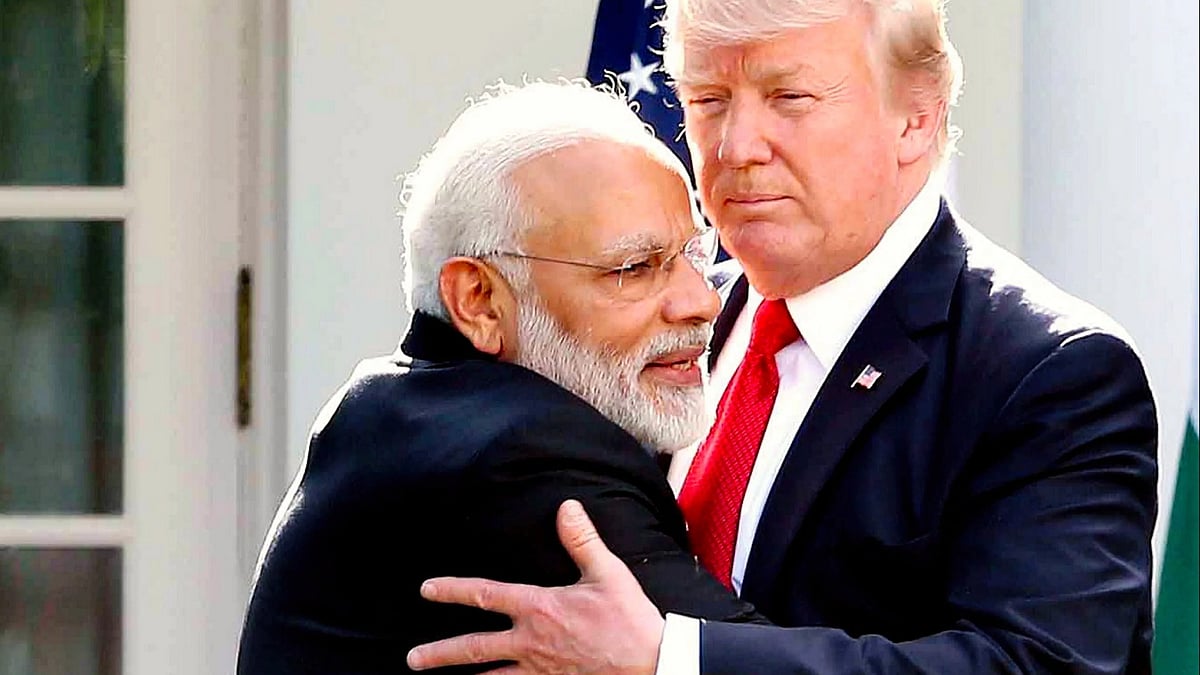
The Congress on Saturday, 11 April, questioned the government's "failure" to prevent Washington from according Islamabad the role of a mediator between the two warring countries despite New Delhi's diplomatic outreach to isolate it following the April 2025 Pahalgam attack.
This raises serious questions about "the self-declared Vishwaguru's huglomacy", said Congress general secretary, communications, Jairam Ramesh, alluding to Prime Minister Narendra Modi.
The Congress leader's remarks came shortly before US Vice President J.D. Vance landed in Islamabad to hold crucial talks with an Iranian delegation led by Parliament Speaker Mohammad Bagher Ghalibaf aimed at ending the conflict in West Asia.
In a post on X, Ramesh said the US-Iran meeting is beginning today in Islamabad and the entire world, including India, is hoping that this is the beginning of a durable peace process between the two countries and "that will not get derailed by Israel's continuing aggression in its neighbourhood".
"But serious questions about the substance and style of the self-declared Vishwaguru's huglomacy arise -- How has Pakistan managed to carve out a new role for itself despite its role in the dastardly Pahalgam terror attack of April 2025 and the diplomatic engagement India mounted to isolate it following the attacks?" he asked.
"This failure is especially damming because the Dr Manmohan Singh Government had very effectively isolated Pakistan after the Mumbai terror attacks in November 2008," he posted.
Ramesh further asked, "How has India allowed the US to accord Pakistan this new role even after the Namaste Trump, Howdy Modi, and Phir Ek Baar Trump Sarkar campaigns of Mr. Modi and his cheerleaders?"
He alleged that India also agreed to a "very clearly one-sided" trade deal where it gave much more than what it got and yet the Modi government failed to gain any leverage with the US.
Peace in West Asia must return quickly, Ramesh said.
The US-Iran talks are taking place amid a two-week halt in the war, which began with Washington and Tel Aviv launching attacks on the Islamic Republic on February 28.
The war has caused oil prices to spiral due to the closure of the Strait of Hormuz, a key shipping route through which 20 per cent of the world's energy is transported.
(With agency inputs)
Join our official telegram channel (@nationalherald) and stay updated with the latest headlines