Nation
Court acquits Arvind Kejriwal in ED summons non-compliance case
Rouse Avenue Court rules in favour of former Delhi CM in cases over skipping Enforcement Directorate summons; detailed order awaited
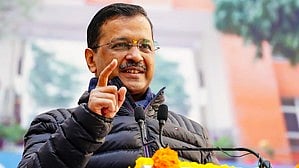
A Delhi court on Thursday acquitted former Delhi chief minister and Aam Aadmi Party (AAP) convenor Arvind Kejriwal in cases relating to alleged non-compliance with summons issued by the Enforcement Directorate (ED) in connection with the Delhi excise policy money-laundering probe.
Additional Chief Judicial Magistrate Paras Dalal of the Rouse Avenue Courts pronounced the verdict on Thursday. A detailed order is awaited.
The ED had moved the court alleging that Kejriwal wilfully failed to comply with summons issued to him for joining the investigation in the excise policy case. The agency had filed two criminal complaints against him, contending that the non-appearance amounted to an offence under the law.
According to the ED, Kejriwal skipped summons issued for 2 November and 21 December 2023, and 3 January and 18 January 2024. Kejriwal had publicly termed the summons “illegal” and questioned the manner in which they were issued.
The acquittal pertains specifically to the cases filed by the ED over alleged non-compliance with its summons and does not adjudicate on the merits of the broader excise policy investigation.
Kejriwal was arrested by the ED on 21 March 2024 in the money-laundering case linked to the now-scrapped Delhi excise policy. He was granted bail on 20 June 2024 by a vacation judge of the Rouse Avenue Courts. However, the Delhi High Court subsequently stayed the bail order after the ED challenged it.
In July 2024, the Supreme Court of India granted Kejriwal interim bail while referring his petition challenging the legality of his arrest by the ED to a larger bench.
The ED has alleged that the Delhi excise policy was implemented as part of a conspiracy to provide a fixed 12 per cent profit margin to certain wholesale liquor operators, a condition which, according to the agency, did not figure in the minutes of meetings of the Group of Ministers (GoM).
The agency has also claimed that the alleged conspiracy was coordinated by Vijay Nair along with other individuals, including members of the so-called “South Group”, and that Nair was acting on behalf of Kejriwal and former deputy chief minister Manish Sisodia.
The court’s detailed reasoning in acquitting Kejriwal in the summons-related cases is expected to provide clarity on the scope of criminal liability for alleged non-compliance with investigative summons.
Join our official telegram channel (@nationalherald) and stay updated with the latest headlines