Nation
Delhi’s AQI remains ‘very poor’ at 308, improvement expected with rising wind speeds
Chhawla records highest AQI at 398, while CPCB attributes differences in AQI figures across platforms to varying measurement methods
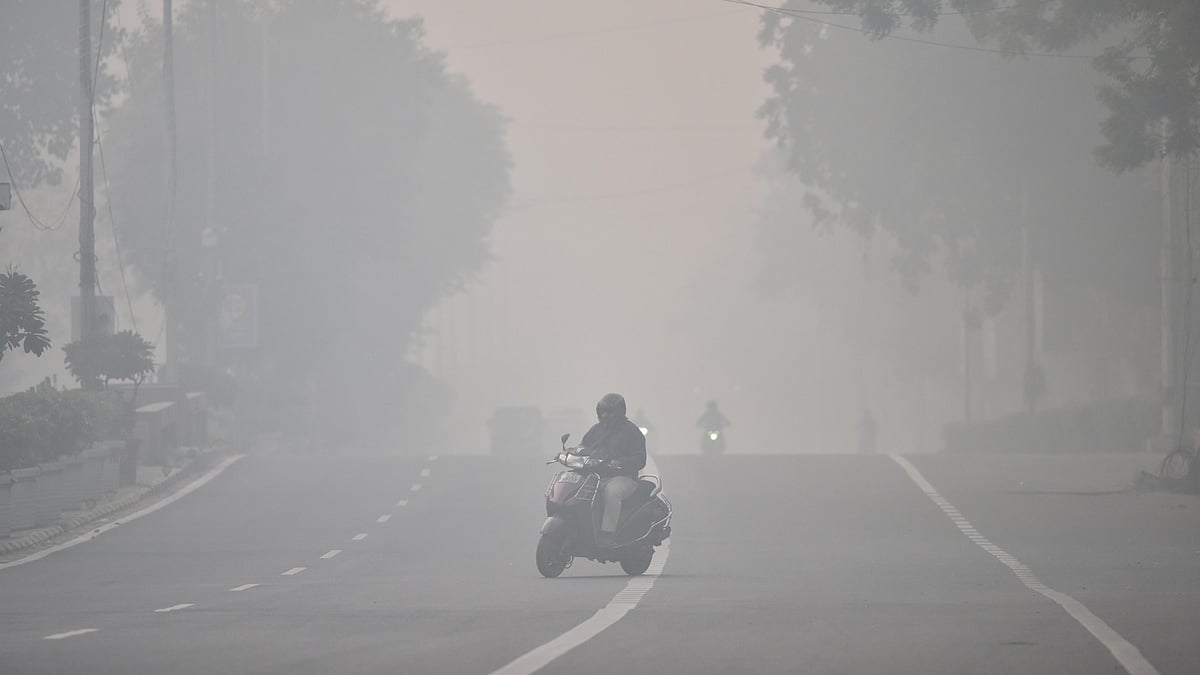
Delhi's AQI stands at 308, placing the capital in the 'very poor' category, with 29 of 59 monitoring stations reporting similar levels
Chhawla records the highest AQI at 398, while the CPCB attributes differences in AQI figures across platforms to varying measurement methods
Rising wind speeds may improve air quality in the coming days, while the IMD forecasts early morning fog or mist until 16 November
Delhi continued to breathe heavily polluted air on Wednesday morning, with the overall Air Quality Index (AQI) standing at 308 at 8.40 am, placing it in the 'very poor' category. However, weather conditions are expected to bring some relief in the coming days as wind speeds are likely to increase.
Of the 59 air quality monitoring stations that reported data on Wednesday, 29 recorded 'very poor' air quality, while the remaining stations fell in the 'poor' category. No monitoring station reported 'severe' pollution levels.
Several parts of the national capital continued to record high pollution levels. Chhawla registered the highest AQI at 398, followed by Chandni Chowk at 383, ITO at 369, Pusa at 361 and NIH Narela at 356.
Other locations reporting 'very poor' air quality included NSIT Dwarka (352), NSUT Jaffarpur (351), Punjabi Bagh (343), Talkatora Garden (333), Jahangirpuri (324), Wazirpur (323), Sirifort (321), Burari (319) and Badarpur (312).
Meanwhile, several areas recorded comparatively lower pollution levels, although their air quality remained in the 'poor' category. Karala recorded an AQI of 220, Ghoga 263, Narela 267, Nangloi 274, Tikri Kalan 276, Maidan Garhi 277, Ghummanhera 279 and Dwarka Sector 8 294.
According to the Central Pollution Control Board (CPCB), an AQI between 0 and 50 is classified as 'good', 51-100 as 'satisfactory', 101-200 as 'moderate', 201-300 as 'poor', 301-400 as 'very poor' and 401-500 as 'severe'.
In a separate development, the CPCB on Tuesday addressed concerns over differences between AQI figures displayed on private applications and those published on its official platform. The pollution watchdog said the variations were due to differences in pollutant concentration measurements and calculation methods, rather than any deliberate under-reporting.
In a statement posted on X, the CPCB responded to media reports questioning air quality data during and after Diwali. The concerns included the capping of AQI readings at 500, gaps in data from some monitoring stations in Delhi and discrepancies between different reporting platforms.
Following Diwali celebrations on 8 November, India featured prominently in global pollution rankings, with 93 Indian cities among the world's 100 most polluted locations, according to AQI.in data released on 9 November.
Meanwhile, the India Meteorological Department (IMD) has forecast fog or mist during the early morning hours in Delhi between 11 and 16 November.
The maximum temperature is expected to remain between 28 and 29 degrees Celsius, while minimum temperatures are likely to range from 14 to 16 degrees Celsius.
For 11 and 12 November, the maximum temperature is forecast at around 28 degrees Celsius, with minimum temperatures between 15 and 16 degrees Celsius. Between 13 and 15 November, daytime temperatures may rise to 29 degrees Celsius, while nighttime temperatures are expected to remain largely unchanged.
With wind speeds likely to increase, Delhi could see some improvement in air quality over the coming days, although pollution levels remain a concern across several parts of the capital.
With IANS inputs
Join our official telegram channel (@nationalherald) and stay updated with the latest headlines