Nation
Haryana bank scam: When the state’s own money was made to disappear
The diversion of public money damages trust, which cannot be restored by a bank transfer
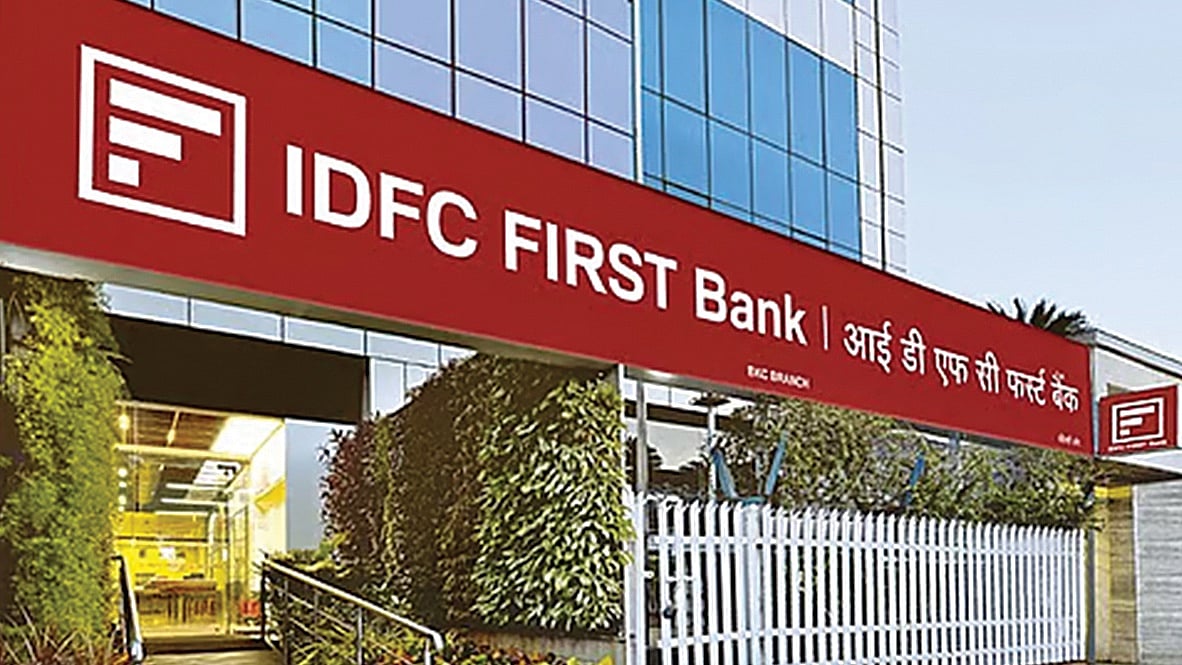
The Central Bureau of Investigation (CBI) has been adroit in cracking down on the Haryana bank scam. Three chargesheets have been filed, 16 people including three IAS officers arrested, and the agency has named 37 accused including three more IAS officers.
Remarkably, not a single minister or politician has been named as complicit in the Rs 634 crore embezzlement. That is the amount of public money siphoned off through multiple bank accounts and shell companies, with the help of officials of two private banks. This, in less than two years.
The scam did not come to light through an audit, a regulator or a whistleblower. It surfaced in February 2026 when a Haryana government department sought to close its account at IDFC FIRST Bank and transfer the balance elsewhere. During reconciliation, officials discovered that the actual balance was far lower than the amount the department believed it held. Similar discrepancies were then found in other government-
linked accounts. IDFC FIRST Bank disclosed the issue to regulators on 22 February 2026. According to investigators, funds meant to remain in government accounts or in fixed deposits had allegedly been diverted through unauthorised transactions. The Haryana Anti-Corruption Bureau registered an FIR, and because of the scale of the fraud, the Haryana government later recommended a CBI investigation.
The agency has arrested senior officials, including IAS officers Pankaj Agarwal, Ram Kumar Singh and Pradeep Kumar.
The modus operandi was remarkably mundane. Government accounts were opened in two private banks, the bulk of it in IDFC FIRST Bank and a smaller number in AU Small Finance Bank, without mandatory approvals. Despite existing rules and restrictions, funds were transferred. Fixed deposits were created on paper while the money was diverted elsewhere. False debit entries were made and approved. Shell companies received funds. Some of the officials allegedly approved transactions ‘as directed’ by seniors (against the rules).
In one case involving the Haryana Power Generation Corporation, officials were allegedly instructed to transfer Rs 50 crore from an existing IndusInd Bank fixed deposit to IDFC FIRST Bank. A letter from the bank offering an extraordinary 14 per cent interest rate was later found to be forged. Yet the transaction went ahead.
If the chargesheets are to be believed, the officials were happy to oblige the banks for small returns. An IAS officer, the chargesheet said, was ‘gifted’ two gold coins bought from Sawan Jewellers in Sector 35. Another IAS officer was happy to attend four dance parties at Jade Manor hotel at Zirakpur. Seven to eight women dancers from Delhi and other female artistes were brought in and Rs 15-20 lakh in cash were showered on them by the officers present, paid for by the bank manager.
A relatively junior official, a superintendent, who is alleged to have facilitated the opening of the bank accounts was directly paid Rs 1 crore and his trips to Mumbai, Pune, Bangkok and Dubai, with wife and family, were funded by the banker. Yet another IAS officer is accused of accepting the bank’s hospitality in a Chandigarh hotel on three occasions in 2025, where several lakhs were spent on food and drinks.
This is how large financial crimes often happen — not through a single spectacular act of deception but through a chain of small compliances. Someone proposes. Someone marks the file. Someone signs. Someone transfers the money. Someone at the bank processes it. Someone else decides not to ask any questions. By the time somebody does get round to asking, the money is gone.
****
The CBI says the Haryana State Pollution Control Board’s account at IDFC FIRST Bank was opened in February 2025 without the required approval from the finance department. Within days, a Rs 50 crore investment was approved.
The CBI alleges that instead of going into a genuine fixed deposit, the money was diverted to CAPCO Fintech Services, described as a shell entity. Another Rs 17.9 crore was subsequently approved and allegedly siphoned through other shell companies. The board ultimately suffered an alleged loss of Rs 169.69 crore through 49 fraudulent debit transactions and six credit entries.
The CBI says six placements between March 2025 and January 2026 took the bank’s deposits from the Board to about Rs 209.42 crore — far above the Rs 50 crore ceiling applicable to a newly empanelled bank. In one instance, the agency alleges that a higher-yielding bid from another bank was overlooked even though the IDFC FIRST quotation had allegedly arrived late and lacked a bank stamp and signatory name.
The chargesheet refers to two 50 gm gold coins allegedly delivered to the residence of IAS officer Vineet Garg ahead of Diwali last year. It alleges that hotel and restaurant bills connected with IAS officer Mohammed Shayin were paid by accused bank manager Ribhav Rishi. It also describes parties allegedly organised for IAS officer Pankaj Agarwal, with dancers, liquor, catering and large amounts of cash.
Pankaj Agarwal is no stranger to controversy. In March, while serving as chief electoral officer and returning officer for the Rajya Sabha election, he was accused of acting like a BJP agent in the conduct of the poll. Senior Congress leaders, including Bhupinder Singh Hooda, questioned his “dubious” role and petitioned the governor over the manner in which the election process was handled.
The finance department’s rules were flouted. There were limits on deposits. Banks were supposed to be selected through competitive processes. Government accounts required approvals. Departments maintained internal accounts and records. Banks had compliance systems. High-value transactions were subject to controls. Yet the alleged diversion continued across departments and across hundreds of transactions.
Former SBI chairman Rajnish Kumar has pointed to the ‘positive pay’ mechanism introduced for high-value cheques. Such controls are useful only if somebody actually uses them. A control that exists on paper creates something more dangerous than the absence of a control: the illusion of safety.
The scandal therefore exposes not simply a banking failure but a failure of institutional vigilance.
The political response has also been revealing. When Congress MLAs protested the bank scam outside the Haryana assembly on 27 August, police action against them included manhandling of former chief minister and Leader of Opposition Bhupinder Singh Hooda.
The Congress subsequently demanded a wider probe and a white paper detailing where government departments had deposited public money, under what approvals and at what rates. The demand deserves to be considered on its merits, irrespective of who makes it.
The government has already said that Rs 556 crore, including interest, has been returned to departments. The private banks sacked their managers and chose to cut their losses by returning the amount deposited by government departments. It is improbable that others in the two banks were totally ignorant of the amounts spent on ‘business promotion’ by the managers. There is no guarantee either that other branches in other states have not engaged in similar deals. Moreover, repayment by a bank is not the same thing as recovery from those who allegedly diverted the money.
Public money is not a mere accounting entry. It belongs to the citizens. Its diversion damages something that cannot be restored by a bank transfer — the presumption that government institutions are capable of protecting it.
The absence of ministerial and political involvement in the CBI chargesheet raises the question of who was the mastermind and how many people in the government and the banking system looked away?
A white paper on the government’s finances, a complete inventory of its bank deposits and interest payments must be open for public scrutiny or scrutiny by the legislature. Every exception made should be explained and every procedural breach examined. That seems to be reasonable but the government and the media appear willing to move on, without getting to the bottom of the scandal.
The Haryana case is still before the courts, and every accused person is entitled to the presumption of innocence. Chargesheets, after all, are still allegations, not convictions.
But institutional reform cannot wait for the verdict. The state should publish a complete inventory of its bank deposits: which department has money in which bank, under whose approval, at what interest rate and under which applicable rules. Every exception should be explained; every procedural breach examined.
Old banking wisdom is ‘trust but verify’. Public finance needs a tougher version: verify hardest when somebody is unusually eager to handle your money. When a bank, an official or an intermediary works especially hard to hold public money, the question should not simply be whether the offer is attractive; it should be: what do they expect in return? That is what Haryana’s financial machinery failed to ask. The price of that is being counted in crores. The real cost is being counted in trust.
Join our official telegram channel (@nationalherald) and stay updated with the latest headlines