Nation
Heavy rain floods parts of Delhi, snarls traffic as IMD issues red alert
Waterlogging reported across key roads and markets as weather office warns of more thunderstorms and intense rainfall
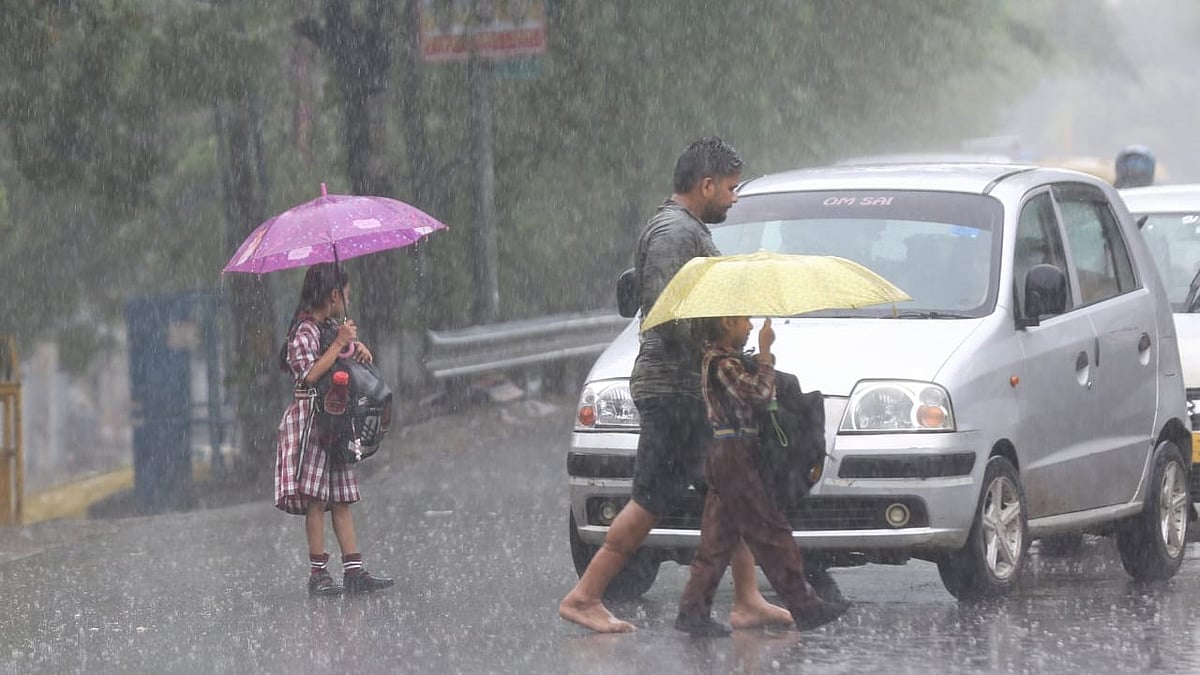
Heavy rain lashed Delhi on Tuesday, inundating roads, disrupting traffic and triggering widespread waterlogging across the city, prompting the India Meteorological Department (IMD) to issue a red alert for thunderstorms, lightning and intense rainfall over the next few hours.
The IMD forecast a generally cloudy sky with heavy rain for the rest of the day and warned of thunderstorms accompanied by lightning and intense spells of rain across the national capital.
Waterlogging was reported from several parts of the city, including Connaught Place, Janpath, Lutyens' Delhi, Bharat Mandapam Road, Barakhamba Road, Mathura Road near ITO and Kalindi Kunj, as well as other low-lying areas.
Large pools of water formed at several intersections, slowing traffic and forcing motorists to negotiate submerged stretches.
Public Works Department Minister Parvesh Sahib Singh shared a video on X showing traffic moving on Minto Bridge, saying efforts were being made to ensure the monsoon did not become a source of disruption.
Meanwhile, Aam Aadmi Party leader Saurabh Bharadwaj shared a video from Sadar Bazar showing floodwaters reaching waist level, with schoolchildren, office-goers and shoppers wading through inundated streets.
Dark skies and steady rain, accompanied by gusty winds, reduced visibility across the city, with vehicles moving slowly with headlights on.
Traffic congestion was reported from Greater Kailash-II to Chirag Dilli, Hauz Khas and R.K. Puram, and from Sangam Vihar to Khanpur via M.B. Road, according to social media posts.
The Delhi Traffic Police also reported congestion due to waterlogging on several arterial roads, including NH-8 near Shankar Vihar, Zakir Hussain Road, the Delhi Cantt-Naraina Flyover-Mayapuri stretch, ITO, Old Rohtak Road, the Madhuban Chowk-Netaji Subhash Place stretch, Peeragarhi, NH-48 near AIIMS, the Delhi-Noida Road, Kalindi Kunj and Vikas Marg.
Between 11.30 am and 2.30 pm, Pusa recorded the highest rainfall at 80 mm, followed by Janakpuri (72 mm), Lodi Road (63.4 mm), Chhatarpur (57.5 mm), Safdarjung (51 mm) and Ayanagar (50.1 mm).
The minimum temperature at Safdarjung settled at 25.5 degrees Celsius, 1.8 degrees below normal.
Join our official telegram channel (@nationalherald) and stay updated with the latest headlines