Nation
India and Russia push national currency trade to boost commerce, eye $100 billion target
Focus areas include removing tariff barriers, easing logistics, strengthening payments, and resolving insurance issues
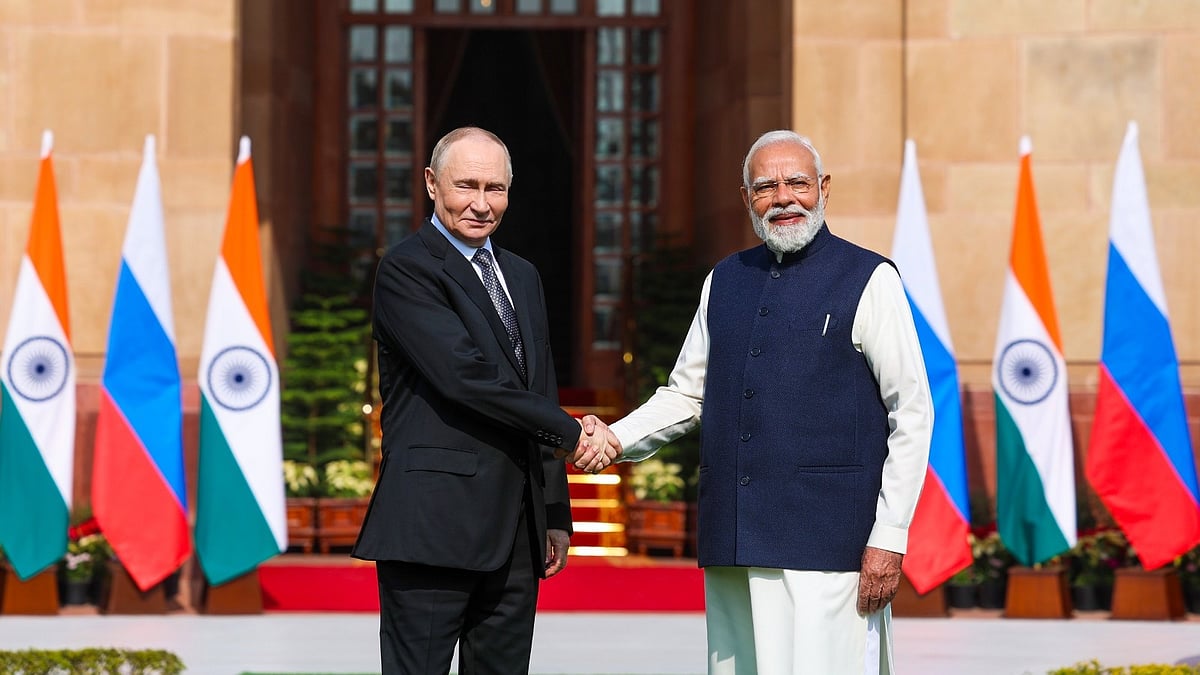
India and Russia have agreed to accelerate work on using their national currencies for bilateral trade, Prime Minister Narendra Modi and President Vladimir Putin confirmed in a joint statement during their summit in New Delhi on Friday.
The move comes as both sides look to insulate commercial transactions from external pressures, reduce dollar dependence, and support a faster expansion of economic ties.
Putin is in India for a two-day visit for the 23rd Annual Summit and discussions with Modi. The leaders reviewed the state of economic cooperation and explored ways to remove tariff and non-tariff barriers in order to reach their revised goal of $100 billion in trade by 2030. Bilateral trade for 2024–25 stood at $68.7 billion.
According to the joint statement, the two governments will continue developing systems that enable settlements in rupees and roubles, alongside enhancing interoperability between payment networks, financial messaging services, and potential central bank digital currency platforms. The intention, officials noted, is to ensure uninterrupted trade flows.
Experts say currency cooperation is part of a broader effort to tackle India’s widening trade deficit with Russia. “By operationalising rupee-denominated trade, we can bypass the dollar-dependency that is currently aggravating our deficit,” said Suketu Thanawala of advisory firm StraCon.
Even as the World Trade Organization faces diminishing influence in global trade governance, the statement stressed the need for an “open, inclusive, transparent and non-discriminatory multilateral trading system with the WTO at its core”.
Both countries identified several priorities for reaching the $100 billion target, including the removal of tariff barriers, easing logistics bottlenecks, strengthening payment mechanisms, and resolving issues around insurance and reinsurance. Regular business-to-business engagement was also highlighted as essential.
Speaking later at the India-Russia Business Forum, Mr. Modi suggested the target could be achieved ahead of schedule. “Based on my discussions with President Putin and the visible potential, I don’t think we will have to wait until 2030,” he said, adding that confidence in the trajectory of trade was rising.
Analysts believe that while the $100 billion milestone may remain open to debate, the trend in commerce will remain strongly upward. “There may be debate as to whether $100 billion is achievable, but there is no doubt that trade will not return to the low levels of $10 billion,” said Lydia Kulik of the SKOLKOVO School of Management. She pointed to the removal of trade obstacles and growing market access for Indian exporters, alongside a surge of interest from businesses independently of government initiatives.
Energy cooperation also featured prominently in the statement, which described it as a core pillar of the countries’ “Special and Privileged Strategic Partnership”. Both sides agreed to expedite solutions to longstanding investor concerns.
India and Russia additionally committed to deepen connectivity through major transport links, including the International North-South Transport Corridor, the Chennai-Vladivostok maritime route, and the Northern Sea Route — projects seen as crucial for faster trade and reduced logistical costs.
With Agency Inputs
Join our official telegram channel (@nationalherald) and stay updated with the latest headlines