Nation
India launches first open-sea marine fish farming project in Andaman Sea
Pilot initiative aims to boost livelihoods and advance the country’s blue economy goals
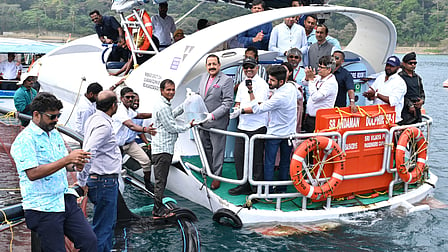
India has launched its first open-sea marine fish farming project in the Andaman Sea, marking a significant step towards harnessing the country’s vast ocean resources under its blue economy strategy.
The initiative was inaugurated on Sunday by the Union minister of state for earth sciences, Dr Jitendra Singh, during a field visit to North Bay near Sri Vijaya Puram in the Andaman and Nicobar Islands. Officials said the project is designed to combine scientific innovation with sustainable livelihood generation for coastal communities.
The pilot programme is being implemented jointly by the Ministry of Earth Sciences, its technical arm the National Institute of Ocean Technology (NIOT), and the Andaman and Nicobar Islands administration. It focuses on the open-sea cultivation of marine finfish and seaweed in natural ocean conditions, using technology developed to withstand offshore environments.
Speaking at the launch, Dr Singh described the project as an early but important move towards unlocking the economic potential of India’s oceans, in line with the prime minister’s emphasis on developing the blue economy. He said marine resources, like those on land, hold significant and diverse opportunities that have remained underutilised for decades.
As part of the launch, two livelihood-oriented interventions were rolled out. Seaweed seeds were distributed to local fishing communities to promote deep-water seaweed cultivation, while finfish seeds were provided for cage-based farming using NIOT-designed open-sea cages.
Dr Singh said the experience gained from the pilot would help assess feasibility and could pave the way for scaling up similar initiatives through public–private partnerships. Such an approach, he added, would accelerate deployment, expand livelihood opportunities and strengthen India’s marine economy.
The minister noted that for much of the period since Independence, India’s ocean resources had not received adequate attention. He said this had changed in recent years, with growing recognition of the maritime domain as a key driver of economic growth.
He also highlighted the distinct characteristics of India’s western, southern and eastern seaboards, saying each offered unique advantages and contributions to national development.
During his visit to the islands, Dr Singh also toured the Mahatma Gandhi Marine National Park near Wandoor, one of India’s earliest marine protected areas. Established in 1983 and spread across 15 islands, the park is known for its coral reefs, mangroves and diverse marine life, including turtles and a wide variety of fish species.
With IANS inputs
Join our official telegram channel (@nationalherald) and stay updated with the latest headlines