Nation
Government orders review of VIP flying rules after Baramati crash
Safety overhaul follows fatal Learjet accident that killed Maharashtra deputy chief minister Ajit Pawar and prompts tighter scrutiny of charter operators
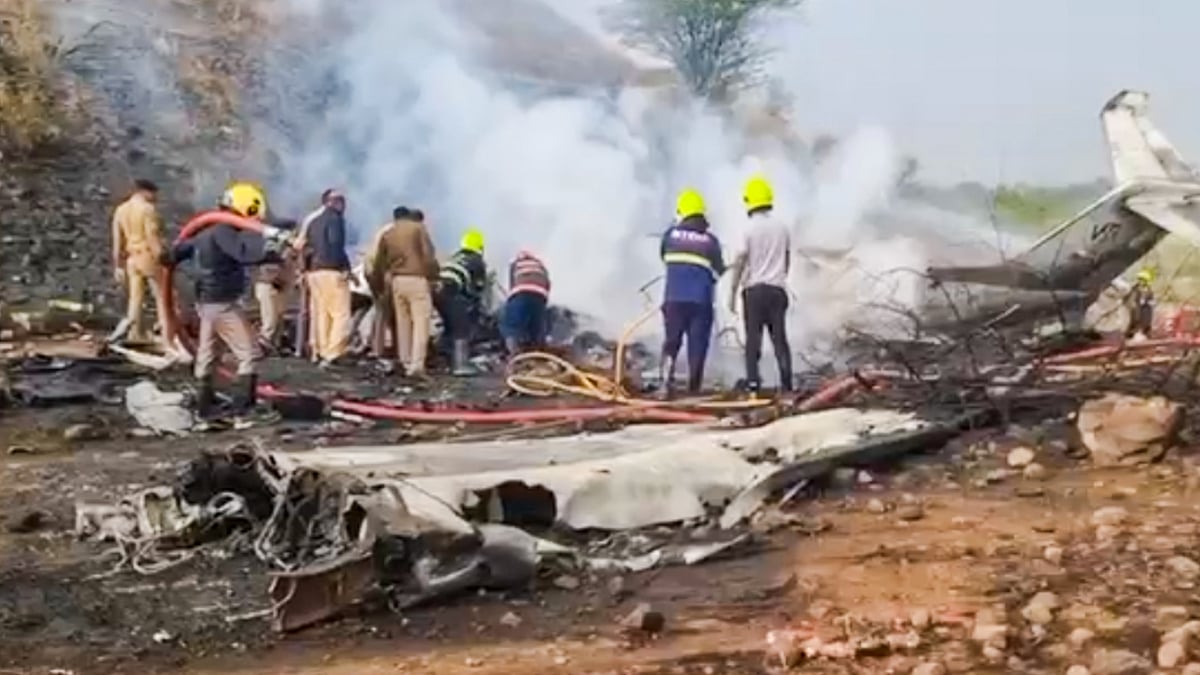
The government has launched a comprehensive review of rules governing VIP air travel in the wake of last month’s fatal crash in Baramati that claimed five lives, including Maharashtra deputy chief minister Ajit Pawar, officials familiar with the matter said.
Hindustan Times reported that the move marks the latest in a series of regulatory steps triggered by the 28 January accident involving a Learjet 45 operated by VSR Ventures. An order examining aircraft deployed for VIP transport was issued last week, according to one official, who said the exercise is intended to identify potential shortcomings in operational standards among operators carrying government-designated dignitaries.
The review follows a recent decision by the directorate general of civil aviation (DGCA) to conduct phased special audits of all non-scheduled operators, starting with the larger companies in the sector. The regulator has also initiated a dedicated audit of VSR Ventures.
A second official confirmed that the reassessment covers flights undertaken for individuals formally classified as VIPs by the Government of India.
Regulatory observations in recent months have highlighted instances of aircraft operating below prescribed weather minima, particularly at uncontrolled airfields. In some cases, officials said, landings were completed despite poor visibility conditions.
Under aviation rules, continuing an approach when visibility or cloud ceiling falls below authorised limits — whether under Visual Flight Rules (VFR) or Instrument Flight Rules (IFR) — constitutes operating below minima.
Uncontrolled airports, which lack instrument approach procedures and air traffic control services, generally require a minimum visibility of 5km and are used frequently for VIP travel, especially during election periods.
Aviation safety specialists have long argued that supervision of non-scheduled operators should extend beyond periodic inspections. They have called for systematic audits of maintenance regimes, verification of flight hour logs, corrosion monitoring and tracking of engine overhaul cycles.
Critics contend that the current framework relies too heavily on documentation and certification, rather than continuous monitoring of operational practices.
VIP and SPG-protected flights operated by private and non-scheduled aircraft are governed by Air Safety Circular 2 of 2014, revised in April 2018. The circular mandates strict adherence to weather minima, crew duty time limits, weight and balance calculations and fuel planning requirements.
Breaches can result in warnings, suspension of pilot or engineer licences, grounding of operations, or — in serious cases — suspension or cancellation of an Air Operator Permit by the DGCA.
Under Civil Aviation Requirements, cabinet-rank state ministers are classified as VIPs, a category that included Pawar.
An official described the current review as part of a broader “structural reset” of safety oversight within the non-scheduled operator permit (NSOP) sector.
The Baramati crash killed Pawar, his security officer Vidhit Jadhav, pilot-in-command Sumit Kapoor, first officer Shambhavi Pathak and cabin crew member Pinky Mali.
Data from the Aircraft Accident Investigation Bureau (AAIB) indicates that India has recorded between seven and 12 civil aviation accidents annually since 2014 across all categories, including scheduled airlines, helicopters, flying schools and charter operators. Eight accidents had been recorded by November 2025.
A total of 104 civil aviation accidents were logged up to 31 December 2024, with 91 investigations completed.
On the surface, the figures suggest relative stability, with no clear upward trend and a peak of 12 accidents in 2022. However, the data does not distinguish between business jets operating under NSOP permits and scheduled commercial airlines, making it difficult to assess risk specifically within the charter segment.
India now has more than 150 business jets within a general aviation fleet exceeding 400 aircraft. Charter and general aviation movements have risen by around 20 per cent in recent years as traffic rebounded strongly after the pandemic.
Industry observers caution that steady accident totals may obscure shifts in exposure. More aircraft, increased utilisation and a higher number of operations into smaller airfields could alter the risk profile, even if headline figures appear unchanged.
The government’s review is expected to examine whether current safeguards adequately reflect those evolving operational realities.
Join our official telegram channel (@nationalherald) and stay updated with the latest headlines